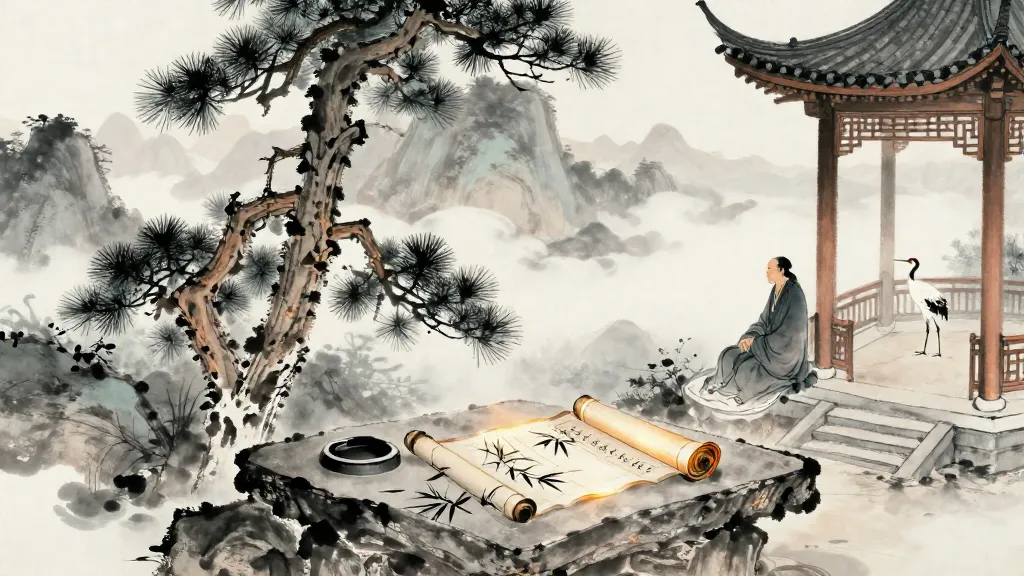
霸言 (Words on Hegemony) — Chinese ink painting

管子 Guanzi · Chapter 23

霸言

Words on Hegemony

View:

霸王之形

The Form of the Hegemon King

霸王之形;象天則地,化人易代,創製天下,等列諸侯,賓屬四海,時匡天下。

The form of the hegemon king: model heaven and pattern earth; transform men and change eras; create institutions for the realm; rank the feudal lords; make vassals of all within the four seas; rectify the realm at the proper time. Great states are diminished; crooked states are straightened; strong states are weakened; heavy states are lightened; chaotic states are absorbed; tyrannical rulers are destroyed. Only after punishing their crimes, lowering their rank, and securing their people does one become king over them. The way of gaining the realm must begin by spreading virtue among the feudal lords. Therefore the former kings had things they took and things they gave, things they yielded and things they extended.

先後之機

The Timing of Acting First or Last

強國眾,先舉者危,後舉者利。強國少,先舉者王,後舉者亡。

When strong states are many, the first to act is endangered and the last to act profits. When strong states are few, the first to act becomes king and the last to act perishes. When warring states are many, acting last can lead to hegemony. When warring states are few, acting first can lead to kingship. The sage of divine intelligence observes the configuration of the realm and knows the timing of action and stillness. He reads the sequence of before and after and knows the gates of fortune and disaster.

大小強弱之形

The Configurations of Great and Small, Strong and Weak

千乘之國得其守,諸侯可得而臣,天下可得而有也。

A state of a thousand chariots that maintains its defenses can make vassals of the feudal lords and possess the realm. A state of ten thousand chariots that loses its defenses — its state is not its own. The great state that acts not is called 'land-full.' The masses that are not governed are called 'people-full.' Military might that is not restrained is called 'force-full.' These three 'fulls' unchecked — the state is not its own. Small states secure themselves through disciplined restraint; they fail through abandoning the strong. The sage never acts first in creating difficulties and never acts against the timing — those who violate timing and force events have never succeeded, from ancient times to the present.

Edition & Source

Text
《管子》 Guanzi
Edition
中華古詩文古書籍網 transcription
Commentary
Traditional commentaries