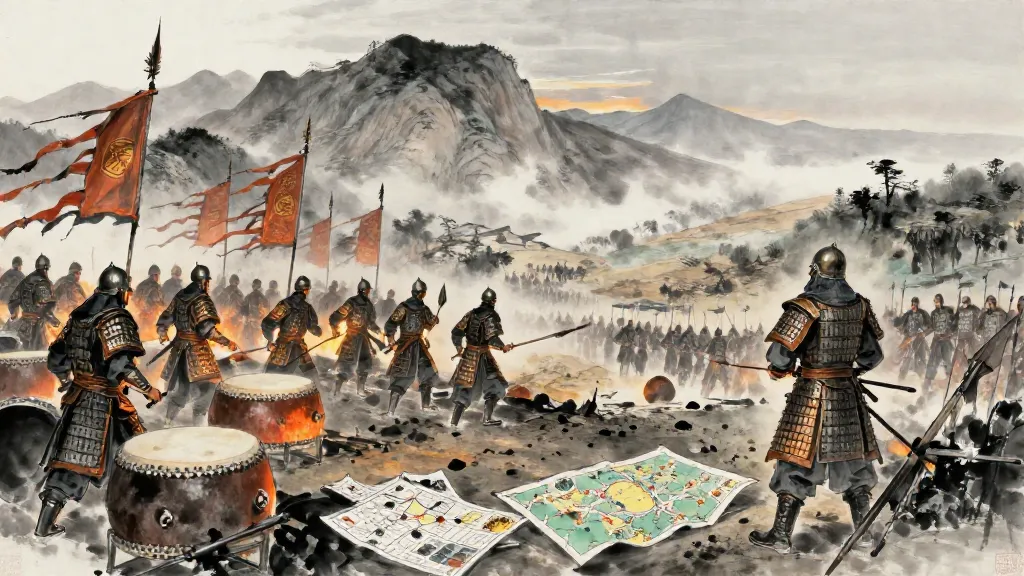
授斧鉞之禮
The Ceremony of Bestowing the Axe
武王問太公曰:「立將之道奈何?」太公曰:「凡國有難,君避正殿,召將而詔之曰:『社稷安危,一在將軍。今某國不臣,願將軍帥師應之』。「將既受命,乃命太史卜,齋三日,至太廟,鑽靈龜,卜吉日,以授斧鉞。君入廟門,西面而立,將入廟門,北面而立。君親操鉞持首,授將其柄,曰:『從此上至天者,將軍制之。』復操斧持柄,授將其刃曰:『從此下至淵者,將軍制之。』見其虛則進,見其實則止,勿以三軍為眾而輕敵,勿以受命為重而必死,勿以身貴而賤人,勿以獨見而違眾,勿以辯說為必然。士未坐勿坐,士未食勿食,寒暑必同。如此,則士眾必盡死力。
King Wu asked Taigong: 'What is the way of appointing a general?' Taigong said: 'Whenever the state faces crisis, the ruler leaves the main hall, summons the general, and issues this decree: "The safety of the altars of state rests entirely upon you, General. Such-and-such state has rebelled — I ask the General to lead the army against them." After the general receives the mandate, the Grand Historian is ordered to divine. The general fasts for three days, proceeds to the Grand Temple, and bores the sacred tortoise shell to determine the auspicious day for bestowing the axe. The ruler enters the temple gate and stands facing west. The general enters the temple gate and stands facing north. The ruler personally grasps the battle-axe by its head and hands the handle to the general, saying: "From here upward to heaven, the General has full command." He then grasps the hatchet by its handle and hands the blade to the general, saying: "From here downward to the deep, the General has full command." When you see the enemy is hollow, advance. When you see the enemy is solid, halt. Do not despise the enemy because your three armies are numerous. Do not seek certain death because your mandate is weighty. Do not look down on others because of your own high rank. Do not override the many because of your own solitary judgment. Do not take eloquent argument for certainty. Do not sit before the soldiers sit. Do not eat before the soldiers eat. Share in their cold and heat without exception. If you do this, then the soldiers and officers will exert themselves to the death.'