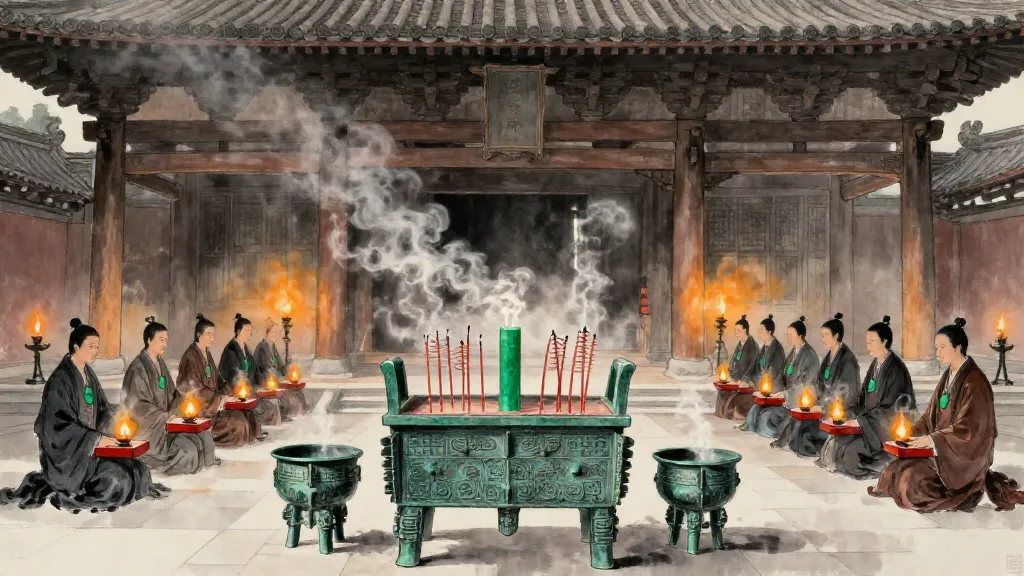
非儒(下) (Against the Confucians, Part 2) — Chinese ink painting

墨子 Mozi · Chapter 39

非儒(下)

Against the Confucians, Part 2

View:

儒者之親疏等差

The Confucian Grading of Closeness and Distance

儒者曰:"親親有術,尊賢有等。"言親疏尊卑之異也。其《禮》曰:喪,父母,三年;妻、後子,三年;伯父、叔父、弟兄、庶子,其;戚族人,五月。若以親疏為歲月之數,則親者多而疏者少矣,是妻、後子與父同也。若以尊卑為歲月數,則是尊其妻、子與父母同,而親伯父、宗兄而卑子也。逆孰大焉?

The Confucians say: 'Loving one's kin has its proper gradations; honoring the worthy has its proper ranks.' They speak of differences in closeness and distance, honor and lowliness. Their Rites say: mourn parents for three years; mourn wife and principal heir for three years; uncles, brothers, and secondary sons for a shorter period; clan members for five months. If the duration of mourning is based on closeness, then the closer should mourn longer and the more distant shorter -- but this makes wife and heir equal to parents. If based on rank, then honoring wife and children equally with parents, while placing uncles and elder brothers of the clan lower than children -- what greater reversal could there be?

Notes

1context

This chapter is one of the most polemical in the Mozi, directly attacking Confucian ritual practices and Confucius personally. The Mohists and Confucians were the two dominant philosophical schools of the early Warring States period and fierce rivals.

儒者之命觀

The Confucian View of Fate

有強執有命以說議曰:"壽夭貧富,安危治亂,固有天命,不可損益。窮達、賞罰、幸否有極,人之知力,不能為焉!"群吏信之,則怠於分職;庶人信之,則怠於從事。吏不治則亂,農事緩則貧,貧且亂,政之本,而儒者以為道教,是賊天下之人者也。

Some stubbornly hold to fatalism and argue: 'Longevity and early death, poverty and wealth, safety and danger, order and chaos are all fixed by the Mandate of Heaven and cannot be changed. Success and failure, reward and punishment, fortune and misfortune all have their limits, and human knowledge and strength cannot affect them!' If officials believe this, they grow lazy in their duties; if common people believe it, they grow lazy in their work. When officials do not govern, there is chaos; when agriculture is neglected, there is poverty. Poverty and chaos are the root of political ruin, yet the Confucians teach this as their doctrine -- they are the destroyers of the world's people.

儒者之四害

The Four Harms of Confucianism

且夫繁飾禮樂以淫人,久喪偽哀以謾親,立命緩貧而高浩居,倍本棄事而安怠傲,貪於飲食,惰於作務,陷於饑寒,危於凍餒,無以違之。是若人氣,甉鼠藏,而羝羊視,賁彘起。君子笑之,怒曰:"散人焉知良儒!"

They elaborately adorn rituals and music to corrupt people; they maintain prolonged mourning with false grief to deceive kin; they establish fatalism, are complacent with poverty, and dwell in lofty idleness; they abandon the root of work and are content in laziness and arrogance. Greedy for food and drink, lazy in work, they fall into hunger and cold, endangered by freezing and starvation, with no way to escape. They have the air of rats hiding and peering, of rams staring, of startled pigs leaping up. When gentlemen laugh at them, they angrily say: 'How can crude people understand a true Confucian!'

晏子論孔子

Yanzi's Assessment of Confucius

齊景公問晏子曰:"孔子為人何如?"晏子不對。公又復問,不對。景公曰:"以孔某語寡人者眾矣,俱以賢人也,今寡人問之,而子不對,何也?"晏子對曰:"嬰不肖,不足以知賢人。雖然,嬰聞所謂賢人者,入人之國,必務合其君臣之親,而弭其上下之怨。孔某之荊,知白公之謀,而奉之以石乞,君身幾滅,而白公僇。嬰聞賢人得上不虛,得下不危,言聽於君必利人,教行下必於上,是以言明而易知也,行明而易從也。"

Duke Jing of Qi asked Yanzi: 'What sort of person is Confucius?' Yanzi did not reply. The Duke asked again, and still Yanzi did not reply. Duke Jing said: 'Many people have spoken to me about Confucius, all calling him a worthy man. Now I ask you and you do not reply -- why?' Yanzi answered: 'I, Ying, am unworthy and insufficient to judge a worthy man. Nevertheless, I have heard that a true worthy man, when entering another's state, must work to strengthen the bond between ruler and ministers and resolve the resentments between upper and lower. When Confucius went to Chu, he knew of the Duke of Bai's conspiracy, yet he assisted it through Shiqi. The ruler was nearly destroyed, and the Duke of Bai was executed. I have heard that a worthy man, when he gains the ruler's trust, does not create hollow alliances, and when he gains the people's trust, does not create danger. His words, when heeded by the ruler, must benefit the people; his teachings, when practiced below, must serve those above.'

Notes

1person晏子Yanzi (Yan Ying)

Yanzi (晏子, Yan Ying, d. 500 BC) was the famous chief minister of Qi under Duke Jing. He is the subject of the Yanzi Chunqiu. The Duke of Bai (白公) refers to a Chu noble who led a failed coup.

2context

This passage is highly polemical and reflects the Mohist-Confucian rivalry. Many of the specific accusations against Confucius in this chapter are disputed or considered fabrications by later scholars. They should be read as Mohist rhetoric rather than historical fact.

Edition & Source

Text
《墨子》 Mozi
Edition
中華古詩文古書籍網 transcription, 《四部叢刊》本
Commentary
Mo Di (墨翟) et al., Warring States period