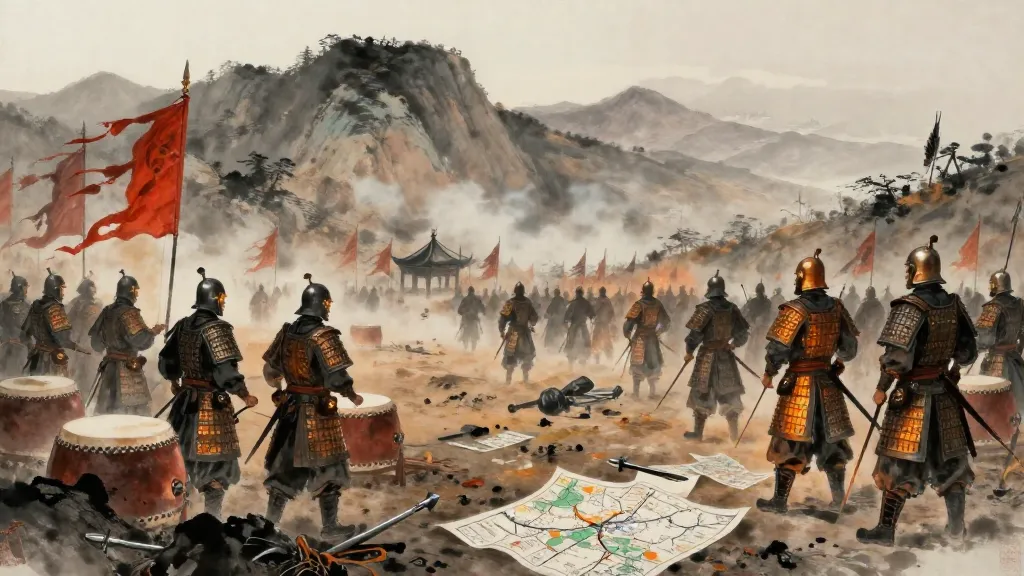
公輸 (Gongshu Ban) — Chinese ink painting

墨子 Mozi · Chapter 50

公輸

Gongshu Ban

View:

止楚攻宋

Stopping Chu's Attack on Song

公輸盤為楚造雲梯之械,成,將以攻宋。子墨子聞之,起於齊,行十日十夜而至於郢,見公輸盤。公輸盤曰:"夫子何命焉為?"子墨子曰:"北方有侮臣,願藉子殺之。"公輸盤不說。子墨子曰:"請獻十金。"公輸盤曰:"吾義固不殺人。"子墨子起,再拜,曰:"請說之。吾從北方聞子為梯,將以攻宋,宋何罪之有?荊國有餘於地,而不足於民,殺所不足,而爭所有餘,不可謂智。宋無罪而攻之,不可謂仁。知而不爭,不可謂忠。爭而不得,不可謂強。義不殺少而殺眾,不可謂知類。"公輸盤服。

Gongshu Ban had built cloud ladders for Chu, which were now complete, and Chu planned to use them to attack Song. When Master Mozi heard of this, he set out from Qi, walking for ten days and ten nights until he reached Ying, where he went to see Gongshu Ban.

Gongshu Ban said: 'What do you command, Master?' Master Mozi said: 'Someone in the north has insulted me. I wish to borrow your services to kill him.' Gongshu Ban was displeased. Master Mozi said: 'I will offer you ten pieces of gold.' Gongshu Ban said: 'My principles firmly prevent me from killing people.'

Master Mozi rose and bowed twice, then said: 'Allow me to explain. I heard in the north that you had built ladders to attack Song. What crime has Song committed? Chu has more land than it needs but not enough people. To kill those it lacks in order to fight over what it has in excess cannot be called wise. To attack Song when it is innocent cannot be called benevolent. To know this yet not contend against it cannot be called loyal. To contend yet not prevail cannot be called strong. To claim one's principles prevent killing a few yet kill many cannot be called understanding categories.' Gongshu Ban was persuaded.

Notes

1context

This is perhaps the most celebrated story in the Mozi. The narrative -- Mozi walking ten days and nights to prevent a war, using rhetorical brilliance and then military expertise to stop Chu's attack on Song -- perfectly encapsulates the Mohist ideals of anti-war activism, logical argumentation, and defensive military capability.

2place郢、宋Ying, Song

Ying (郢) was the capital of Chu, located near modern Jingzhou, Hubei province. Song (宋) was a smaller state in modern eastern Henan/western Shandong.

模擬攻防

The Simulated Siege

於是見公輸盤。子墨子解帶為城,以牒為械,公輸盤九設攻城之機變,子墨子九距之。公輸盤之攻械盡,子墨子之守圉有餘,公輸盤屈,而曰:"吾知所以距子矣,吾不言。"子墨子亦曰:"吾知子之所以距我,吾不言。"楚王問其故,子墨子曰:"公輸子之意,不過欲殺臣,殺臣,宋莫能守,可攻也。然臣之弟子禽滑厘等三百人,已持臣守圉之器,在宋城上而待楚寇矣。雖殺臣,不能絕也。"楚王曰:"善哉!吾請無攻宋矣。"

Then they went to see the King of Chu together. Master Mozi loosened his belt to represent a city wall and used wooden tiles as military equipment. Gongshu Ban devised nine different attack strategies, and Master Mozi countered all nine. Gongshu Ban's offensive devices were exhausted, while Master Mozi's defensive measures still had room to spare.

Gongshu Ban yielded and said: 'I know how to defeat you, but I will not say it.' Master Mozi also said: 'I know how you intend to defeat me, but I will not say it.' The King of Chu asked what they meant. Master Mozi said: 'Gongshu Ban's intention is simply to have me killed. If I am killed, Song will have no one to defend it and can be attacked. However, my disciples Qin Guli and three hundred others are already manning the walls of Song with my defensive equipment, awaiting the Chu invasion. Even if you kill me, you cannot eliminate them all.' The King of Chu said: 'Excellent! I shall abandon the attack on Song.'

Notes

1person禽滑厘Qin Guli

Qin Guli (禽滑厘/禽滑釐) was Mozi's most important disciple and the primary interlocutor in the defensive warfare chapters. The detail that 300 Mohist warriors were already deployed in Song shows the Mohist school's combination of philosophical advocacy with practical military organization.

治於神者

Those Who Work in the Realm of the Unseen

子墨子歸,過宋。天雨,庇其閭中,守閭者不內也。故曰:"治於神者,眾人不知其功;爭於明者,眾人知之。"

On his way home, Master Mozi passed through Song. It was raining, and he sought shelter in a gateway, but the gatekeeper would not let him in. Therefore it is said: 'Those who work in the realm of the unseen -- the common people do not know of their achievements. Those who contend in the realm of the visible -- the common people know of them.'

Notes

1context

This poignant ending -- the man who just saved Song from destruction cannot even find shelter in Song -- illustrates the Mohist ideal of selfless service. The closing aphorism about invisible versus visible achievement captures a core Mohist theme: true merit often goes unrecognized.

Edition & Source

Text
《墨子》 Mozi
Edition
中華古詩文古書籍網 transcription, 《四部叢刊》本
Commentary
Mo Di (墨翟) et al., Warring States period