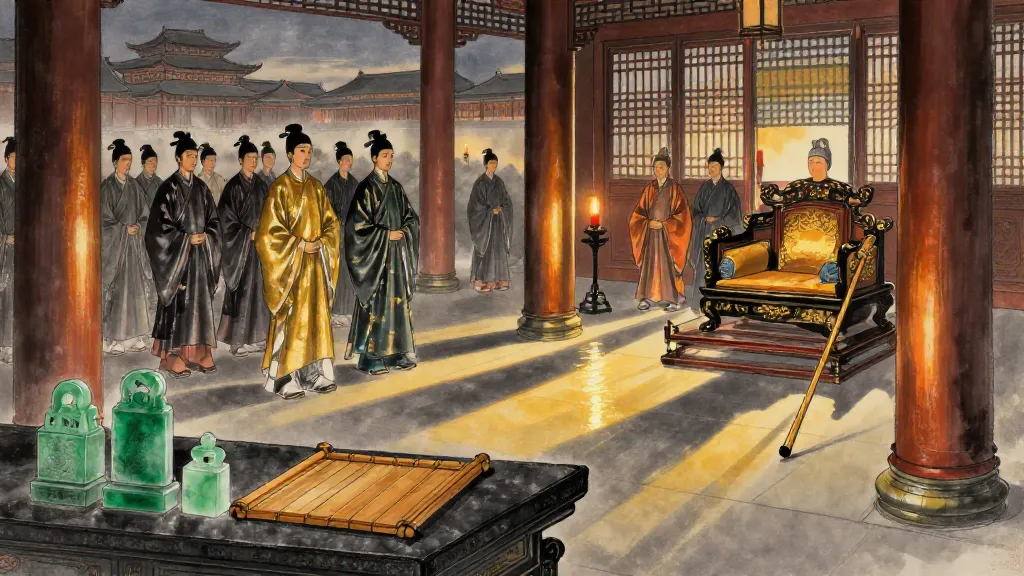
牧民 (Shepherding the People) — Chinese ink painting

管子 Guanzi · Chapter 1

牧民

Shepherding the People

View:

國頌

Ode to the State

凡有地牧民者,務在四時,守在倉廩。國多財,則遠者來,地辟舉,則民留處;倉廩實,則知禮節;衣食足,則知榮辱;上服度,則六親固。四維張,則君令行。故省刑之要,在禁文巧,守國之度,在飾四維,順民之經,在明鬼神,只山川,敬宗廟,恭祖舊。不務天時,則財不生;不務地利,則倉廩不盈;野蕪曠,則民乃菅,上無量,則民乃妄。文巧不禁,則民乃淫,不璋兩原,則刑乃繁。不明鬼神,則陋民不悟;不只山川,則威令不聞;不敬宗廟,則民乃上校;不恭祖舊,則孝悌不備;四維不張,國乃滅亡。

All who possess territory and shepherd the people must attend to the four seasons and guard the granaries. When the state has abundant wealth, those from afar will come; when land is opened and cultivated, the people will stay and settle. When the granaries are full, the people will understand propriety and moderation; when clothing and food are sufficient, they will understand honor and shame. When the ruler observes proper measure, the six kinship bonds will be firm. When the Four Pillars are upheld, the ruler's commands will be carried out. The key to reducing punishments lies in prohibiting frivolous craftsmanship; the measure of guarding the state lies in cultivating the Four Pillars; the constant way of guiding the people lies in honoring the spirits, revering mountains and rivers, respecting the ancestral temples, and venerating the old ways. If one does not attend to heaven's seasons, wealth will not be produced; if one does not attend to the advantages of the land, the granaries will not be filled. When the fields lie waste, the people grow negligent; when the ruler lacks measure, the people grow reckless. If frivolous craft is not prohibited, the people become dissolute; if the two sources are not regulated, punishments multiply. If the spirits are not honored, the common folk do not awaken; if the mountains and rivers are not revered, authority and commands are not heard; if the ancestral temples are not respected, the people defy their superiors; if the old ways are not venerated, filial piety and fraternal duty are incomplete. When the Four Pillars are not upheld, the state will be destroyed.

Notes

1context

The Four Pillars (四維 sì wéi) — propriety (禮), duty (義), integrity (廉), and sense of shame (恥) — are the foundational political concept of the Guanzi. The metaphor treats these virtues as the four corner-ropes of a tent: lose one and the structure tilts; lose all four and it collapses entirely.

四維

The Four Pillars

國有四維,一維絕則傾,二維絕則危,三維絕則覆,四維絕則滅。傾可正也,危可安也,覆可起也,滅不可復錯也。何謂四維?一曰禮、二曰義、三曰廉、四曰恥。禮不踰節,義不自進。廉不蔽惡,恥不從枉。故不踰節,則上位安;不自進,則民無巧軸;不蔽惡,則行自全;不從枉,則邪事不生。

The state has Four Pillars. If one is severed, the state tilts; if two are severed, it is imperiled; if three are severed, it is overturned; if all four are severed, it is destroyed. When tilted it can be righted; when imperiled it can be stabilized; when overturned it can be raised again; but when destroyed, it cannot be restored. What are the Four Pillars? The first is propriety, the second is duty, the third is integrity, the fourth is a sense of shame. Propriety means not overstepping proper bounds; duty means not advancing oneself. Integrity means not concealing wrongdoing; shame means not following the crooked. When proper bounds are not overstepped, those in high position are secure; when people do not advance themselves, the people have no cunning schemes; when wrongdoing is not concealed, conduct is naturally complete; when the crooked is not followed, wicked affairs do not arise.

四順

The Four Accommodations

政之所興,在順民心。政之所廢,在逆民心。民惡憂勞,我佚樂之。民惡貧賤,我富貴之,民惡危墜,我存安之。民惡滅絕,我生育之。能佚樂之,則民為之憂勞。能富貴之,則民為之貧賤。能存安之,則民為之危墜。能生育之,則民為之滅絕。故刑罰不足以畏其意,殺戮不足以服其心。故刑罰繁而意不恐,則令不行矣。殺戮眾而心不服,則上位危矣。故從其四欲,則遠者自親;行其四惡,則近者叛之,故知"予之為取者,政之寶也"。

What causes governance to flourish lies in following the people's hearts. What causes governance to decay lies in opposing the people's hearts. The people detest worry and toil — I give them ease and pleasure. The people detest poverty and low station — I give them wealth and honor. The people detest danger — I preserve and secure them. The people detest extinction — I give them life and nurture. If I can give them ease, then the people will endure toil for me. If I can give them wealth, then the people will endure poverty for me. If I can preserve them, then the people will face danger for me. If I can nurture them, then the people will face extinction for me. Punishments alone cannot make their minds fearful; executions alone cannot make their hearts submit. When punishments multiply yet minds feel no fear, commands cannot be carried out. When executions multiply yet hearts do not submit, the ruler's position is in peril. Follow the people's four desires and those who are distant will draw near; impose their four dreads and those who are close will rebel. Thus know this: 'To give in order to take — this is the treasure of governance.'

十一經

The Eleven Standards

錯國於不傾之地,積於不涸之倉,藏於不竭之府,下令於流水之原,使民於不爭之官,明必死之路,開必得之門。不為不可成,不求不可得,不處不可久,不行不可復。

Place the state on ground that will not tilt; store in granaries that will not run dry; deposit in treasuries that will not be exhausted; issue commands from a source that flows like water; employ the people in offices free of contention; make clear the road to certain death; open the gate of certain gain. Do not attempt what cannot be accomplished; do not seek what cannot be obtained; do not occupy what cannot endure; do not practice what cannot be sustained. To place the state on untiltable ground means conferring authority on the virtuous. To store in inexhaustible granaries means attending to the five grains. To issue commands like flowing water means making commands follow the people's hearts. Strict punishments keep people from wickedness; trustworthy rewards make people brave in hardship; measuring the people's strength means nothing will fail.

六親五法

The Six Kinships and Five Standards

以家為鄉,鄉不可為也。以鄉為國,國不可為也。以國為天下,天下不可為也。以家為家,以鄉為鄉,以國為國,以天下為天下。

If you govern the district as though it were your household, the district cannot be governed. If you govern the state as a district, the state cannot be governed. If you govern the realm as a state, the realm cannot be governed. Govern each level according to its proper scale. Do not say those of different birth need not be heeded. Be like heaven and earth — what partiality? Be like the sun and moon — the ruler's proper measure alone. The reins of guiding the people lie in what those above value. The realm does not lack ministers — it lacks a ruler to employ them. The realm does not lack wealth — it lacks someone to distribute it. One who understands timing may be established as leader; one without self-interest may be appointed to govern.

Notes

1person管仲Guǎn Zhòng

Guan Zhong (管仲, c. 720–645 BC) was chief minister of Duke Huan of Qi and the figure to whom the Guanzi text is attributed. He transformed Qi into the first hegemon of the Spring and Autumn period through comprehensive political, economic, and military reforms.

Edition & Source

Text
《管子》 Guanzi
Edition
中華古詩文古書籍網 transcription
Commentary
Traditional commentaries