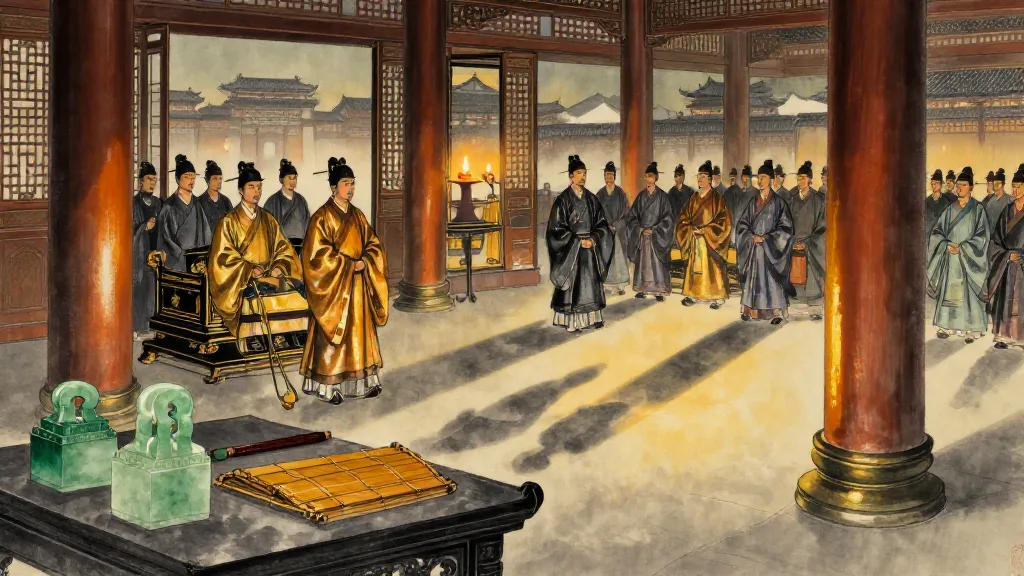
君臣下
Ruler and Minister, Part Two
In ancient times there was not yet the distinction between ruler and minister, superior and inferior, nor the union of husband and wife. People lived in herds like beasts, using strength to dominate one another. The intelligent deceived the foolish; the strong oppressed the weak; the old and orphaned could find no place. Then the wise person organized collective strength to prohibit violent oppression, and the brutal were stopped. He created benefits and removed harms for the people, corrected their virtue, and the people made him their teacher. Thus the Way and its techniques, virtue and its practice, emerged from the worthy. When duty and principle took form in the people's hearts, the people returned to the Way. When names and categories were established and right and wrong were distinguished, then rewards and punishments were enacted. A state has four types of disorder: palace disorder through jealous concubines; household disorder through disputed succession; court disorder through ministers who contest the chief minister; and popular disorder through incompetent officials. Five disorders arise — and the ruler is imperiled.