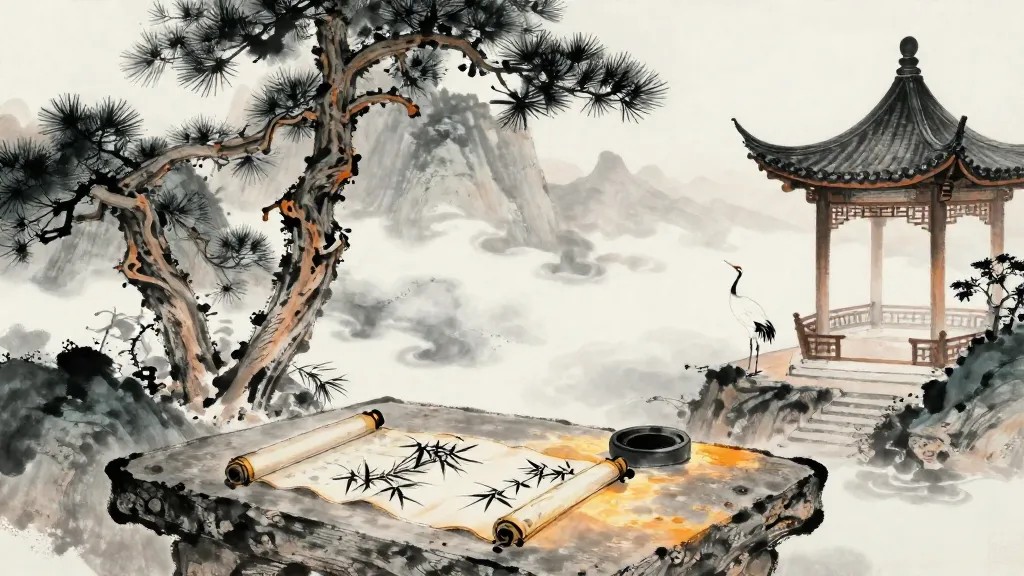
任法 (Entrusting to Law) — Chinese ink painting

管子 Guanzi · Chapter 45

任法

Entrusting to Law

View:

聖君任法

The Sage Ruler Entrusts to Law

聖君任法而不任智,任數而不任說,任公而不任私,任大道而不任小物,然後身佚而天下治。

The sage ruler entrusts to law and not to personal cleverness, entrusts to method and not to persuasion, entrusts to the public interest and not to private advantage, entrusts to the great Way and not to petty matters — only then does he rest at ease while all under heaven is well governed.

堯與黃帝之治

The Governance of Yao and the Yellow Emperor

昔者堯之治天下也,猶埴之在埏也,唯陶之所以為;猶金之在壚;恃冶之所以鑄。故堯之治也,善明法禁之令而已矣。黃帝之治天下也,置法而不變,使民安其法者也。

When Yao governed all under heaven, the people were like clay on the potter’s wheel, shaped as the potter wished; like metal in the furnace, cast as the smith desired. Yao’s governance consisted in skillfully making clear the laws and prohibitions. The Yellow Emperor’s governance consisted in establishing laws and not changing them, making the people secure in their laws.

Notes

1personYáo

Yao (堯) was one of the legendary sage-emperors of high antiquity, regarded as the paragon of virtuous rulership.

2person黃帝Huáng Dì

The Yellow Emperor (黃帝) is the legendary progenitor of Chinese civilization.

法為大道

Law as the Supreme Way

所謂仁義禮樂者,皆出於法。此先聖之所以一民者也。《周書》曰:「國法,法不一,則有國者不祥。」故曰:法者不可不恆也,存亡治亂之所以出,聖君所以為天下大儀也。

What are called benevolence, duty, propriety, and music all originate from law. This is how the former sages unified the people. The Book of Zhou says: 「Regarding national law — when laws are not unified, it is inauspicious for those who hold the state.」 Therefore: law must be constant — it is the source from which survival and destruction, order and chaos proceed, and the great standard by which the sage ruler governs all under heaven.

主之三術與六柄

The Ruler’s Three Methods and Six Handles

故明王之所操者六:生之、殺之、富之、貧之、貴之、賤之。此六柄者,主之所操也。

The enlightened ruler controls six instruments: giving life and dealing death, enriching and impoverishing, ennobling and debasing. These six handles are what the ruler controls.

Edition & Source

Text
《管子》 Guanzi
Edition
《四部叢刊》本
Commentary
Traditional commentaries