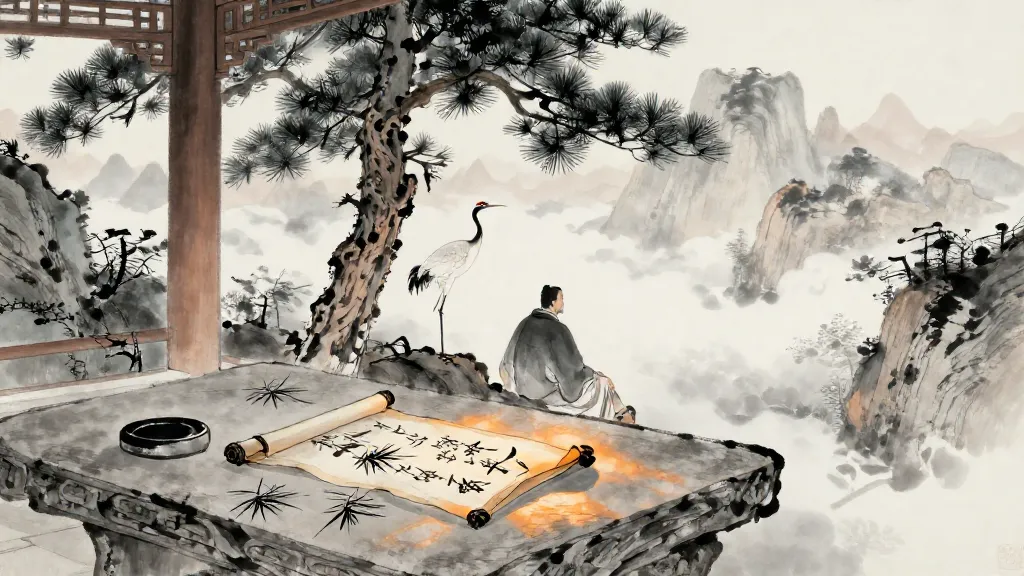
形勢解 (Commentary on Situational Power) — Chinese ink painting

管子 Guanzi · Chapter 64

形勢解

Commentary on Situational Power

View:

山高而不崩

The Mountain That Does Not Crumble

山者,物之高者也。惠者,主之高行也。慈者,父母之高行也。忠者,臣之高行也。孝者,子婦之高行也。故山高而不崩則祈羊至,主惠而不解則民奉養。

The mountain is the highest among things. Benevolence is the highest conduct of a ruler. Compassion is the highest conduct of parents. Loyalty is the highest conduct of a minister. Filial piety is the highest conduct of children. When the mountain is high and does not crumble, sacrificial sheep come to it. When the ruler is benevolent and does not slacken, the people offer their support.

蛟龍得水

The Dragon Finds Water

蛟龍,水蟲之神者也。乘於水則神立,失於水則神廢。人主,天下之有威者也。得民則威立,失民則威廢。

The water dragon is the most divine of aquatic creatures. When it rides upon water, its divine power is established; when it loses water, its divine power is ruined. The ruler is the most authoritative figure in all under heaven. When he has the people, his authority is established; when he loses the people, his authority is ruined.

巧者有餘

The Skilful Have Surplus

古者,武王地方不過百里,戰卒之眾不過萬人,然能戰勝攻取,立為天子,而世謂之聖王者,知為之之術也。

In ancient times, King Wu's territory did not exceed a hundred li and his soldiers did not exceed ten thousand, yet he was able to win battles, conquer territory, and establish himself as Son of Heaven. The world called him a sage king because he understood the art of statecraft.

Notes

1person周武王Zhōu Wǔ Wáng

King Wu of Zhou (周武王, r. c. 1046-1043 BC) led the Zhou conquest of the Shang dynasty at the Battle of Muye, establishing the Zhou dynasty.

Edition & Source

Text
《管子》 Guanzi
Edition
《四部叢刊》本
Commentary
Traditional commentaries