初見秦 (First Audience with Qin) — Chinese ink painting

韓非子 Hanfeizi · Chapter 1

初見秦

First Audience with Qin

View:

臣之進言

The Minister's Plea to Speak

臣聞:"不知而言,不智;知而不言,不忠。"為人臣不忠,當死;言而不當,亦當死。雖然,臣願悉言所聞,唯大王裁其罪。

I have heard it said: "To speak without knowledge is unwise; to know and not speak is disloyal." A minister who is disloyal deserves death; one who speaks inappropriately also deserves death. Be that as it may, I wish to say all that I have heard, and leave it to Your Majesty to judge my offense.

Notes

1context

This formulaic opening -- acknowledging the risk of death for speaking -- is a standard rhetorical device in Warring States memorials. It simultaneously demonstrates the speaker's courage and flatters the ruler by implying that the advice is so important it is worth dying for.

2translation

大王 is rendered as 'Your Majesty' following the convention for addressing the King of Qin. The speaker addresses the king directly throughout the memorial.

秦強合縱弱

Qin's Strength versus the Weakness of the Vertical Alliance

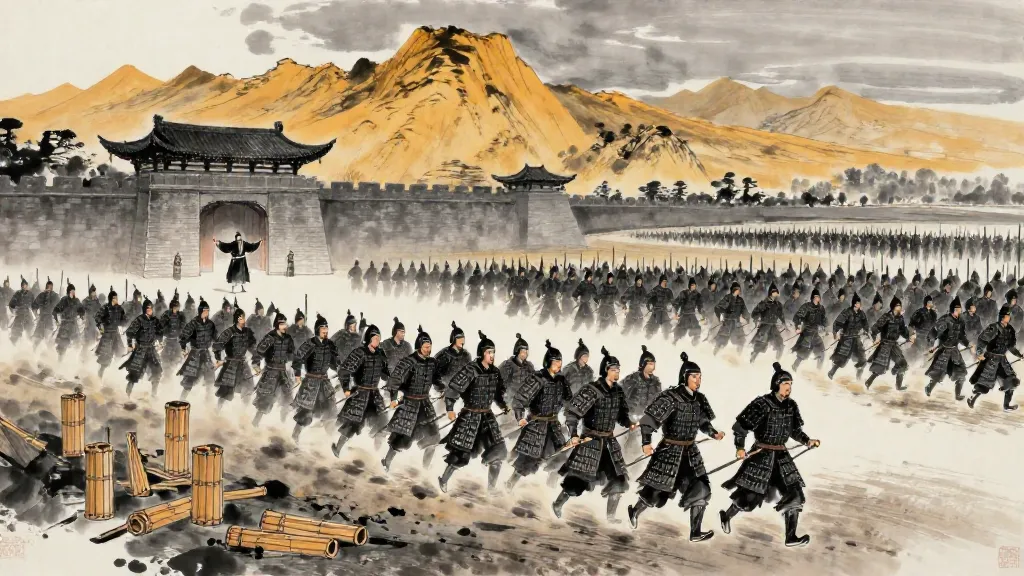
臣聞:天下陰燕陽魏,連荊固齊,收韓而成從,將西面以與秦強為難。臣竊笑之。世有三亡,而天下得之,其此之謂乎!臣聞之曰:"以亂攻治者亡,以邪攻正者亡,以逆攻順者亡"。今天下之府庫不盈,囷倉空虛,悉其士民,張軍數十百萬,其頓首戴羽為將軍斷死於前不至千人,皆以言死。白刃在前,斧鑕在後,而卻走不能死也,非其士民不能死也,上不能故也。言賞則不與,言罰則不行,賞罰不信,故士民不死也。今秦出號令而行賞罰,有功無功相事也。出其父母懷衽之中,生未嘗見寇耳。聞戰,頓足徒裼,犯白刃,蹈爐炭,斷死於前者皆是也。夫斷死與斷生者不同,而民為之者,是貴奮死也。夫一人奮死可以對十,十可以對百,百可以千,千可以對萬,萬可以克天下矣。今秦地折長補短,方數千里,名師數十百萬。秦之號令賞罰,地形利害,天下莫若也。以此與天下,天下不足兼而有也。是故秦戰未嘗不克,攻未嘗不取,所當未嘗不破,開地數千里,此其大功也。然而兵甲頓,士民病,蓄積索,田疇荒,囷倉虛,四鄰諸侯不服,霸王之名不成。此無異故,其謀臣皆不盡其忠也。

I have heard that All-Under-Heaven is secretly courting Yan, openly courting Wei, linking with Chu, cementing ties with Qi, and drawing in Han to form the Vertical Alliance, with the intent of turning westward to challenge mighty Qin. I cannot help but laugh at this. There are three paths to ruin in the world, and the allied states have taken every one of them. As the saying goes: "Those who attack order with disorder perish; those who attack righteousness with depravity perish; those who attack the compliant with the rebellious perish."

Today, the treasuries of the allied states are not full, their granaries stand empty. They conscript all their people and muster armies numbering in the millions, yet among those who bow their heads and wear feathered caps as generals, not even a thousand are truly resolved to die in the front lines -- they merely talk of dying. With bare blades before them and executioners' axes behind them, they still turn and flee, unable to face death. It is not that their soldiers and people cannot die; it is that their rulers cannot inspire them to do so. They promise rewards but do not deliver; they threaten punishments but do not carry them out. When rewards and punishments lack credibility, soldiers and people will not fight to the death.

Now Qin issues orders and enforces rewards and punishments: the meritorious and the unmeritorious are treated accordingly. Its people, brought forth from their parents' bosoms, have never in their lives even seen an enemy. Yet when they hear of battle, they stamp their feet, bare their arms, charge into naked blades and tread upon burning coals -- all resolved to die in the front lines. Choosing certain death over choosing life: the difference could not be greater, yet the people embrace it, because they prize the honor of fighting to the death. One man resolved to die can stand against ten; ten against a hundred; a hundred against a thousand; a thousand against ten thousand; and ten thousand can conquer All-Under-Heaven.

Today, Qin's territory, trimming the long sides to fill the short, measures several thousand li on each side, with renowned armies numbering in the millions. Qin's system of orders, rewards, and punishments, and the advantages of its terrain -- nothing under Heaven compares. With these, to contend against All-Under-Heaven: All-Under-Heaven is not enough to annex and possess. Thus Qin has never fought without conquering, never attacked without taking, never faced an enemy without breaking them, opening up thousands of li of territory. These are great achievements indeed.

And yet the armor and weapons are worn out, the soldiers and people are exhausted, the stores are depleted, the fields lie fallow, the granaries stand empty, the neighboring lords do not submit, and the name of hegemon-king remains unachieved. There is no other reason for this: Qin's counselors have none of them given their full loyalty.
Notes

1context

The Vertical Alliance (從/合縱) was the anti-Qin coalition strategy attributed to Su Qin, linking the six states running north-south (Yan, Zhao, Han, Wei, Qi, Chu) against Qin in the west. The Horizontal Alliance (連橫) was the pro-Qin counter-strategy attributed to Zhang Yi.

2translation

陰燕陽魏: literally 'secretly [with] Yan, openly [with] Wei.' This captures the dual diplomatic strategy of the anti-Qin alliance -- some partners courted in secret, others openly.

3translation

荊 (Jing) is an older name for the state of Chu (楚). In this text it is used interchangeably.

4context

The passage contrasts Qin's strict system of rewards and punishments (法家/Legalist governance) with the empty promises of the other states. This is a core Legalist argument: institutional credibility, not personal virtue, produces military strength.

5translation

霸王 (hegemon-king): the supreme status combining military hegemony (霸) with kingly virtue (王). This term represents the ultimate political achievement in Warring States political thought.

失霸王之道一:不滅楚

First Lost Opportunity: Failure to Annihilate Chu

臣敢言之:往者齊南破荊,東破宋,西服秦,北破燕,中使韓、魏,土地廣而兵強,戰克攻取,詔令天下。齊之清濟濁河,足以為限;長城巨防,足以為塞。齊,五戰之國也,一戰不克而無齊。由此觀之,夫戰者,萬乘之存亡也。且聞之曰:"削跡無遺根,無與禍鄰,禍乃不存。"秦與荊人戰,大破荊,襲郢,取洞庭、五湖、江南,荊王君臣亡走,東服於陳。當此時也,隨荊以兵,則荊可舉;荊可舉,則民足貪也,地足利也,東以弱齊、燕,中以凌三晉。然則是一舉而霸王之名可成也,四鄰諸侯可朝也,而謀臣不為,引軍而退,復與荊人為和。令荊人得收亡國,聚散民,立社稷主,置宗廟,令率天下西面以與秦為難。此固以失霸王之道一矣。

I dare to state my case. In the past, Qi broke Chu in the south, broke Song in the east, subdued Qin in the west, broke Yan in the north, and made Han and Wei serve it in the center. Its territory was vast and its armies strong; it conquered in battle and took what it attacked, issuing commands to All-Under-Heaven. The clear Ji River and the turbid Yellow River were sufficient as boundaries; the Great Wall and massive ramparts were sufficient as barriers. Yet Qi was a state that had fought five wars, and after losing just one, there was no more Qi. From this we can see: for a state of ten thousand chariots, war is a matter of survival or extinction.

Moreover, the saying goes: "When cutting down a tree, leave no roots behind; do not dwell beside misfortune, and misfortune will not exist." Qin fought with Chu, dealt Chu a devastating defeat, raided Ying, and seized the Dongting, the Five Lakes, and all the territory south of the Yangtze. The king and ministers of Chu fled east and submitted at Chen. At that moment, had Qin pursued Chu with its army, Chu could have been taken entirely. With Chu taken, its people could have been absorbed and its land exploited. In the east, this would have weakened Qi and Yan; in the center, it would have dominated the Three Jin. Thus in a single stroke, the name of hegemon-king could have been achieved and the neighboring lords could have been made to pay court.

But the counselors did not act. They withdrew the army and made peace with Chu once again. They allowed the people of Chu to recover their lost state, reassemble their scattered people, establish a new lord over the altars of soil and grain, and restore the ancestral temples, so that Chu could lead All-Under-Heaven westward to oppose Qin. This was the first time the path to hegemon-king was lost.

Notes

1context

The reference to Qi's rise and sudden fall alludes to King Min of Qi (齊湣王, r. 314-284 BC), whose aggressive expansion provoked a coalition of five states led by Yan's general Yue Yi in 284 BC. Qi was nearly destroyed, reduced to just two cities before its eventual recovery.

2person白起Bai Qi

The Qin general who captured Ying (郢), the Chu capital, in 278 BC was Bai Qi (白起), one of the most celebrated military commanders of the Warring States.

3placeYing

Ying (郢) was the capital of Chu, located near modern Jingzhou (荊州), Hubei province. After its fall in 278 BC, Chu relocated its capital eastward to Chen (陳), near modern Huaiyang (淮陽), Henan province.

4context

The Three Jin (三晉) refers to the three successor states of Jin: Han (韓), Wei (魏), and Zhao (趙). The original state of Jin was partitioned among these three noble houses in 403 BC.

5translation

社稷 (altars of soil and grain) is the standard synecdoche for the state itself. 'Establishing a lord over the altars of soil and grain' means reconstituting the state with a new ruler.

失霸王之道二:不滅魏

Second Lost Opportunity: Failure to Annihilate Wei

天下又比周而軍華下,大王以詔破之,兵至梁郭下。圍梁數旬,則梁可拔;拔梁,則魏可舉;舉魏,則荊、趙之意絕;荊、趙之意絕,則趙危;趙危而荊狐疑;東以弱齊、燕,中以凌三晉。然則是一舉而霸王之名可成也,四鄰諸侯可朝也,而謀臣不為,引軍而退,復與魏氏為和。令魏氏反收亡國,聚散民,立社稷主,置宗廟,令率天下西面以與秦為難。此固以失霸王之道二矣。前者穰侯之治秦也,用一國之兵而欲以成兩國之功,是故兵終身暴露於外,士民疲病於內,霸王之名不成。此固以失霸王之道三矣。

Then All-Under-Heaven allied together and encamped at Hua. Your Majesty by royal command defeated them, and the army reached the outer wall of Daliang. Had they besieged Daliang for a few more weeks, it could have been taken. With Daliang taken, Wei could have been annexed. With Wei annexed, the resolve of Chu and Zhao would have been broken. With their resolve broken, Zhao would be endangered; with Zhao endangered, Chu would waver in indecision. In the east, this would have weakened Qi and Yan; in the center, it would have dominated the Three Jin. Thus in a single stroke, the name of hegemon-king could have been achieved and the neighboring lords could have been made to pay court.

But the counselors did not act. They withdrew the army and made peace with Wei once again. They allowed Wei to recover its lost territories, reassemble its scattered people, establish a new lord over the altars of soil and grain, and restore the ancestral temples, so that Wei could lead All-Under-Heaven westward to oppose Qin. This was the second time the path to hegemon-king was lost.

Previously, when the Marquis of Rang governed Qin, he used one state's army yet tried to achieve the work of two states. As a result, the troops were exposed in the field their entire lives, while soldiers and people were exhausted at home. The name of hegemon-king was not achieved. This was the third time the path to hegemon-king was lost.

Notes

1place華陽Huayang

Hua (華) likely refers to Huayang (華陽), near modern Zhengzhou, Henan. The battle of Huayang (273 BC) was a major Qin victory over the allied forces of Wei and Zhao.

2place大梁Daliang

Daliang (梁/大梁) was the capital of Wei, located at modern Kaifeng (開封), Henan province. 'Liang' and 'Wei' are often used interchangeably because the state relocated its capital to Daliang in 364 BC.

3person穰侯 (魏冉)Rang Hou (Wei Ran)

The Marquis of Rang (穰侯) was Wei Ran (魏冉, d. 265 BC), maternal uncle and chief minister of King Zhaoxiang of Qin. He pursued aggressive but strategically unfocused campaigns, enriching his personal fief of Tao (陶) rather than consolidating Qin's position. He was eventually dismissed through the arguments of Fan Sui.

失霸王之道三:長平之後不滅趙

Third Lost Opportunity: Failure to Annihilate Zhao after Changping

趙氏,中央之國也,雜民所居也,其民輕而難用也。號令不治,賞罰不信,地形不便,下不能盡其民力。彼固亡國之形也,而不憂民萌,悉其士民軍於長平之下,以爭韓上黨。大王以詔破之,拔武安。當是時也,趙氏上下不相親也,貴賤不相信也。然則邯鄲不守。拔邯鄲,管山東河間,引軍而去,西攻修武,逾華,絳代、上黨。代四十六縣,上黨七十縣,不用一領甲,不苦一士民,此皆秦有也。以代、上黨不戰而畢為秦矣,東陽、河外不戰而畢反為齊矣,中山、呼沲以北不戰而畢為燕矣。然則是趙舉,趙舉則韓亡,韓亡則荊、魏不能獨立,荊、魏不能獨立,則是一舉而壞韓、蠹魏、拔荊,東以弱齊、燕,決白馬之口以沃魏氏,是一舉而三晉亡,從者敗也。大王垂拱以須之,天下編隨而服矣,霸王之名可成。而謀臣不為,引軍而退,復與趙氏為和。

Zhao is a state at the center of the realm, inhabited by mixed peoples, whose populace is flighty and difficult to employ. Its commands are not well administered, its rewards and punishments lack credibility, its terrain is disadvantageous, and its rulers cannot fully harness the strength of their people. It bears all the marks of a doomed state. Yet without concern for its people, Zhao mustered all its soldiers and civilians to encamp at Changping, contending for the Shangdang territory of Han. Your Majesty by royal command defeated them and took Wu'an.

At that time, the upper and lower ranks of Zhao were estranged, and the noble and the common did not trust one another. Handan therefore could not have held. Had Qin taken Handan, controlled the territory east of the mountains and between the rivers, then marched west to attack Xiuwu, crossed the Hua Mountains, and subdued Dai and Shangdang -- Dai's forty-six districts and Shangdang's seventy districts would have become Qin's without donning a single suit of armor or troubling a single soldier. Dai and Shangdang would have fallen to Qin without a fight; Dongyang and the lands beyond the Yellow River would have reverted to Qi without a fight; Zhongshan and the territory north of the Hutuo River would have fallen to Yan without a fight.

With Zhao thus annexed, Han would perish. With Han gone, Chu and Wei could not stand alone. With Chu and Wei unable to stand, then in a single stroke Han would be ruined, Wei would be hollowed out, Chu would be uprooted, Qi and Yan would be weakened in the east, and the breach at Baima could flood Wei's lands. In a single stroke, the Three Jin would be destroyed and the Vertical Alliance defeated. Your Majesty could have sat with arms folded, waiting, while All-Under-Heaven fell into line and submitted. The name of hegemon-king could have been achieved.

But the counselors did not act. They withdrew the army and made peace with Zhao once again.

Notes

1context

The Battle of Changping (長平之戰, 260 BC) was the decisive engagement in which Qin general Bai Qi annihilated the Zhao army. According to historical accounts, over 400,000 Zhao prisoners of war were executed after the battle. It was one of the bloodiest battles in ancient Chinese history.

2place上黨Shangdang

Shangdang (上黨) was a strategic highland region in modern southeastern Shanxi province. Its defection from Han to Zhao was the proximate cause of the Changping campaign.

3place邯鄲Handan

Handan (邯鄲) was the capital of Zhao, located in modern Handan, Hebei province.

4placeDai

Dai (代) was a region in northern Zhao (modern northern Shanxi and Hebei). Zhongshan (中山) was a former state in central Hebei, conquered by Zhao in 296 BC. The Hutuo River (呼沲/滹沱) flows through northern Hebei.

5place白馬Baima

Baima (白馬, 'White Horse') was a strategic point on the Yellow River near modern Hua County (滑縣), Henan. Breaching the dike here would flood Wei's low-lying capital region around Daliang.

6translation

垂拱 ('arms folded and robes hanging down') is an idiom for effortless rule -- governing without having to exert oneself, because the strategic situation does all the work.

天下量秦之力

All-Under-Heaven Takes the Measure of Qin

夫以大王之明,秦兵之強,棄霸王之業,地曾不可得,乃取欺於亡國。是謀臣之拙也。且夫趙當亡而不亡,秦當霸而不霸,天下固以量秦之謀臣一矣。乃復悉士卒以攻邯鄲,不能拔也,棄甲兵弩,戰竦而卻,天下固已量秦力二矣。軍乃引而復,並於孚下,大王又並軍而至,與戰不能克之也,又不能反,軍罷而去,天下固量秦力三矣。內者量吾謀臣,外者極吾兵力。由是觀之,臣以為天下之從,幾不能矣。內者,吾甲兵頓,士民病,蓄積索,田疇荒,囷倉虛;外者,天下皆比意甚固。願大王有以慮之也。

With Your Majesty's brilliance and Qin's military power, you abandoned the enterprise of hegemon-king, failed even to gain territory, and ended up being deceived by a state on the verge of ruin. This is the incompetence of your counselors. When Zhao should have perished but did not, and Qin should have achieved hegemony but did not -- that was the first time All-Under-Heaven took the measure of Qin's counselors.

Then Qin mustered all its soldiers to attack Handan but could not take it, abandoning armor, weapons, and crossbows, trembling in battle and retreating. That was the second time All-Under-Heaven took the measure of Qin's strength.

The army then withdrew and regrouped at Fu. Your Majesty once again combined forces and arrived, but engaged the enemy and could not overcome them, nor could the army return -- it disbanded and departed. That was the third time All-Under-Heaven took the measure of Qin's strength.

Internally, they have assessed our counselors; externally, they have tested the limits of our military power. From this perspective, I believe the Vertical Alliance against us can hardly be broken. Internally, our armor and weapons are worn out, our soldiers and people are exhausted, our stores are depleted, our fields lie fallow, our granaries stand empty. Externally, all the states under Heaven are united with great determination. I beg Your Majesty to give this careful thought.

Notes

1context

The failed siege of Handan (259-257 BC) was a major setback for Qin. After the Changping victory, Qin attempted to take the Zhao capital but was repelled by a combined relief force including Wei's Lord Xinling (信陵君) and Chu's Lord Chunshen (春申君). This humiliation demonstrated the limits of Qin's military reach.

2place

Fu (孚/汾) is uncertain; likely a location where Qin forces regrouped after the Handan debacle, possibly near the Fen River area in modern Shanxi.

3translation

幾 here means 'nearly' or 'almost' -- the speaker concedes that the Vertical Alliance has become very difficult (though not impossible) to break, adding urgency to the plea.

以古鑒今:紂與知伯

Lessons from the Past: Zhou of Shang and Zhibo

且臣聞之曰:"戰戰慄栗,日慎一日,苟慎其道,天下可有。"何以知其然也?昔者紂為天子,將率天下甲兵百萬,左飲於淇溪,右飲於洹溪,淇水竭而洹水不流,以與周武王為難。武王將素甲三千,戰一日,而破紂之國,禽其身,據其地而有其民,天下莫傷。知伯率三國之眾以攻趙襄主於晉陽,決水而灌之三月,城且拔矣,襄主鑽龜筮占兆,以視利害,何國可降。乃使其臣張孟談。於是乃潛行而出,反知伯之約,得兩國之眾,以攻知伯,禽其身,以復襄主之初。

Moreover, I have heard it said: "Trembling with fear, more cautious with each passing day -- if one is careful in one's course, All-Under-Heaven can be possessed." How do I know this to be so?

In former times, Zhou of Shang was Son of Heaven, commanding the armored soldiers of All-Under-Heaven, a million strong. When his army's horses drank on the left from the Qi River and on the right from the Huan River, the Qi ran dry and the Huan ceased to flow. With this force he opposed King Wu of Zhou. Yet King Wu led a mere three thousand in plain armor, fought for a single day, destroyed Zhou's state, captured his person, seized his territory and took his people, and none under Heaven mourned.

Zhibo led the combined forces of three states to attack Lord Xiang of Zhao at Jinyang. He diverted the river to flood the city for three months, and the city was on the verge of falling. Lord Xiang consulted the tortoise shell and yarrow stalks to divine his fortunes and determine to which state he might surrender. He then dispatched his minister Zhang Mengtian, who slipped out of the city in secret, reversed Zhibo's alliance, won over the armies of the two other states, and attacked Zhibo, capturing his person and restoring Lord Xiang's original position.

Notes

1personZhou

Zhou of Shang (紂), also known as King Zhou (商紂王), was the last ruler of the Shang dynasty (r. c. 1075-1046 BC). He is the archetypal tyrant in Chinese historiography.

2person周武王Zhou Wu Wang

King Wu of Zhou (周武王, r. c. 1046-1043 BC) overthrew the Shang dynasty at the Battle of Muye. The 'three thousand in plain armor' is a conventional number emphasizing the smallness of his force relative to the Shang army.

3person知伯Zhi Bo

Zhibo (知伯/智伯, d. 453 BC) was the head of the Zhi clan, the most powerful of the four noble houses of Jin. His attempt to destroy the Zhao house led to a reversal in which the Zhao, Han, and Wei houses partitioned Jin among themselves -- the event that conventionally marks the beginning of the Warring States period.

4person趙襄子Zhao Xiangzi

Lord Xiang of Zhao (趙襄子, d. 425 BC) successfully resisted Zhibo's siege of Jinyang by turning Zhibo's allies against him.

5person張孟談Zhang Mengtan

Zhang Mengtian (張孟談) was the minister of Zhao who secretly left the besieged city of Jinyang and persuaded the Han and Wei houses to betray Zhibo.

6place晉陽Jinyang

Jinyang (晉陽) was the stronghold of the Zhao house, located near modern Taiyuan (太原), Shanxi province.

臣之策略與誓言

The Minister's Strategy and Pledge

今秦地折長補短,方數千里,名師數十百萬。秦國之號令賞罰,地形利害,天下莫如也。此與天下,可兼而有也。臣昧死願望見大王,言所以破天下之從,舉趙,亡韓,臣荊、魏,親齊、燕,以成霸王之名,朝四鄰諸侯之道。大王誠聽其說,一舉而天下之從不破,趙不舉,韓不亡,荊、魏不臣,齊、燕不北,霸王之名不成,四鄰諸侯不朝,大王斬臣以徇國,以為王謀不忠者也。

Today Qin's territory, trimming the long sides to fill the short, measures several thousand li on each side, with renowned armies numbering in the millions. Qin's system of orders, rewards, and punishments, and the advantages of its terrain -- nothing under Heaven compares. With these, it is possible to annex and possess All-Under-Heaven.

I risk death to request an audience with Your Majesty, to present the strategy for breaking the Vertical Alliance of All-Under-Heaven, annexing Zhao, destroying Han, making vassals of Chu and Wei, winning over Qi and Yan, and thereby achieving the name of hegemon-king and making the neighboring lords pay court.

If Your Majesty truly heeds this counsel, and yet in a single campaign the Vertical Alliance is not broken, Zhao is not annexed, Han does not perish, Chu and Wei do not submit, Qi and Yan do not yield, the name of hegemon-king is not achieved, and the neighboring lords do not pay court -- then let Your Majesty behead me and parade my corpse through the state, as a warning to those who counsel the king without loyalty.

Notes

1translation

昧死 ('risking death in darkness') is a formulaic expression of humility used when a subject presumes to address the ruler on matters of great import.

2translation

徇國 means to parade the executed person's body through the state as a public warning. The speaker stakes his life on the success of his strategy -- a powerful rhetorical device to demonstrate sincerity.

3context

The authorship of this chapter is disputed. Some scholars attribute it to Han Fei himself, while others suggest it was written by an earlier persuader (perhaps Zhang Yi or Fan Sui) and later collected into the Hanfeizi. The historical events referenced (Changping, Handan) date to the reign of King Zhaoxiang of Qin (r. 306-251 BC), before Han Fei's active period.

Edition & Source

Text
《韓非子》 Hanfeizi
Edition
中華古詩文古書籍網 transcription, 《四部叢刊》本
Commentary
Han Fei (韓非), Warring States period