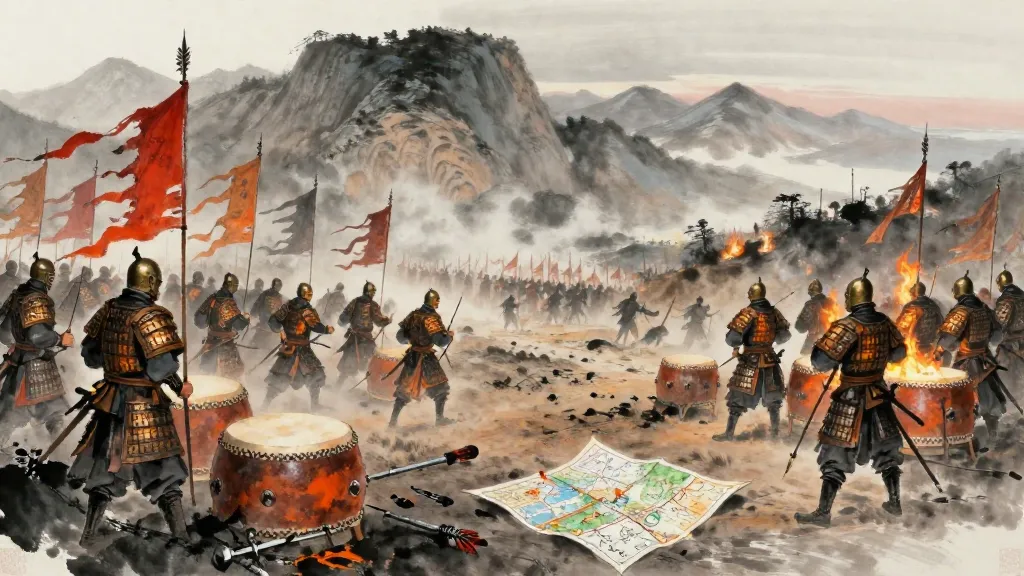
上賢 (Honoring the Worthy) — Chinese ink painting

六韜 Liutao · Chapter 9

上賢

Honoring the Worthy

View:

六賊七害

The Six Parasites and Seven Harms

文王問太公曰:「王人者,何上,何下,何取,何去,何禁,何止?」太公曰:「王人者,上賢,下不肖,取誠信,去詐偽,禁暴亂,止奢侈。故王人者,有六賊七害。」文王曰:「願聞其道。」

King Wen asked Taigong: 'For one who rules over men — what should he elevate, what should he lower, what should he adopt, what should he reject, what should he prohibit, what should he stop?' Taigong said: 'He who rules over men elevates the worthy and lowers the unworthy, adopts sincerity and trustworthiness, rejects fraud and deception, prohibits violence and disorder, and stops extravagance and excess. He who rules over men must beware of six parasites and seven harms.' King Wen said: 'I wish to hear about them.'

六賊

The Six Parasites

太公曰:「夫六賊者:一曰,臣有大作宮室池榭,游觀倡樂者,傷王之德。二曰,民有不事農桑,任氣遊俠,犯曆法禁,不從吏教者,傷王之化。三曰,臣有結朋黨,蔽賢智,障主明者,傷王之權。四曰,士有抗志高節,以為氣勢,外交諸侯,不重其主者,傷王之威。五曰,臣有輕爵位,賤有司,羞為上犯難者,傷功臣之勞。六曰,強宗侵奪,凌侮貧弱者,傷庶人之業。

Taigong said: 'The six parasites are these: First, ministers who build grand palaces, pools, and terraces, indulging in sightseeing and entertainment — they damage the king's virtue. Second, people who neglect farming and sericulture, who indulge in bravado and knight-errantry, who violate laws and prohibitions and refuse the instruction of officials — they damage the king's moral influence. Third, ministers who form factions, obstruct the wise, and block the ruler's clarity — they damage the king's authority. Fourth, scholars who flaunt lofty ambitions and proud integrity to build their own influence, who cultivate ties with foreign lords without respecting their own master — they damage the king's prestige. Fifth, ministers who despise rank and office, who look down on the established officials, and who are ashamed to face danger on the ruler's behalf — they damage the merit of loyal servants. Sixth, powerful clans who seize and plunder, who bully and humiliate the poor and weak — they damage the livelihood of the common people.'

七害

The Seven Harms

「七害者:一曰,無智略權謀,而以重賞尊爵之故,強勇輕戰,僥倖於外,王者慎勿使為將。二曰,有名無實,出入異言,掩善揚惡,進退為巧,王者慎勿與謀。三曰,朴其身躬,惡其衣服,語無為以求名,言無欲以求利,此偽人也,王者慎勿近。四曰,奇其冠帶,偉其衣服,博聞辯辭,虛論高議,以為容美,窮居靜處,而誹時俗,此奸人也,王者慎勿寵。五曰,讒佞苟得,以求官爵,果敢輕死,以貪祿秩,不圖大事,得利而動,以高談虛論,說於人主,王者慎勿使。六曰,為雕文刻鏤,技巧華飾,而傷農事,王者必禁之。七曰,偽方異技,巫蠱左道,不祥之言,幻惑良民,王者必止之。

The seven harms are these: First, those without wisdom, strategy, or tactical sense who, lured by heavy rewards and high rank, are recklessly brave and make light of battle, seeking lucky victories abroad — the king must never make them generals. Second, those who have reputation but no substance, who say different things coming and going, who conceal the good and broadcast the evil, who maneuver for advantage — the king must never consult with them. Third, those who make themselves appear plain in body and shabby in dress, who speak of non-action to seek fame and profess desirelessness to seek profit — these are frauds, and the king must never draw near them. Fourth, those who affect exotic caps and sashes, grand in their attire, who are broadly learned and rhetorically clever, who engage in empty lofty discourse to appear impressive, who live in poverty and seclusion while slandering the customs of the age — these are treacherous men, and the king must never favor them. Fifth, slanderers and flatterers who will do anything for gain, who seek office and rank, who are recklessly brave and make light of death out of greed for salary and position, who plan nothing great but move only for profit, who use lofty talk and empty arguments to ingratiate themselves with the ruler — the king must never employ them. Sixth, those who produce carved ornaments, intricate artistry, and lavish decorations that damage agriculture — the king must prohibit these. Seventh, those who practice false arts and strange techniques, sorcery and heterodox ways, who speak inauspicious words and bewitch the good people with illusions — the king must stop these.'
王者之道

The Way of the True King

「故民不盡力,非吾民也;士不誠信,非吾士也;臣不忠諫,非吾臣也;吏不平潔愛人,非吾吏也;相不能富國強兵,調和陰陽,以安萬乘之主,正群臣,定名實,明賞罰,樂萬民,非吾相也。夫王者之道如龍首,高居而遠望,深視而審聽。示其形,隱其情,若天之高不可極也,若淵之深不可測也。故可怒而不怒,奸臣乃作;可殺而不殺,大賊乃發。兵勢不行,敵國乃強。」文王曰:「善哉。」

Therefore, people who do not exert themselves fully are not truly my people. Scholars who are not sincere and trustworthy are not truly my scholars. Ministers who are not loyal in their counsel are not truly my ministers. Officials who are not fair, incorruptible, and caring toward the people are not truly my officials. A chancellor who cannot enrich the state, strengthen the army, harmonize yin and yang, secure the ruler of ten thousand chariots, rectify the ministers, match names to realities, clarify rewards and punishments, and bring joy to the myriad people — he is not truly my chancellor. The way of the true king is like a dragon's head: dwelling on high and gazing far, looking deep and listening carefully. He reveals his form but conceals his feelings — like the height of heaven that cannot be reached, like the depth of an abyss that cannot be fathomed. Therefore, when anger is warranted but he does not show anger, treacherous ministers will arise. When killing is warranted but he does not kill, great enemies will emerge. When military force is not exercised, rival states grow strong.' King Wen said: 'Excellent!'

Edition & Source

Text
《六韜》 Liutao
Edition
中華古詩文古書籍網 transcription
Commentary
Traditional military commentaries