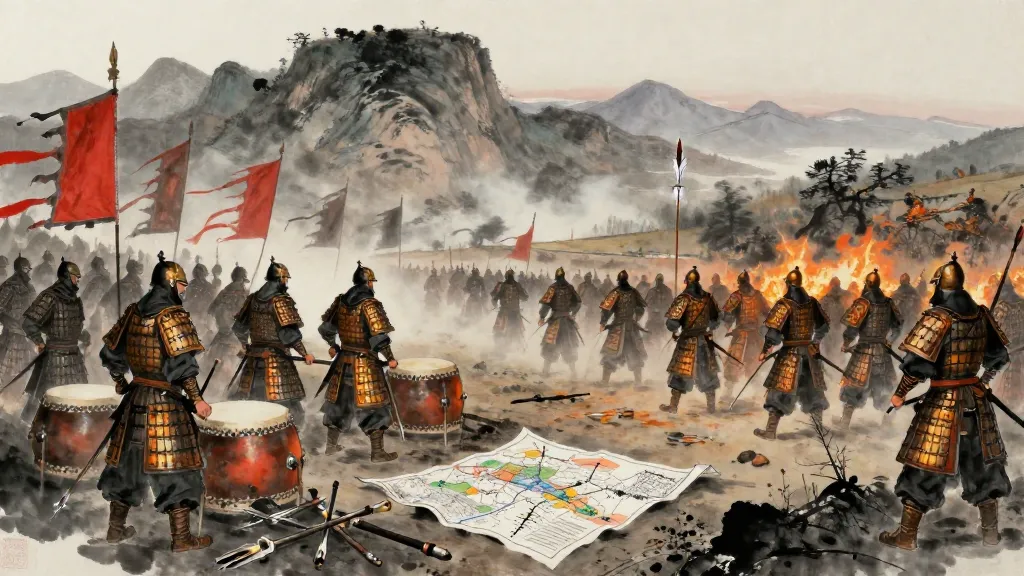
兵道莫過乎一
The Way of War Is Nothing Beyond Unity
武王問太公曰:「兵道如何?」太公曰:「凡兵之道莫過乎一,一者能獨往獨來。黃帝曰:『一者階於道,幾於神』。用之在於機,顯之在於勢,成之在於君。故聖王號兵為兇器,不得已而用之。今商王知存而不知亡,知樂而不知殃,夫存者非存,在於慮亡;樂者非樂,在於慮殃。今王已慮其源,豈憂其流乎!」
King Wu asked Taigong: 'What is the way of war?' Taigong said: 'The way of war is nothing beyond unity. Unity is what enables one to go and come alone. The Yellow Emperor said: "Unity is the step toward the Way, the approach to the divine." Its application lies in seizing the critical moment, its display lies in strategic momentum, its accomplishment lies in the ruler. Therefore the sage-kings called weapons instruments of ill omen, to be used only when unavoidable. Now the king of Shang knows how to survive but not how to perish; he knows pleasure but not calamity. True survival does not lie in mere survival — it lies in planning for destruction. True pleasure does not lie in mere pleasure — it lies in anticipating calamity. Now that the king has already thought about the source, why worry about the stream?'
Notes
King Wu of Zhou (周武王, personal name Ji Fa 姬發, r. c. 1046–1043 BC) was the son of King Wen who completed the conquest of the Shang dynasty at the Battle of Muye, establishing Zhou rule over the Central Plains.
The Yellow Emperor (黃帝, Huáng Dì) was the legendary progenitor of Chinese civilization, credited with the invention of numerous arts including military strategy. Many military texts are attributed to or cite him as an authority.