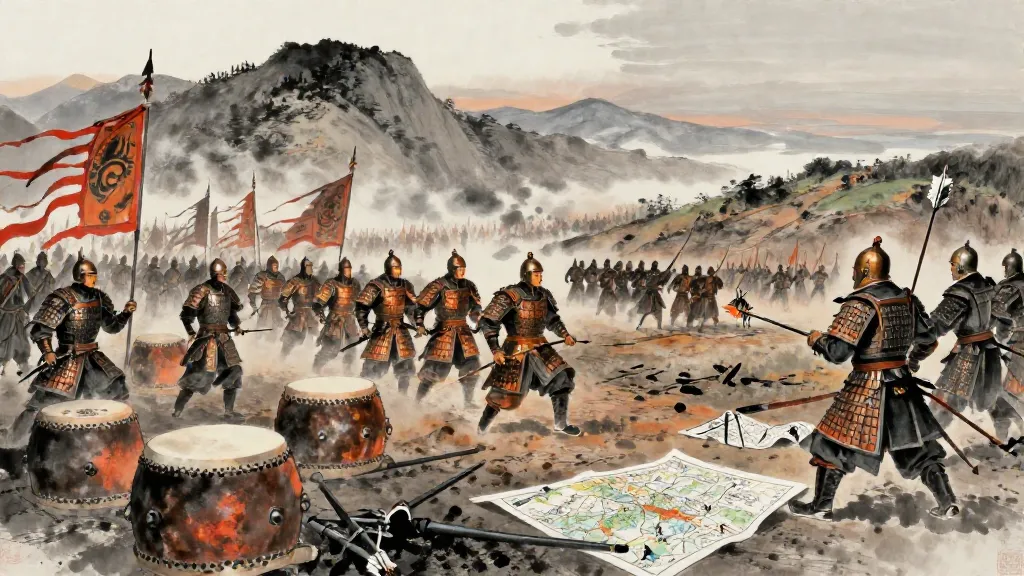
戰步 (Infantry Warfare) — Chinese ink painting

六韜 Liutao · Chapter 60

戰步

Infantry Warfare

View:

步兵戰車騎

Infantry Fighting Chariots and Cavalry

武王問太公曰:「步兵與車、騎戰奈何?」太公曰:「步兵與車、騎戰者,必依丘陵、險阻,長兵強弩居前,短兵弱弩居後,更發更止,敵之車騎雖眾而至,堅陣疾戰,材士強弩,以備我後。」

King Wu asked Taigong: "How should infantry fight against chariots and cavalry?" Taigong said: "When infantry fights chariots and cavalry, it must rely on hills, ridges, and natural obstacles. Place long weapons and powerful crossbows in front, short weapons and lighter crossbows behind. Fire and halt in alternation. Even if the enemy's chariots and cavalry arrive in great numbers, hold the formation firm and fight with speed. Station elite crossbowmen to guard our rear."

無險可依

When There Is No Terrain to Rely On

武王曰:「吾無丘陵,又無險阻,敵人之至,既眾且武,車騎翼我兩旁,獵我前後;吾三軍恐怖,亂敗而走,為之奈何?」太公曰:「令我士卒為行馬、木蒺藜,置牛馬隊伍,為四武沖陣。望敵車騎將來,均置蒺藜,掘地匝後,廣深五尺,名曰『命籠』。人操行馬進步,闌車以為壘,推而前後,立而為屯,材士強弩,備我左右,然後令我三軍,皆疾戰而不解。」武王曰:「善哉!」

King Wu said: "If I have no hills or ridges and no natural obstacles, and the enemy arrives in great numbers, fierce and martial, with chariots and cavalry flanking us on both sides and sweeping our front and rear — our three armies are terrified and scatter in a rout. What should be done?" Taigong said: "Order our soldiers to construct mobile barriers and wooden caltrops. Arrange cattle and horse teams and form the Four Martial Assault Formation. When the enemy's chariots and cavalry are approaching, spread caltrops evenly and dig pits all around the rear, five feet wide and five feet deep, called 'fate cages.' Men advance on foot pushing mobile barriers, using wagons as ramparts, pushing them forward and back, standing them as garrisons. Station elite crossbowmen to guard our flanks. Then order our three armies to fight with fury without letting up." King Wu said: "Excellent!"

Notes

1context

The 'fate cage' (命籠) pit trap, combined with caltrops and mobile barriers, represents an early form of field fortification designed to neutralize cavalry's mobility advantage on open terrain. This combined-arms approach — obstacles, projectile fire, and mobile defensive structures — anticipates defensive doctrines used throughout Chinese military history.

Edition & Source

Text
《六韜》 Liutao
Edition
中華古詩文古書籍網 transcription
Commentary
Traditional military commentaries