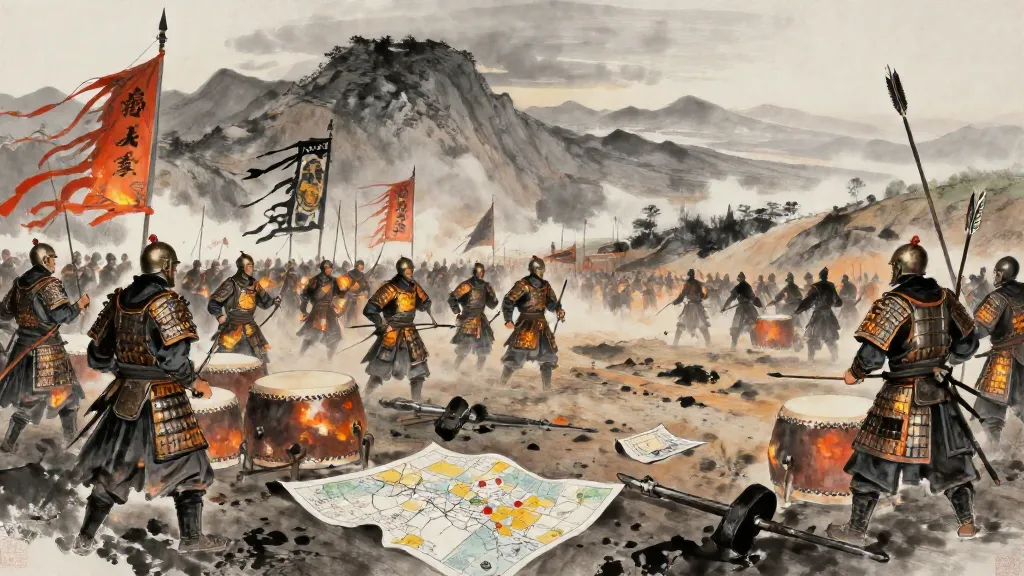
騎之十勝
The Ten Victories of Cavalry
武王問太公曰:「戰騎奈何?」太公曰:「騎有十勝、九敗。」武王曰:「十勝奈何?」太公曰:「敵人始至,行陣未定,前後不屬,陷其前騎,擊其左右,敵人必走;敵人行陣整齊堅固,士卒欲鬥,吾騎翼而勿去,或馳而往,或馳而來,其疾如風,其暴如雷,白晝如昏,數更旌旗,變易衣服,其軍可克;敵人行陣不固,士卒不鬥,薄其前後,獵其左右,翼而擊之,敵人必懼;敵人暮欲歸舍,三軍恐駭,翼其兩旁,疾擊其後,薄其壘口,無使得入,敵人必敗。敵人無險阻保固,深入長驅,絕其糧路,敵人必飢;地平而易,四面見敵,車騎陷之,敵人必亂;敵人奔走,士卒散亂,或翼其兩旁,或掩其前後,其將可擒;敵人暮返,其兵甚眾,其行陣必亂;令我騎十而為隊,百而為屯,車五而為聚,十而為群,多設旌旗,雜以強弩;或擊其兩旁,或絕其前後,敵將可虜。此騎之十勝也。」
King Wu asked Taigong: "What about cavalry warfare?" Taigong said: "Cavalry has ten victories and nine defeats." King Wu said: "What are the ten victories?" Taigong said: "When the enemy has just arrived, their formation not yet settled, front and rear disconnected — charge their lead cavalry and strike their flanks, the enemy will certainly flee. When the enemy's formation is orderly and solid and their soldiers eager to fight — our cavalry should wing out without departing, galloping back and forth, swift as wind, violent as thunder, turning broad daylight into confusion, frequently changing banners and altering insignia — their army can be overcome. When the enemy's formation is unsteady and their soldiers will not fight — press their front and rear, sweep their flanks, wing around and strike them, the enemy will certainly be terrified. When the enemy wishes to return to camp at dusk and the three armies are anxious — wing their flanks, strike hard at the rear, press their camp entrance and do not let them enter, the enemy will certainly be defeated. When the enemy has no natural stronghold and we drive deep, cutting their supply route — the enemy will certainly starve. When the ground is flat and open, the enemy visible from all sides — chariots and cavalry charge them, the enemy will certainly be thrown into confusion. When the enemy is in flight and their soldiers scattered — wing their flanks or envelop their front and rear, their general can be captured. When the enemy returns at dusk with very large numbers, their march formation will inevitably be disordered — form our cavalry into squads of ten, garrisons of a hundred, chariot clusters of five, and groups of ten, set many banners and intersperse powerful crossbows, then strike their flanks or cut their front and rear — the enemy general can be taken prisoner. These are the ten victories of cavalry."