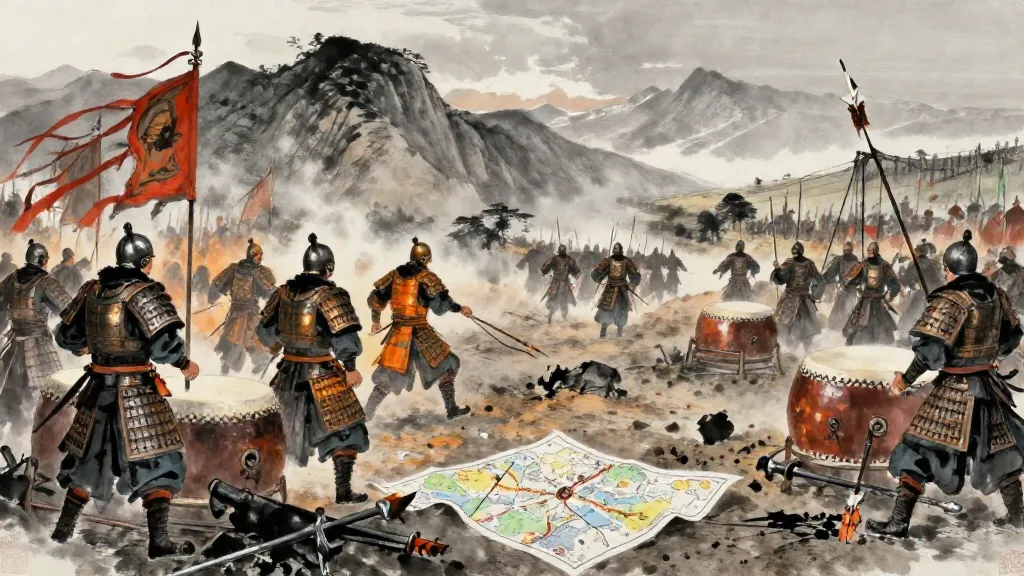
盡心下 (Fully Developing the Heart, Part II) — Chinese ink painting

孟子 Mengzi · Chapter 14

盡心下

Fully Developing the Heart, Part II

View:

不仁哉梁惠王也

How Unbenevolent Was King Hui of Liang!

孟子曰:"不仁哉,梁惠王也!仁者以其所愛及其所不愛,不仁者以其所不愛及其所愛。"公孫丑曰:"何謂也?"

"梁惠王以土地之故,糜爛其民而戰之,大敗,將復之,恐不能勝,故驅其所愛子弟以殉之,是之謂以其所不愛及其所愛也。"

Mencius said: “How unbenevolent was King Hui of Liang! The benevolent extend what they love to what they do not love; the unbenevolent extend what they do not love to what they love.” Gongsun Chou asked what this meant. Mencius said: “King Hui of Liang, for the sake of territory, ground up his people in war. Suffering a great defeat, he was about to try again, fearing he could not win, so he drove his beloved sons and brothers to die alongside them. This is extending what he does not love to what he loves.”

春秋無義戰

In the Spring and Autumn Period There Were No Righteous Wars

孟子曰:"春秋無義戰。彼善於此,則有之矣。征者上伐下也,敵國不相征也。"

Mencius said: “In the Spring and Autumn period there were no righteous wars. Some were better than others, but a true expedition is when the superior attacks the inferior. Equals do not campaign against each other.”

盡信書不如無書

To Fully Trust the Documents Would Be Worse Than Having No Documents

孟子曰:"盡信書,則不如無書。吾於武成,取二三策而已矣。仁人無敵於天下。以至仁伐至不仁,而何其血之流杵也?"

Mencius said: “To fully trust the Documents would be worse than having no Documents at all. From the Wu Cheng chapter I accept only two or three bamboo strips. A benevolent person has no enemies under heaven. When the supremely benevolent attacks the supremely unbenevolent, why should blood flow enough to float pestles?”

國君好仁天下無敵

If the Ruler Loves Benevolence, He Will Have No Enemies

孟子曰:"有人曰:'我善為陳,我善為戰。'大罪也。國君好仁,天下無敵焉。南面而征北狄怨,東面而征西夷怨。曰:'奚為後我?'武王之伐殷也,革車三百兩,虎賁三千人。王曰:'無畏!寧爾也,非敵百姓也。'若崩厥角稽首。征之為言正也,各欲正己也,焉用戰?"

Mencius said: “Someone who says ‘I am skilled at formations, I am skilled at warfare’ commits a great crime. If the ruler loves benevolence, he has no enemies in the realm. King Wu’s campaign against Yin used only three hundred war chariots and three thousand tiger warriors. He told the people: ‘Do not fear! I bring you peace, not enmity.’ And they bowed their heads to the ground. ‘Campaign’ means to correct. When each wishes to correct himself, what use is war?”

梓匠輪輿能與人規矩

The Carpenter Can Give Others Compass and Square

孟子曰:"梓匠輪輿,能與人規矩,不能使人巧。"

Mencius said: “The carpenter and wheelwright can give others compass and square, but cannot give them skill.”

舜之飯糗茹草也

Shun Ate Parched Grain and Wild Plants

孟子曰:"舜之飯糗茹草也,若將終身焉;及其為天子也,被袗衣,鼓琴,二女果,若固有之。"

Mencius said: “When Shun ate parched grain and wild plants, it was as if he would do so forever. When he became Son of Heaven, wearing embroidered robes, playing the lute, with Yao’s two daughters attending him, it was as if these had always been his.”

殺人親之重

The Gravity of Killing a Person’s Kin

孟子曰:"吾今而後知殺人親之重也:殺人之父,人亦殺其父;殺人之兄,人亦殺其兄。然則非自殺之也,一間耳。"

Mencius said: “Only now do I understand the gravity of killing another person’s kin. Kill someone’s father, and someone will kill yours. Kill someone’s brother, and someone will kill yours. You did not do it yourself, but you were only one step removed.”

古之為關將以御暴

The Passes of Antiquity Were Made to Stop Violence

孟子曰:"古之為關也,將以御暴。今之為關也,將以為暴。"

Mencius said: “The passes of antiquity were made to stop violence. The passes of today are made to commit violence.”

身不行道不行於妻子

If You Do Not Practice the Way, It Will Not Be Practiced Even by Your Wife and Children

孟子曰:"身不行道,不行於妻子;使人不以道,不能行於妻子。"

Mencius said: “If you yourself do not practice the Way, it will not prevail even with your wife and children. If you employ people not according to the Way, you cannot command even your wife and children.”

周於利者凶年不能殺

One Rich in Goodness Cannot Be Harmed by a Famine Year

孟子曰:"周於利者,凶年不能殺;周於德者,邪世不能亂。"

Mencius said: “One rich in goodness — a bad year cannot destroy him. One rich in virtue — a corrupt age cannot confuse him.”

好名之人能讓千乘之國

A Fame-Loving Person Can Yield a Thousand-Chariot State

孟子曰:"好名之人,能讓千乘之國;苟非其人,簞食豆羹見於色。"

Mencius said: “A fame-loving person can yield a state of a thousand chariots. But if he is not truly such a person, you can see resentment on his face over a basket of food or a bowl of soup.”

不信仁賢則國空虛

If the Worthy Are Not Trusted, the State Will Be Empty

孟子曰:"不信仁賢,則國空虛。無禮義,則上下亂。無政事,則財用不足。"

Mencius said: “If the benevolent and worthy are not trusted, the state will be empty. Without propriety and righteous conduct, superiors and inferiors will be in disorder. Without good governance, there will be insufficient revenue.”

不仁而得國者有之矣

An Unbenevolent Person May Win a State

孟子曰:"不仁而得國者,有之矣;不仁而得天下,未之有也。"

Mencius said: “An unbenevolent person may win a state — that has happened. But an unbenevolent person winning the whole realm — that has never happened.”

民為貴社稷次之君為輕

The People Are Most Important; the Altars of Soil and Grain Come Next; the Ruler Is Least Important

孟子曰:"民為貴,社稷次之,君為輕。是故得乎丘民而為天子,得乎天子為諸侯,得乎諸侯為大夫。諸侯危社稷,則變置。犧牲既成,粢盛既潔,祭祀以時,然而旱乾水溢,則變置社稷。"

Mencius said: “The people are most important; the altars of soil and grain come next; the ruler is least important. Therefore one who gains the trust of the common people becomes Son of Heaven. One who gains the trust of the Son of Heaven becomes a feudal lord. One who gains the trust of the feudal lord becomes a great officer. When a feudal lord endangers the altars of soil and grain, he is replaced. When the sacrificial victims are properly prepared and the grain offerings are clean, and sacrifices are performed on time, yet drought and floods still come — then the altars themselves are replaced.”

Notes

1context

This is perhaps the most politically revolutionary statement in the Mengzi. The hierarchy — people > state > ruler (民為貴,社稷次之,君為輕) — places popular welfare above the ruler’s interests and even above the state’s ritual institutions. It has been cited throughout Chinese history as a foundation for the legitimacy of revolution.

聖人百世之師也

The Sage Is a Teacher for a Hundred Generations

孟子曰:"聖人,百世之師也,伯夷、柳下惠是也。故聞伯夷之風者,頑夫廉,懦夫有立志;聞柳下惠之風者,薄夫敦,鄙夫寬。奮乎百世之上。百世之下,聞者莫不興起也。非聖人而能若是乎,而況於親炙之者乎?"

Mencius said: “The sage is a teacher for a hundred generations — Bo Yi and Liuxia Hui are examples. Those who hear of Bo Yi’s character are inspired: the stubborn become honest, the timid develop determination. Those who hear of Liuxia Hui’s character are inspired: the mean become generous, the narrow become liberal. They inspired people across a hundred generations. Could anyone but a sage do this? How much more those who were personally influenced by them!”

仁也者人也

Benevolence Is What Makes a Person Human

孟子曰:"仁也者,人也。合而言之,道也。"

Mencius said: “Benevolence is what makes a person human. When the two are combined, it is called the Way.”

孔子之去魯曰遲遲吾行也

When Confucius Left Lu, He Said: How Slowly I Travel!

孟子曰:"孔子之去魯,曰:'遲遲吾行也。'去父母國之道也。去齊,接淅而行,去他國之道也。"

Mencius said: “When Confucius left Lu, he said: ‘How slowly I travel!’ This is the way of leaving one’s homeland. When he left Qi, he took the rice from the steamer before it was done — this is the way of leaving another state.”

君子之厄於陳蔡

The Noble Person’s Hardship Between Chen and Cai

孟子曰:"君子之厄於陳蔡之閒,無上下之交也。"

Mencius said: “The noble person’s hardship between Chen and Cai occurred because he had no connections with those in power.”

稽大不理於口

Severely Criticized

貉稽曰:"稽大不理於口。"

孟子曰:"無傷也。士憎茲多口。詩云:'憂心悄悄,慍於群小。'孔子也。'肆不殄厥慍,亦不隕厥問。'文王也。"

Mo Ji said: “I am severely criticized.” Mencius said: “No harm in that. Scholars always invite much criticism. The Odes say: ‘My heart is troubled; I am resented by the petty crowd.’ This was Confucius. ‘He did not extinguish his resentment, nor did he lose his reputation.’ This was King Wen.”

以其昭昭使人昭昭

Using One’s Own Clarity to Enlighten Others

孟子曰:"賢者以其昭昭,使人昭昭;今以其昏昏,使人昭昭。"

Mencius said: “The worthy of old used their own clarity to make others clear. Today they use their own muddleness to try to make others clear.”

山徑之蹊間

A Mountain Trail

孟子謂高子曰:"山徑之蹊閒,介然用之而成路。為閒不用,則茅塞之矣。今茅塞子之心矣。"

Mencius said to Gao Zi: “A mountain trail: if used regularly, it becomes a path. If unused for a time, weeds block it. Now weeds are blocking your heart.”

禹之聲尚文王之聲

Yu’s Tones Were Superior to King Wen’s

高子曰:"禹之聲,尚文王之聲。"孟子曰:"何以言之?"曰:"以追蠡。"曰:"是奚足哉?城門之軌,兩馬之力與?"

Gao Zi said Yu’s music surpassed King Wen’s. Mencius asked why, and Gao Zi cited the worn bell-stand. Mencius replied: “Is that sufficient evidence? The ruts in a city gate — are they made by two horses’ strength?”

齊飢陳臻曰

The Qi Famine

齊飢。陳臻曰:"國人皆以夫子將復為發棠,殆不可復。"

孟子曰:"是為馮婦也。晉人有馮婦者,善搏虎,卒為善士。則之野,有眾逐虎。虎負嵎,莫之敢攖。望見馮婦,趨而迎之。馮婦攘臂下車。眾皆悅之,其為士者笑之。"

During a famine in Qi, Chen Zhen said: “Everyone thinks you, Master, will again request the opening of the Tang granary. Probably that cannot be done again.” Mencius said: “That would be to become a Feng Fu.” He told the story of Feng Fu, who had been a famous tiger-fighter, then became a gentleman — but when a crowd was chasing a tiger, Feng Fu rolled up his sleeves and jumped in. The crowd was pleased; the gentlemen laughed at him.

性也有命焉

Nature and Destiny

孟子曰:"口之於味也,目之於色也,耳之於聲也,鼻之於臭也,四肢之於安佚也,性也,有命焉,君子不謂性也。仁之於父子也,義之於君臣也,禮之於賓主也,智之於賢者也,聖人之於天道也,命也,有性焉,君子不謂命也。"

Mencius said: “The mouth’s relation to tastes, the eye’s to colors, the ear’s to sounds, the nose’s to smells, the body’s to comfort — these are nature, but there is also destiny, so the noble person does not call them nature alone. Benevolence in the parent-child relationship, righteous conduct in the ruler-minister relationship, propriety in the host-guest relationship, wisdom in the worthy person, the sage’s relation to the Way of heaven — these are destiny, but there is also nature, so the noble person does not call them destiny alone.”

善信美大聖神

Good, Trustworthy, Beautiful, Great, Sagely, Divine

浩生不害問曰:"樂正子,何人也?"孟子曰:"善人也,信人也。""何謂善?何謂信?"

曰:"可欲之謂善,有諸己之謂信。充實之謂美,充實而有光輝之謂大,大而化之之謂聖,聖而不可知之之謂神。樂正子,二之中,四之下也。"

Haosheng Buhai asked what kind of person Yuezheng Zi was. Mencius said: “A good person. A trustworthy person.” “What do ‘good’ and ‘trustworthy’ mean?” Mencius said: “What is desirable is called good. To have it in oneself is called trustworthy. To be full of it is called beautiful. Full and radiant is called great. Great and transforming is called sagely. Sagely and unfathomable is called divine. Yuezheng Zi stands in the middle of the first two and below the last four.”

逃墨必歸於楊

Those Who Flee Mohism Turn to Yangism

孟子曰:"逃墨必歸於楊,逃楊必歸於儒。歸,斯受之而已矣。今之與楊墨辯者,如追放豚,既入其苙,又從而招之。"

Mencius said: “Those who flee Mohism must turn to Yangism; those who flee Yangism must turn to Confucianism. When they turn, simply accept them. Those who debate with Yang and Mo today are like chasing escaped pigs — once you have them in the pen, you must also bind their legs.”

有布縷之徵粟米之徵

There Are Cloth Levies, Grain Levies, and Labor Levies

孟子曰:"有布縷之徵,粟米之徵,力役之徵。君子用其一,緩其二。用其二而民有殍,用其三而父子離。"

Mencius said: “There are cloth levies, grain levies, and labor levies. The noble person uses one and defers the other two. Using two, the people starve. Using all three, fathers and sons are separated.”

諸侯之寶三

A Feudal Lord Has Three Treasures

孟子曰:"諸侯之寶三:土地,人民,政事。寶珠玉者,殃必及身。"

Mencius said: “A feudal lord has three treasures: territory, people, and governance. One who prizes pearls and jade will surely meet with disaster.”

死矣盆成括

Pen Cheng Kuo Will Die!

盆成括仕於齊。孟子曰:"死矣盆成括!"盆成括見殺。門人問曰:"夫子何以知其將見殺?"

曰:"其為人也小有才,未聞君子之大道也,則足以殺其軀而已矣。"

When Pen Cheng Kuo received office in Qi, Mencius said: “He is a dead man!” When Pen Cheng Kuo was indeed killed, a disciple asked: “How did you know?” Mencius said: “He was a man of small talent who had never heard the great Way of the noble person — just enough to get himself killed.”

孟子之滕館於上宮

Mencius at Teng, Lodging at the Upper Palace

孟子之滕,館於上宮。有業屨於牖上,館人求之弗得。

或問之曰:"若是乎從者之廋也?"曰:"子以是為竊屨來與?"

曰:"殆非也。""夫予之設科也,往者不追,來者不距。苟以是心至,斯受之而已矣。"

When Mencius visited Teng, a pair of sandals was found missing from a windowsill. Someone asked: “Do your followers steal?” Mencius said: “Do you think I came here to steal sandals? Those who come to learn — I do not turn away those who come, nor do I pursue those who leave. If they come with the right heart, I simply accept them.”

人皆有所不忍

Everyone Has Things They Cannot Bear

孟子曰:"人皆有所不忍,達之於其所忍,仁也;人皆有所不為,達之於其所為,義也。人能充無欲害人之心,而仁不可勝用也;人能充無穿逾之心,而義不可勝用也。人能充無受爾汝之實,無所往而不為義也。士未可以言而言,是以言餂之也;可以言而不言,是以不言餂之也,是皆穿逾之類也。"

Mencius said: “Everyone has things they cannot bear to do. Extend this to what they can bear, and that is benevolence. Everyone has things they will not do. Extend this to what they would do, and that is righteous conduct. If people can extend the heart that does not wish to harm others, benevolence will be more than sufficient. If people can extend the heart that refuses to bore through walls and climb over fences, righteous conduct will be more than sufficient.”

言近而指遠者善言也

Words That Are Near Yet Point Far Are Good Words

孟子曰:"言近而指遠者,善言也;守約而施博者,善道也。君子之言也,不下帶而道存焉。君子之守,修其身而天下平。人病舍其田而芸人之田,所求於人者重,而所以自任者輕。"

Mencius said: “Words that are near yet point far are good words. A Way that is simple yet broad in application is a good Way. The noble person’s words do not go below the belt, yet the Way is present in them. The noble person’s charge is to cultivate himself, and the whole realm is at peace. People’s trouble is that they neglect their own field to weed someone else’s — demanding much from others while being easy on themselves.”

堯舜性者也湯武反之也

Yao and Shun Acted from Nature; Tang and Wu Returned to It

孟子曰:"堯舜,性者也;湯武,反之也。動容周鏇中禮者,盛德之至也;哭死而哀,非為生者也;經德不回,非以乾祿也;言語必信,非以正行也。君子行法,以俟命而已矣。"

Mencius said: “Yao and Shun acted from nature; Tang and Wu returned to it. When every movement and gesture accords with propriety, that is the fullness of virtue. When you grieve for the dead with genuine sorrow, it is not for the sake of the living. When you follow the path of virtue without deviation, it is not for the sake of salary. When your words are always trustworthy, it is not for the sake of correcting your behavior. The noble person practices the law and awaits his destiny — nothing more.”

說大人則藐之

When Speaking to a Great Man, Look Down on Him

孟子曰:"說大人,則藐之,勿視其巍巍然。堂高數仞,榱題數尺,我得志弗為也;食前方丈,侍妾數百人,我得志弗為也;般樂飲酒,驅騁田獵,後車千乘,我得志弗為也。在彼者,皆我所不為也;在我者,皆古之制也,吾何畏彼哉?"

Mencius said: “When speaking to a great man, look down on him and do not be awed by his grandeur. His hall is several fathoms high, his roof ornaments several feet wide — if I achieved my ambition, I would not do this. Food spread before him covers a square zhang, with hundreds of attendant women — if I achieved my ambition, I would not do this. Drinking, pleasure-seeking, hunting with a thousand carriages behind — if I achieved my ambition, I would not do this. What he has is what I would not do; what I have is the ancient institutions. Why should I stand in awe of him?”

養心莫善於寡慾

Nothing Is Better for Nourishing the Heart Than Having Few Desires

孟子曰:"養心莫善於寡慾。其為人也寡慾,雖有不存焉者,寡矣;其為人也多欲,雖有存焉者,寡矣。"

Mencius said: “Nothing is better for nourishing the heart than having few desires. A person of few desires may lose some things, but they will be few. A person of many desires may preserve some things, but they will be few.”

曾皙嗜羊棗

Zeng Xi Loved Lamb Dates

曾皙嗜羊棗,而曾子不忍食羊棗。

公孫丑問曰:"膾炙與羊棗孰美?"孟子曰:"膾炙哉!"

公孫丑曰:"然則曾子何為食膾炙而不食羊棗?"曰:"膾炙所同也,羊棗所獨也。諱名不諱姓,姓所同也,名所獨也。"

Zeng Xi loved lamb dates, and after his death Zeng Zi could not bear to eat them. Gongsun Chou asked: “Which is better, sliced meat or lamb dates?” Mencius said: “Sliced meat, of course!” “Then why did Zeng Zi eat sliced meat but not lamb dates?” Mencius said: “Sliced meat is what everyone shares; lamb dates were his father’s particular fondness. One avoids the name, not the surname — because the surname is shared, but the name is personal.”

孔子在陳何思魯之狂士

Confucius in Chen, Thinking of Lu’s Bold Scholars

萬章問曰:"孔子在陳曰:'盍歸乎來!吾黨之士狂簡,進取,不忘其初。'孔子在陳,何思魯之狂士?"

孟子曰:"孔子'不得中道而與之,必也狂獧乎!狂者進取,獧者有所不為也'。孔子豈不欲中道哉?不可必得,故思其次也。"

"敢問何如斯可謂狂矣?"曰:"如琴張、曾皙、牧皮者,孔子之所謂狂矣。"

"何以謂之狂也?"曰:"其志嘐嘐然,曰'古之人,古之人'。夷考其行而不掩焉者也。狂者又不可得,欲得不屑不潔之士而與之,是獧也,是又其次也。

孔子曰:'過我門而不入我室,我不憾焉者,其惟鄉原乎!鄉原,德之賊也。'"曰:"何如斯可謂之鄉原矣?"

曰:"'何以是嘐嘐也?言不顧行,行不顧言,則曰:古之人,古之人。行何為踽踽涼涼?生斯世也,為斯世也,善斯可矣。'閹然媚於世也者,是鄉原也。"

萬章曰:"一鄉皆稱原人焉,無所往而不為原人,孔子以為德之賊,何哉?"

曰:"非之無舉也,刺之無刺也;同乎流俗,合乎污世;居之似忠信,行之似廉潔;眾皆悅之,自以為是,而不可與入堯舜之道,故曰德之賊也。孔子曰:'惡似而非者:惡莠,恐其亂苗也;惡佞,恐其亂義也;惡利口,恐其亂信也;惡鄭聲,恐其亂樂也;惡紫,恐其亂朱也;惡鄉原,恐其亂德也。'君子反經而已矣。經正,則庶民興;庶民興,斯無邪慝矣。"

Wan Zhang asked: “When Confucius was in Chen, he said ‘Let me go home! The scholars of my school are bold and hasty, advancing yet not forgetting their beginnings.’ Why did Confucius in Chen think of Lu’s bold scholars?”

Mencius said: “Confucius said: ‘If I cannot find those who follow the middle way, I must turn to the bold and the cautious. The bold advance; the cautious have things they will not do.’ Confucius would have preferred the middle way, but when he could not be sure of finding it, he thought of the next best.”

Mencius then discussed the ‘village worthy’ — one who is universally praised, appears virtuous in every way, yet cannot enter the Way of Yao and Shun. Confucius called the village worthy ‘the thief of virtue’ because he resembles virtue without being it, just as weeds resemble grain, glibness resembles trustworthiness, and popular music resembles true music. “The noble person simply returns to principle. When principle is correct, the common people rise up; when the common people rise up, wickedness disappears.”

Notes

1context

The concept of the ‘village worthy’ (鄉原) or ‘thief of virtue’ (德之賊) is Mencius’s most sophisticated critique of moral imposture. The village worthy is dangerous precisely because his conformity to convention makes him appear virtuous, preventing the genuine moral transformation that Confucian cultivation demands.

由堯舜至於湯五百有餘歲

From Yao and Shun to Tang, Five Hundred Years

孟子曰:"由堯舜至於湯,五百有餘歲,若禹、皋陶,則見而知之;若湯,則聞而知之。由湯至於文王,五百有餘歲,若伊尹、萊朱則見而知之;若文王,則聞而知之。由文王至於孔子,五百有餘歲,若太公望、散宜生,則見而知之;若孔子,則聞而知之。由孔子而來至於今,百有餘歲,去聖人之世,若此其未遠也;近聖人之居,若此其甚也,然而無有乎爾,則亦無有乎爾。"

Mencius said: “From Yao and Shun to Tang, over five hundred years. Yu and Gao Yao saw them and knew; Tang heard of them and knew. From Tang to King Wen, over five hundred years. Yi Yin and Lai Zhu saw him and knew; King Wen heard of him and knew. From King Wen to Confucius, over five hundred years. Taigong Wang and San Yisheng saw him and knew; Confucius heard of him and knew. From Confucius to the present, a little over a hundred years. The distance from the sage’s age is so short! The nearness to the sage’s home is so close! Yet there is no one — indeed, there is no one.”

Notes

1context

This concluding passage of the entire Mengzi expresses both a lament and a quiet claim. The five-hundred-year cycle of sages has reached its term, Mencius’s proximity to Confucius’s home state is close — yet there is no successor. The repeated ‘there is no one’ (無有乎爾) is both a cry of despair and an implicit assertion of Mencius’s own place in the succession of sages.

Edition & Source

Text
《孟子》 Mengzi
Edition
《四部叢刊》本
Commentary
Traditional Confucian commentaries