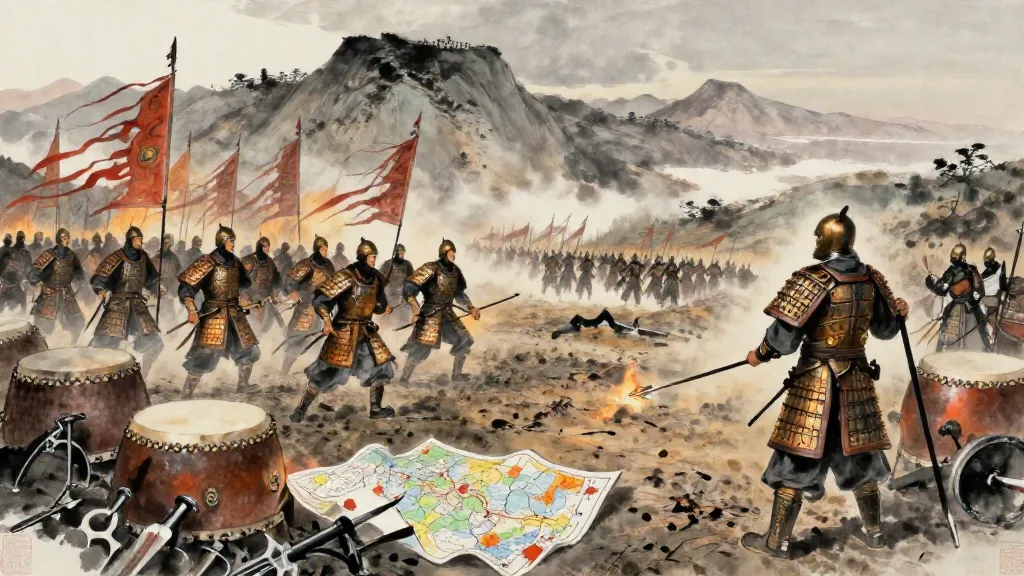
親士 (Befriending Scholars) — Chinese ink painting

墨子 Mozi · Chapter 1

親士

Befriending Scholars

View:

國之存亡在於士

The Survival of a State Depends on Its Scholars

入國而不存其士,則亡國矣。見賢而不急,則緩其君矣。非賢無急,非士無與慮國。緩賢忘士,而能以其國存者,未曾有也。

If one enters a state and does not preserve its scholars, that state will perish. If one sees the worthy but does not treat the matter with urgency, this shows negligence toward one's lord. Without the worthy there is nothing urgent to attend to; without scholars there are none with whom to deliberate on state affairs. To neglect the worthy and forget the scholars, yet still preserve one's state -- this has never happened.

Notes

1context

This opening chapter establishes the Mohist emphasis on meritocratic governance. Unlike Confucians who stressed ritual propriety, Mohists prioritized the recruitment and retention of capable men based purely on their abilities.

三子之達名成功

Three Lords Who Achieved Renown Through Adversity

昔者文公出走而正天下;桓公去國而霸諸侯;越王勾踐遇吳王之醜而尚攝中國之賢君。三子之能達名成功於天下也,皆於其國抑而大醜也。太上無敗,其次敗而有以成,此之謂用民。吾聞之曰:「非無安居也,我無安心也;非無足財也,我無足心也。」是故君子自難而易彼,眾人自易而難彼。君子進不敗其志,內究其情;雖雜庸民,終無怨心。彼有自信者也。

In the past, Duke Wen of Jin fled his state yet went on to bring order to the realm; Duke Huan of Qi left his state yet became hegemon over the feudal lords; King Goujian of Yue suffered humiliation at the hands of the King of Wu yet still commanded respect among the worthy lords of the Central States. That these three were able to achieve fame and success throughout the realm was because they had all been suppressed and deeply humiliated in their own states. The highest achievement is to never suffer defeat; the next best is to suffer defeat yet still accomplish great things -- this is what is meant by 'employing the people.' I have heard it said: 'It is not that I lack a comfortable dwelling -- I lack a contented heart; it is not that I lack sufficient wealth -- I lack a satisfied heart.' Therefore the gentleman makes things difficult for himself and easy for others, while the common person makes things easy for himself and difficult for others. The gentleman, in advancing, does not compromise his resolve, and inwardly examines his true feelings; though he may be mixed among ordinary people, he never harbors resentment. Such a person possesses self-confidence.

Notes

1person晉文公Jin Wen Gong

Duke Wen of Jin (晉文公, r. 636-628 BC) spent nineteen years in exile before returning to become one of the Five Hegemons of the Spring and Autumn period.

2person齊桓公Qi Huan Gong

Duke Huan of Qi (齊桓公, r. 685-643 BC) fled to the state of Ju before returning to become the first and most celebrated of the Five Hegemons, guided by his minister Guan Zhong.

3person越王勾踐Yue Wang Goujian

King Goujian of Yue (越王勾踐, r. 496-465 BC) was defeated and forced to serve as a vassal to King Fuchai of Wu, but endured decades of humiliation before finally destroying Wu.

太盛難守

Great Prominence Is Hard to Maintain

是故為其所難者,必得其所欲焉;未聞為其所欲,而免其所惡者也。是故逼臣傷君,諂下傷上。君必有弗弗之臣,上必有詻詻之下。分議者延延,而支苟者詻詻,焉可以長生保國。臣下重其爵位而不言,近臣則喑,遠臣則吟,怨結於民心。諂諛在側,善議障塞,則國危矣。桀紂不以其無天下之士邪?殺其身而喪天下。故曰:「歸國寶,不若獻賢而進士。」今有五錐,此其銛,銛者必先挫。有五刀,此其錯,錯者必先靡。是以甘井近竭,招木近伐,靈龜近灼,神蛇近暴。是故比干之殪,其抗也;孟賁之殺,其勇也;西施之沈,其美也;吳起之裂,其事也。故彼人者,寡不死其所長,故曰「太盛難守」也。

Therefore those who undertake what is difficult will certainly obtain what they desire; but I have never heard of those who pursue only what they desire being able to avoid what they hate. Thus overbearing ministers harm their lord, and fawning subordinates harm their superiors. A ruler must have ministers who frankly remonstrate with him; a superior must have subordinates who speak out forthrightly. Those who share in deliberation speak at length, and those who correct errors speak bluntly -- only thus can one enjoy long life and preserve the state. When ministers value their rank and salary and keep silent, when close ministers are mute and distant ministers can only groan, when resentment accumulates in the hearts of the people, when flatterers stand at one's side and good counsel is blocked -- then the state is in danger. Was it not because Jie and Zhou lacked worthy scholars throughout the realm? They brought death upon themselves and lost the realm. Therefore it is said: 'Rather than returning a state treasure, it is better to present the worthy and advance the scholar.' Now if there are five awls and one is the sharpest, the sharpest will be the first to be blunted. If there are five knives and one has the finest edge, the finest-edged will be the first to be worn down. Thus the sweet well is soon exhausted, the tall tree is soon felled, the efficacious tortoise is soon scorched, the divine serpent is soon displayed. Therefore Bi Gan was killed for his uprightness; Meng Ben was slain for his courage; Xi Shi was drowned for her beauty; Wu Qi was torn apart for his accomplishments. Few among such persons fail to die because of their very strengths -- hence it is said: 'Great prominence is hard to maintain.'

Notes

1person比干Bi Gan

Bi Gan (比干) was a loyal minister of the Shang dynasty who remonstrated with the tyrant King Zhou. Zhou had him executed and his heart cut out to see if a sage truly had seven apertures in his heart.

2person孟賁Meng Ben

Meng Ben (孟賁) was a legendary strongman of ancient China, famous for his extraordinary courage and physical strength.

3person西施Xi Shi

Xi Shi (西施) was one of the legendary Four Beauties of ancient China. She was sent as a gift to King Fuchai of Wu as part of Yue's strategy to weaken Wu. Legend says she was drowned after Wu's fall.

4person吳起Wu Qi

Wu Qi (吳起, c. 440-381 BC) was a brilliant military reformer who served in Lu, Wei, and Chu. He was killed by Chu aristocrats who tore his body apart with chariots after the death of his patron King Dao of Chu.

江河不惡小谷

The Rivers Do Not Reject Small Streams

故雖有賢君,不愛無功之臣;雖有慈父,不愛無益之子。是故不勝其任而處其位,非此位之人也;不勝其爵而處其祿,非此祿之主也。良弓難張,然可以及高入深;良馬難乘,然可以任重致遠;良才難令,然可以致君見尊。是故江河不惡小谷之滿已也,故能大。聖人者,事無辭也,物無違也,故能為天下器。是故江河之水,非一水之源也;千鎰之裘,非一狐之白也。夫惡有同方取不取同而已者乎?蓋非兼王之道也!是故天地不昭昭,大水不潦潦,大火不燎燎,王德不堯堯者,乃千人之長也。其直如矢,其平如砥,不足以覆萬物。是故溪陝者速涸,逝淺者速竭,〔土堯〕埆者其地不育。王者淳澤,不出宮中,則不能流國矣。

Therefore even a worthy ruler does not favor a minister without merit; even a kind father does not love a child who is of no benefit. Thus one who cannot bear the responsibilities of a position yet occupies it is not the right person for that position; one who cannot sustain the rank yet draws its salary is not the rightful holder of that salary. A fine bow is hard to draw, yet it can reach the heights and penetrate the depths; a fine horse is hard to ride, yet it can bear heavy loads and travel far; fine talent is hard to command, yet it can bring honor and respect to one's lord. The great rivers do not disdain small streams filling them -- that is why they are great. The sage refuses no task and rejects no thing -- that is why he can serve as a vessel for all under heaven. The water of the rivers does not come from a single source; a fur coat worth a thousand yi is not made from the white fur of a single fox. How can one who accepts only what is the same and rejects what is different ever succeed? This is surely not the way of the all-encompassing king! Therefore heaven and earth are not brilliantly conspicuous, great waters are not dazzlingly clear, great fires are not blindingly bright, and kingly virtue is not ostentatiously lofty -- for they are the leaders of a thousand men. Being straight as an arrow and level as a whetstone is not enough to shelter all things. Therefore narrow streams quickly dry up, shallow waters are soon exhausted, and rocky barren ground produces no crops. If the king's bountiful generosity does not extend beyond the palace, it cannot flow throughout the state.

Edition & Source

Text
《墨子》 Mozi
Edition
《四部叢刊》本
Commentary
Traditional commentaries