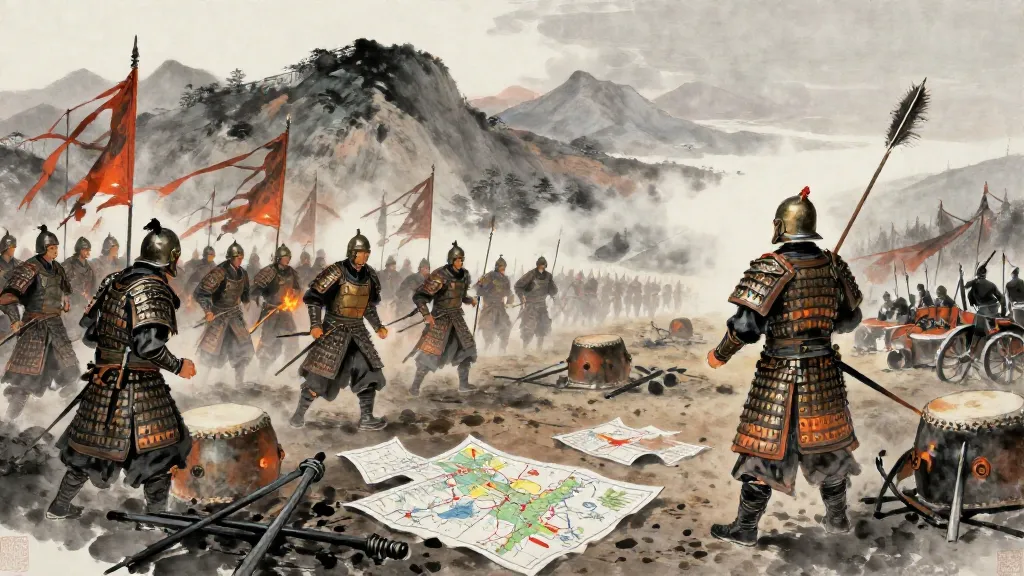
修身 (Self-Cultivation) — Chinese ink painting

墨子 Mozi · Chapter 2

修身

Self-Cultivation

View:

行為本

Action as the Foundation

君子戰雖有陳,而勇為本焉;喪雖有禮,而哀為本焉;士雖有學,而行為本焉。是故置本不安者,無務豐末;近者不親,無務求遠;親戚不附,無務外交;事無終始,無務多業;舉物而暗,無務博聞。是故先王之治天下也,必察邇來遠,君子察邇,修身也。修身,見毀而反之身者也,此以怨省而行修矣。

The gentleman in war may have formations, but courage is the foundation. In mourning there may be rituals, but grief is the foundation. The scholar may have learning, but action is the foundation. Therefore if the foundation is not secure, do not strive to enrich the branches. If those near you are not close, do not strive to win over those far away. If your relatives do not rally to you, do not pursue external alliances. If you cannot finish the tasks you have begun, do not pursue many enterprises. If you are confused about the things before you, do not pursue wide learning. Therefore when the ancient kings governed the realm, they examined what was near to attract what was far. The gentleman examines what is near -- that is self-cultivation. Self-cultivation means that when one is criticized, one reflects upon oneself; thus resentments diminish and conduct improves.

君子之道

The Way of the Gentleman

君子之道也:貧則見廉,富則見義,生則見愛,死則見哀;四行者不可虛假反之身者也。藏於心者,無以竭愛,動於身者,無以竭恭,出於口者,無以竭馴。暢之四支,接之肌膚,華發隳顛,而猶弗舍者,其唯聖人乎!

The way of the gentleman: in poverty he displays integrity, in wealth he displays righteousness, in life he shows love, and in death he inspires grief. These four forms of conduct cannot be falsely assumed but must be reflected in one's own person. What is stored in the heart should express inexhaustible love; what is enacted by the body should express inexhaustible reverence; what issues from the mouth should express inexhaustible gentleness. Let these pervade the four limbs and suffuse the flesh and skin -- even when one's hair turns white and the temples grow bare, still not to abandon them: only the sage can achieve this!

志強言信

Strong Will and Trustworthy Words

志不強者智不達;言不信者行不果。據財不能以分人者,不足與友;守道不篤,遍物不博,辯是非不察者,不足與游。本不固者,末必幾。雄而不修者,其後必惰。原濁者,流不清;行不信者,名必耗。名不徒生,而譽不自長。功成名遂,名譽不可虛假反之身者也。務言而緩行,雖辯必不聽。多力而伐功,雖勞必不圖。慧者心辯而不繁說,多力而不伐功,此以名譽揚天下。言無務多而務為智,無務為文而務為察。故彼智與察在身,而情反其路者也。善無主於心者不留,行莫辯於身者不立;名不可簡而成也,譽不可巧而立也,君子以身戴行者也。思利尋焉,忘名忽焉,可以為士於天下者,未嘗有也。

Those whose will is not strong will not achieve wisdom; those whose words are not trustworthy will not act decisively. Those who possess wealth but cannot share it with others are not worthy of friendship; those who do not firmly uphold the Way, whose knowledge of things is not broad, and who cannot clearly distinguish right from wrong, are not worthy of companionship. When the root is not firm, the branches will certainly fail. Those who are proud but do not cultivate themselves will certainly become lazy thereafter. When the source is murky, the stream cannot be clear; when conduct is not trustworthy, one's reputation will certainly be consumed. Reputation does not arise by itself, and fame does not grow on its own. When merit is achieved and reputation follows, reputation cannot be falsely assumed but must be reflected in one's person. Those who are eloquent in speech but slow in action, however persuasive, will not be heeded. Those who exert great effort but boast of their achievements, however laborious, will not be recognized. The wise person's heart discerns clearly but does not speak profusely; he exerts great effort but does not boast of achievements -- thus his reputation spreads throughout the realm. In speech, do not strive for quantity but for wisdom; do not strive for eloquence but for penetration. When wisdom and penetration reside in oneself, yet one's feelings run contrary to this path -- that is the problem. Goodness that is not anchored in the heart will not endure; conduct that is not verified in one's person will not be established. Reputation cannot be achieved through shortcuts, nor fame established through cleverness. The gentleman carries his conduct on his person. To think only of profit and neglect fame entirely -- there has never been such a person who could serve as a worthy scholar in the realm.

Edition & Source

Text
《墨子》 Mozi
Edition
《四部叢刊》本
Commentary
Traditional commentaries