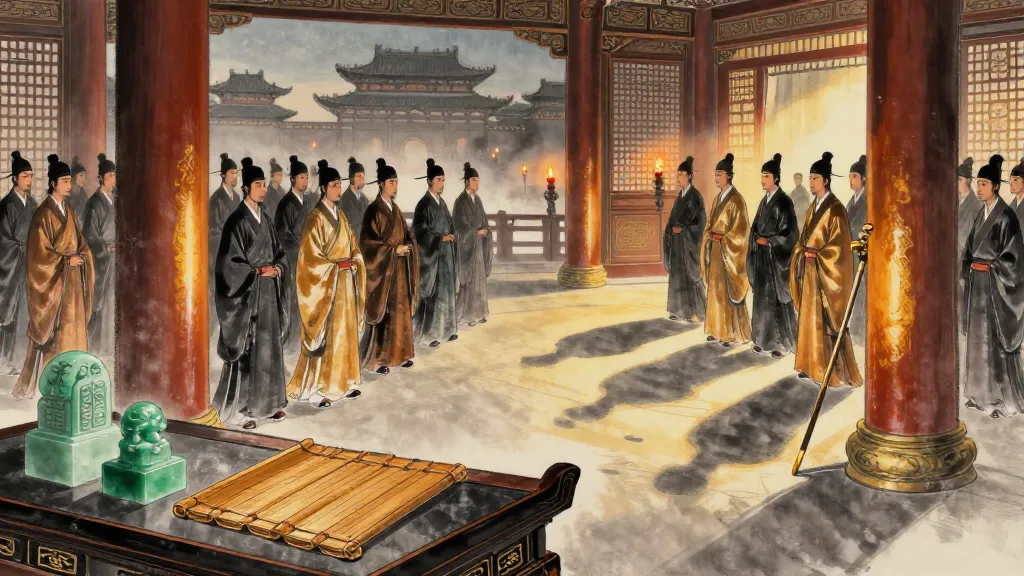
尚同(上) (Conforming Upward, Part I) — Chinese ink painting

墨子 Mozi · Chapter 11

尚同(上)

Conforming Upward, Part I

View:

人異義天下亂

Differing Standards Lead to Chaos

子墨子言曰:古者民始生,未有刑政之時,蓋其語,人異義。是以一人則一義,二人則二義,十人則十義。其人茲眾,其所謂義者亦茲眾。是以人是其義,以非人之義,故交相非也。是以內者父子兄弟作,離散不能相和合;天下之百姓,皆以水火毒藥相虧害。至有餘力,不能以相勞;腐朽余財,不以相分;隱匿良道,不以相教。天下之亂,若禽獸然。

Master Mozi said: 'In the beginning when people first came into being and there was not yet any government or political administration, their expression of it was that each person had a different standard of right. Thus one person had one standard of right, two persons had two standards, ten persons had ten standards. The more numerous the people, the more numerous the standards they called right. Each person affirmed his own standard and condemned others' standards, so they mutually condemned one another. Within families, fathers and sons, brothers quarreled, separated, and could not live in harmony. The hundred families of the realm all used water, fire, and poison to harm one another. Those with surplus strength could not help others; surplus goods rotted rather than being shared; good teachings were hidden rather than being imparted. The disorder of the realm was like that of birds and beasts.'

Notes

1context

The Shang Tong (Conforming Upward) chapters present Mozi's theory of the origin of government. Unlike Confucian accounts based on sage-king virtue, Mozi presents a proto-contractarian argument: government arose to resolve the chaos of competing moral standards. This anticipates Hobbes by two millennia.

選天子立正長

Selecting the Son of Heaven and Establishing Political Leaders

夫明乎天下之所以亂者,生於無政長。是故選天下之賢可者,立以為天子。天子立,以其力為未足,又選天下之賢可者,置立之以為三公。天子、三公既以立,以天下為博大,遠國異土之民,是非利害之辯,不可一二而明知,故畫分萬國,立諸侯國君。

Understanding that the reason for the disorder of the realm was the absence of political leaders, the most worthy and capable of the realm were selected and established as the Son of Heaven. Once the Son of Heaven was established, since his power alone was insufficient, the most worthy and capable of the realm were again selected and placed as the Three Dukes. Once the Son of Heaven and Three Dukes were established, since the realm was so vast and the people of distant states and foreign lands differed in their judgments of right and wrong, benefit and harm, which could not be clearly known one by one, the realm was divided into ten thousand states and feudal lords were established.

上同於天

Conforming Upward to Heaven

天下之百姓皆上同於天子,而不上同於天,則災猶未去也。今若天飄風苦雨,溱溱而至者,此天之所以罰百姓之不上同於天者也。是故子墨子言曰:「古者聖王為五刑,請以治其民。譬若絲縷之有紀,罔罟之有綱,所以連收天下之百姓,不尚同其上者也。」

If all the people of the realm conform upward to the Son of Heaven but do not conform upward to Heaven, then calamities will still not be averted. When violent winds and bitter rains come rushing upon us, these are Heaven's punishment for the people's failure to conform upward to Heaven. Therefore Master Mozi said: 'In ancient times the sage kings established the five punishments to govern their people. This was like the order-thread running through silk strands, or the main rope running through a net -- a means to gather in and bring together all the people of the realm who would not conform upward to their superiors.'

Edition & Source

Text
《墨子》 Mozi
Edition
《四部叢刊》本
Commentary
Traditional commentaries