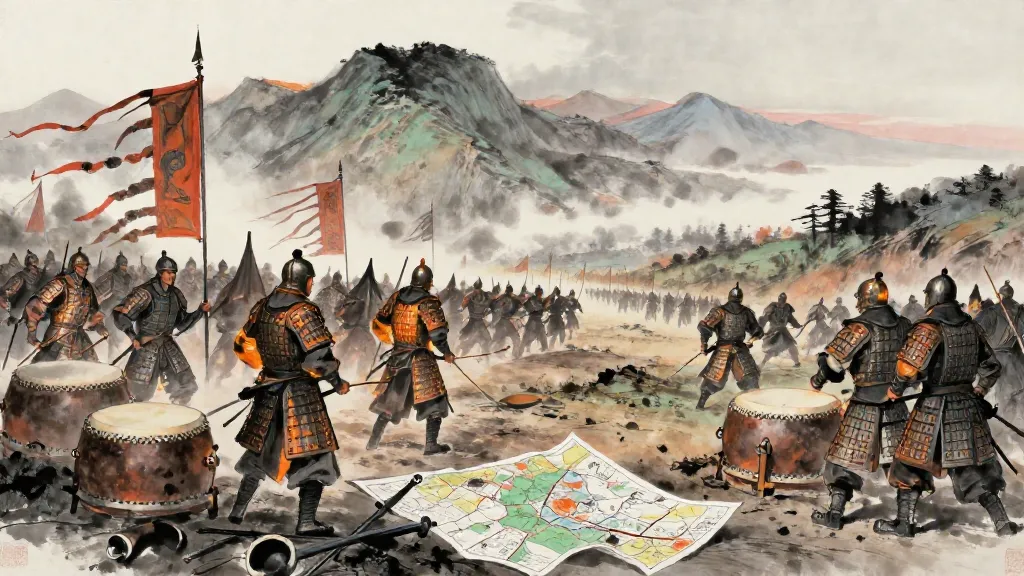
明鬼(下) (Explaining Ghosts, Part III) — Chinese ink painting

墨子 Mozi · Chapter 31

明鬼(下)

Explaining Ghosts, Part III

View:

疑惑鬼神則天下亂

Doubting the Ghosts and Spirits Leads to Chaos

子墨子言曰:「逮至昔三代聖王既沒,天下失義,諸侯力正。是以存夫為人君臣上下者之不惠忠也,父子弟兄之不慈孝弟長貞良也,正長之不強於聽治,賤人之不強於從事也。民之為淫暴寇亂盜賊,以兵刃、毒藥、水火,退無罪人乎道路率徑,奪人車馬、衣裘以自利者,並作,由此始,是以天下亂。此其故何以然也?則皆以疑惑鬼神之有與無之別,不明乎鬼神之能賞賢而罰暴也。」

Master Mozi said: 'Since the three generations of sage kings passed away, the realm has lost righteousness and the feudal lords rule by force. Therefore rulers and ministers, superiors and subordinates are not generous and loyal; fathers and sons, brothers young and old are not kind, filial, respectful, and good; leaders are not diligent in governance; and common people are not diligent in their work. The people commit lewdness, violence, brigandage, chaos, and theft, using weapons, poison, water, and fire to ambush innocent people on roads and paths, seizing their chariots, horses, and clothing for personal gain -- all these things have arisen together, and this is the beginning of why the realm is in chaos. What is the reason? It is all because people are confused about whether ghosts and spirits exist, and are not clear about the ability of ghosts and spirits to reward the worthy and punish the wicked.'

Notes

1context

Chapters 29 (Ming Gui Upper) and 30 (Ming Gui Middle) are lost. This surviving lower chapter contains Mozi's fullest argument for the existence of ghosts and spirits, drawing on historical anecdotes, classical texts, and utilitarian reasoning.

杜伯之鬼

The Ghost of Du Bo

子墨子言曰:「若以眾之所同見,與眾之所同聞,則若昔者杜伯是也。」周宣王殺其臣杜伯而不辜,杜伯曰:「吾君殺我而不辜,若以死者為無知,則止矣;若死而有知,不出三年,必使吾君知之。」其三年,周宣王合諸侯而田於圃,田車數百乘,從數千人,滿野。日中,杜泊乘白馬素車,朱衣冠,執朱弓,挾朱矢,追周宣王,射之車上,中心折脊,殪車中,伏弢而死。

Master Mozi said: 'If we rely on what many have jointly seen and jointly heard, then there is the case of Du Bo of old.' King Xuan of Zhou killed his minister Du Bo though he was innocent. Du Bo said: 'My lord kills me though I am innocent. If the dead have no awareness, then so be it; but if the dead have awareness, within three years I will certainly make my lord know it.' Three years later, King Xuan of Zhou assembled the feudal lords for a hunt in the park, with several hundred hunting chariots and several thousand followers filling the fields. At noon, Du Bo appeared riding a white horse and plain chariot, wearing vermilion robes and cap, holding a vermilion bow with vermilion arrows, and pursued King Xuan, shooting him in his chariot, striking him in the heart and breaking his spine. He collapsed in his chariot, fell over his bow case, and died.

Notes

1person周宣王Zhou Xuan Wang

King Xuan of Zhou (周宣王, r. 827-782 BC) was one of the later Western Zhou monarchs. The story of Du Bo's ghost taking revenge is one of the most famous ghost stories in Chinese history and was widely cited in ancient philosophical debates about the existence of spirits.

鬼神之賞罰

The Rewards and Punishments of Ghosts and Spirits

是故子墨子曰:「嘗若鬼神之能賞賢如罰暴也,蓋本施之國家,施之萬民,實所以治國家、利萬民之道也。」

Therefore Master Mozi said: 'If we consider that ghosts and spirits can reward the worthy and punish the wicked, and extend this principle to the governance of states and the welfare of the myriad people, this is truly the Way of governing states and benefiting the myriad people.'

祭祀之利

The Benefits of Sacrifice

是故子墨子曰:「今吾為祭祀也,非直注之污壑而棄之也,上以交鬼之福,下以合歡聚眾,取親乎鄉里。若神有,則是得吾父母弟兄而食之也。則此豈非天下利事也哉!」

Therefore Master Mozi said: 'Now when I perform sacrifices, I am not simply pouring offerings into a ditch and throwing them away. Above, I am securing the blessings of the spirits; below, I am bringing people together in joyful assembly and building goodwill with my community. If the spirits truly exist, then I am feeding my parents and brothers. Is this not a beneficial thing for the realm? Even if the spirits do not exist, the sacrificial food is shared among kinsmen and neighbors -- it still serves to unite the community.'

Edition & Source

Text
《墨子》 Mozi
Edition
《四部叢刊》本
Commentary
Traditional commentaries