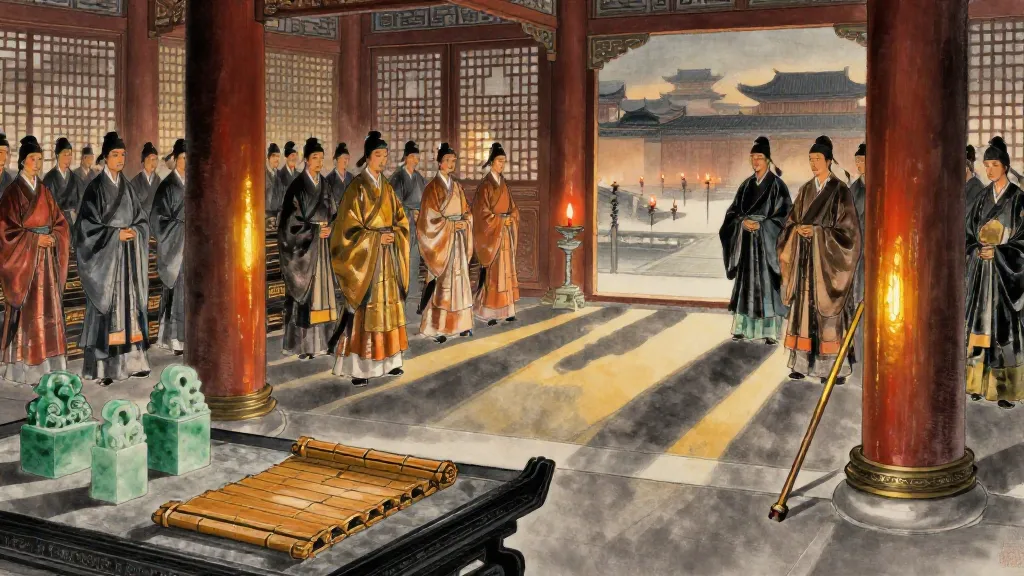
非命(上) (Against Fatalism, Part 1) — Chinese ink painting

墨子 Mozi · Chapter 35

非命(上)

Against Fatalism, Part 1

View:

有命之害

The Harm of Fatalism

子墨子言曰:古者王公大人,為政國家者,皆欲國家之富,人民之眾,刑政之治。然而不得富而得貧,不得眾而得寡,不得治而得亂,則是本失其所欲,得其所惡,是故何也?

Master Mozi said: In ancient times, the kings, dukes, and great men who governed states all desired their states to be wealthy, their populations to be numerous, and their punishments and governance to be well-ordered. Yet instead of wealth they got poverty, instead of a large population they got a sparse one, instead of good order they got chaos. They fundamentally lost what they desired and gained what they hated. Why was this?

Notes

1context

This chapter is the first of three on 'Against Fatalism' (非命). Mozi's attack on fatalism (the doctrine of 'destiny' or 'fate,' 命) is one of his ten core doctrines. He argues that the belief in predetermined fate undermines effort in governance, agriculture, and all human endeavors.

執有命者之言

The Words of the Fatalists

子墨子言曰:執有命者以雜於民間者眾。執有命者之言曰:"命富則富,命貧則貧;命眾則眾,命寡則寡;命治則治,命亂則亂;命壽則壽,命夭則夭。命……雖強勁,何益哉?"上以說王公大人,下以(馬+且)百姓之從事,故執有命者不仁。故當執有命者之言,不可不明辨。

Master Mozi said: Those who hold that fate exists are numerous among the common people. The fatalists say: 'If fate decrees wealth, there will be wealth; if it decrees poverty, there will be poverty. If fate decrees a large population, there will be many; if it decrees few, there will be few. If fate decrees order, there will be order; if chaos, chaos. If fate decrees long life, there will be longevity; if early death, early death. Even if one strives vigorously, what good is it?' Above, this doctrine pleases kings and great men; below, it hinders the common people from their work. Therefore the fatalists are not benevolent. We must clearly examine the words of those who assert fate.

Notes

1context

The fatalist position Mozi attacks was widespread in early Chinese thought. Some scholars associate it with early Confucian ideas about the 'Mandate of Heaven' (天命), though Confucian thinkers would nuance this differently. Mozi's critique is that any doctrine removing human agency from outcomes leads to moral laziness.

三表法

The Three Standards of Judgment

然則明辨此之說,將奈何哉?子墨子言曰:必立儀。言而毋儀,譬猶運鈞之上,而立朝夕者也,是非利害之辨,不可得而明知也。故言必有三表。何謂三表?子墨子言曰:有本之者,有原之者,有用之者。於何本之?上本之於古者聖王之事;於何原之?下原察百姓耳目之實;於何用之?廢以為刑政,觀其中國家百姓人民之利,此所謂言有三表也。

Then how shall we clearly examine this doctrine? Master Mozi said: We must establish standards. To speak without standards is like placing a gnomon on a spinning potter's wheel to determine morning and evening -- one cannot clearly know the distinction between right and wrong, benefit and harm. Therefore all claims must have the Three Standards. What are the Three Standards? Master Mozi said: There is the basis, the source of evidence, and the practical application. Where is the basis? Above, base it on the deeds of the ancient sage-kings. Where is the source of evidence? Below, examine the evidence of the common people's eyes and ears. Where is the practical application? Apply it to governance and punishments, and observe whether it benefits the state and the people. This is what is meant by the Three Standards of argument.

Notes

1context

The Three Standards (三表) are Mozi's epistemological method for evaluating claims. They appear repeatedly across the Mohist chapters and represent one of the earliest systematic approaches to evidence-based argumentation in Chinese philosophy: (1) historical precedent, (2) empirical evidence, and (3) practical utility.

聖王之事為證

The Sage-Kings as Evidence Against Fatalism

然而今天下之士君子,或以命為有。蓋嘗尚觀於聖王之事?古者桀之所亂,湯受而治之;紂之所亂,武王受而治之。此世未易,民未渝,在於桀、紂,則天下亂;在於湯、武,則天下治。豈可謂有命哉!

Yet today some gentlemen in the world assert that fate exists. Have they ever looked up to examine the deeds of the sage-kings? In ancient times, what Jie had thrown into chaos, Tang received and brought to order; what Zhou had thrown into chaos, King Wu received and brought to order. The age had not changed, the people had not altered, yet under Jie and Zhou the world was in chaos, while under Tang and Wu the world was well-ordered. How can one say there is fate?

Notes

1person桀、紂、湯、武王Jie, Zhou, Tang, Wu Wang

Jie (桀) was the last ruler of the Xia dynasty, and Zhou/Zhòu (紂) was the last ruler of the Shang dynasty. Both are archetypes of tyrannical rulers in Chinese tradition. Tang (湯) overthrew Jie to found the Shang, and King Wu (武王) overthrew Zhou to found the Zhou dynasty.

先王之書為證

The Books of the Former Kings as Evidence

然而今天下之士君子,或以命為有,蓋嘗尚觀於先王之書?先王之書,所以出國家、布施百姓者,憲也;先王之憲亦嘗有曰:"福不可請,而禍不可諱,敬無益、暴無傷者乎?"所以聽獄制罪者,刑也;先王之刑亦嘗有曰:"福不可請,禍不可諱,敬無益,暴無傷者乎?"所以整設師旅,進退師徒者,誓也;先王之誓亦嘗有曰:"福不可請,禍不可諱,敬無益、暴無傷者乎?"

Yet today some gentlemen assert that fate exists. Have they ever examined the books of the former kings? The books of the former kings that were issued to govern the state and provide for the people are the statutes. Did the statutes of the former kings ever say: 'Blessings cannot be sought, calamities cannot be avoided, reverence is useless, and cruelty does no harm'? The means by which trials were heard and punishments determined were the penal codes. Did the penal codes of the former kings ever say such things? The means by which armies were organized and troops advanced and withdrawn were the military oaths. Did the military oaths of the former kings ever say such things?

Notes

1context

Mozi uses the second of his Three Standards here -- examining the written records. His rhetorical argument is that nowhere in the official documents of the sage-kings (statutes, penal codes, military oaths) does fatalism appear as doctrine. If fate were real, these documents would reflect it.

義人在上則天下治

When the Righteous Rule, the World is Ordered

是故子墨子言曰:吾當未鹽數,天下之良書,不可盡計數,大方論數,而五者是也。今雖毋求執有命者之言,不必得,不亦可錯乎?今用執有命者之言,是覆天下之義。覆天下之義者,是立命者也,百姓之誶也。說百姓之誶者,是滅天下之人也。然則所為欲義在上者,何也?曰:義人在上,天下必治,上帝、山川、鬼神,必有乾主,萬民被其大利。何以知之?子墨子曰:古者湯封於亳,絕長繼短,方地百里,與其百姓兼相愛,交相利,移則分,率其百姓以上尊天事鬼,是以天鬼富之,諸侯與之,百姓親之,賢士歸之,未歿其世而王天下,政諸侯。

Therefore Master Mozi said: I have not been able to count them all exhaustively, for the good books in the world are beyond complete enumeration, but broadly speaking there are five categories of such texts. Even without specifically seeking the words of the fatalists, if they cannot be found in any of them, can we not set the doctrine aside? To adopt the fatalists' words is to overthrow righteousness in the world. Those who overthrow the world's righteousness are the proponents of fate, the curse of the common people. Those who advocate cursing the people are destroying the people of the world.

Then why do we want righteous men in positions of authority? The answer is: when righteous men are in authority, the world is necessarily well-ordered; the Lord on High, the mountains and rivers, and the ghosts and spirits all have proper lords, and the myriad people receive great benefit. How do we know this? Master Mozi said: In ancient times, Tang was enfeoffed at Bo with a territory of only a hundred li square, yet he practiced universal love with his people, sharing benefits mutually and distributing when they moved. He led his people to honor Heaven above and serve the spirits, and thus Heaven and the spirits enriched him, the feudal lords allied with him, the common people were devoted to him, and worthy men came to him. Before his generation had passed, he was king of all under Heaven and governed the feudal lords.

Notes

1personTang

Tang (湯), founder of the Shang dynasty, was enfeoffed at Bo (亳), traditionally located near modern Shangqiu, Henan. The story of his rise from a minor lord to king of all under Heaven exemplifies Mozi's argument that human virtue and effort, not fate, determine political outcomes.

文王之治

The Governance of King Wen

昔者文王封於歧周,絕長繼短,方地百里,與其百姓兼相愛,交相利則,是以近者安其政,遠者歸其德。聞文王者,皆起而趨之;罷不肖、股肱不利者,處而願之,曰:"奈何乎使文王之地及我,吾則吾利,豈不亦猶文王之民也哉!"是以天鬼富之,諸侯與之,百姓親之,賢士歸之。未歿其世而王天下,政諸侯。鄉者言曰:義人在上,天下必治,上帝、山川、鬼神,必有乾主,萬民被其大利。吾用此知之。

In former times, King Wen was enfeoffed at Qi-Zhou with a territory of only a hundred li square. He practiced universal love with his people, sharing benefits mutually. Thus those nearby were content with his governance, and those far away were drawn to his virtue. All who heard of King Wen arose and hastened to him. Even the weary and incapable, those with weakened limbs, stayed in their places and wished, saying: 'If only King Wen's territory extended to us, would we not also benefit as King Wen's people do!' Thus Heaven and the spirits enriched him, the feudal lords allied with him, the common people were devoted to him, and worthy men came to him. Before his generation had passed, he was king of all under Heaven and governed the feudal lords. As I said before: when righteous men are in authority, the world is necessarily well-ordered. This is how I know it.

Notes

1person文王Wen Wang

King Wen (文王) of Zhou was the father of King Wu. He is credited with the founding virtue of the Zhou dynasty, though he died before the actual conquest of Shang. Qi-Zhou (歧周) refers to the Zhou homeland in the Wei River valley, near modern Baoji, Shaanxi.

有命者之害政

How Fatalism Harms Governance

是故古之聖王,發憲出令,設以為賞罰以勸賢。是以入則孝慈於親戚,出則弟長於鄉里,坐處有度,出入有節,男女有辨。是故使治官府,則不盜竊;守城,則不崩叛;君有難則死,出亡則送。此上之所賞,而百姓之所譽也。執有命者之言曰:上之所賞,命固且賞,非賢故賞也;上之所罰,命固且罰,不暴故罰也。是故入則不慈孝於親戚,出則不弟長於鄉里,坐處不度,出入無節,男女無辨。是故治官府,則盜竊;守城,則崩叛;君有難則不死,出亡則不送。此上之所罰,百姓之所非毀也。執有命者言曰:上之所罰,命固且罰,不暴故罰也;上之所賞,命固且賞,非賢故賞也。以此為君則不義,為臣則不忠,為父則不慈,為子則不孝,為兄則不良,為弟則不弟。而強執此者,此特凶言之所自生,而暴人之道也。

Therefore the ancient sage-kings promulgated statutes and issued decrees, establishing rewards and punishments to encourage the worthy. Thus at home people practiced filial devotion and kindness toward their kin; abroad they showed deference to their elders in the community. They conducted themselves with propriety, maintained discipline in their comings and goings, and observed the distinctions between men and women. When placed in charge of government offices, they did not steal; when defending cities, they did not desert or rebel; when their lord faced danger, they died for him; when he went into exile, they escorted him. These were the ones whom the authorities rewarded and the people praised.

The fatalists say: 'Those the authorities reward, fate had already decreed they would be rewarded -- it is not because they were worthy. Those the authorities punish, fate had already decreed they would be punished -- it is not because they were cruel.' Therefore at home they are not devoted to their kin; abroad they show no deference to their elders. They have no propriety in conduct, no discipline, no distinction between men and women. In office they steal; defending cities, they desert and rebel; when their lord faces danger, they will not die for him; when he goes into exile, they will not escort him. These are the ones whom the authorities punish and the people condemn.

If one holds to this, as a ruler one will be unrighteous, as a minister disloyal, as a father unkind, as a son unfilial, as an elder brother unfriendly, as a younger brother disrespectful. Those who stubbornly hold to this: this is the very source from which evil words arise, the way of cruel men.
命為暴人之道

Fatalism as the Way of Cruel Men

然則何以知命之為暴人之道?昔上世之窮民,貪於飲食,惰於從事,是以衣食之財不足,而饑寒凍餒之憂至;不知曰我罷不肖,從事不疾,必曰我命固且貧。昔上世暴王,不忍其耳目之淫,心塗之辟,不順其親戚,遂以亡失國家,傾覆社稷;不知曰我罷不肖,為政不善,必曰吾命固失之。於《仲虺之告》曰:"我聞於夏人矯天命,布命於下。帝伐之惡,龔喪厥師。"此言湯之所以非桀之執有命也。於太誓曰:"紂夷處,不肯事上帝鬼神,禍厥先神禔不祀,乃曰:'吾民有命。'無廖排漏,天亦縱棄之而弗葆。"此言武王所以非紂執有命也。

How then do we know that fatalism is the way of cruel men? In ancient times, the destitute people who were greedy for food and drink and lazy in their work, so that their provisions were insufficient and the worries of hunger, cold, and starvation arrived -- they never admitted 'I am incapable and was not diligent in my work,' but always said 'My fate has decreed that I be poor.' In ancient times, the tyrannical kings who could not restrain the indulgences of their eyes and ears and the perversity of their hearts, who turned against their own kin and thereby lost their states and overturned their altars of soil and grain -- they never admitted 'I was incapable and governed badly,' but always said 'My fate has always decreed this loss.'

In the 'Announcement of Zhonghui' it says: 'I have heard that the men of Xia falsified the Mandate of Heaven and spread their doctrine of fate below. The Lord on High attacked them for their wickedness, and they humbly lost their armies.' This records how Tang condemned Jie's belief in fate. In the 'Great Declaration' it says: 'Zhou dwells at ease, refusing to serve the Lord on High and the ghosts and spirits, bringing calamity upon his ancestral spirits and refusing to sacrifice, saying: "My people have their fates." He did not repair the leaks, and Heaven also abandoned and cast him off without protection.' This records how King Wu condemned Zhou's belief in fate.

Notes

1context

The 'Announcement of Zhonghui' (仲虺之告/仲虺之誥) and the 'Great Declaration' (太誓/泰誓) are chapters of the Book of Documents (尚書). Mozi frequently cites these canonical texts to support his arguments, applying his Third Standard -- that doctrines must accord with the words of the sage-kings as preserved in their books.

命之大害

The Great Harm of Fatalism

今用執有命者之言,則上不聽治,下不從事。上不聽治,則刑政亂;下不從事,則財用不足;上無以供粢盛酒醴祭祀上帝鬼神,下無以降綏天下賢可之士,外無以應持諸侯之賓客,內無以食飢衣寒,將養老弱。故命上不利於天,中不利於鬼,下不利於人。而強執此者,此特凶言之所自生,而暴人之道也!是故子墨子言曰:"今天下之士君子,忠實欲天下之富而惡其貧,欲天下之治而惡其亂,執有命者之言,不可不非。此天下之大害也。

If one adopts the words of the fatalists, then those above will not attend to governance and those below will not attend to their work. If those above do not govern, then punishments and administration fall into disorder; if those below do not work, then goods and resources are insufficient. Above, there will be nothing to provide the grain offerings, wine, and sweet spirits for sacrificing to the Lord on High and the ghosts and spirits. Below, there will be nothing to attract and comfort the worthy men of the world. Abroad, there will be nothing to receive the guests of the feudal lords. At home, there will be nothing to feed the hungry, clothe the cold, and nourish the old and weak.

Therefore fatalism does not benefit Heaven above, does not benefit the spirits in the middle, and does not benefit humans below. Those who stubbornly hold to this: this is the very source from which evil words arise, the way of cruel men!

Therefore Master Mozi said: 'Today the gentlemen of the world, if they truly desire the world's wealth and hate its poverty, desire its order and hate its chaos, must condemn the words of the fatalists. This is the great harm of the world.'

Notes

1context

Mozi's 'three benefits' test -- benefiting Heaven, the spirits, and the people -- is his standard utilitarian criterion, applied consistently across his doctrines. Any belief or practice that fails this threefold test is condemned as harmful.

Edition & Source

Text
《墨子》 Mozi
Edition
中華古詩文古書籍網 transcription, 《四部叢刊》本
Commentary
Mo Di (墨翟) et al., Warring States period