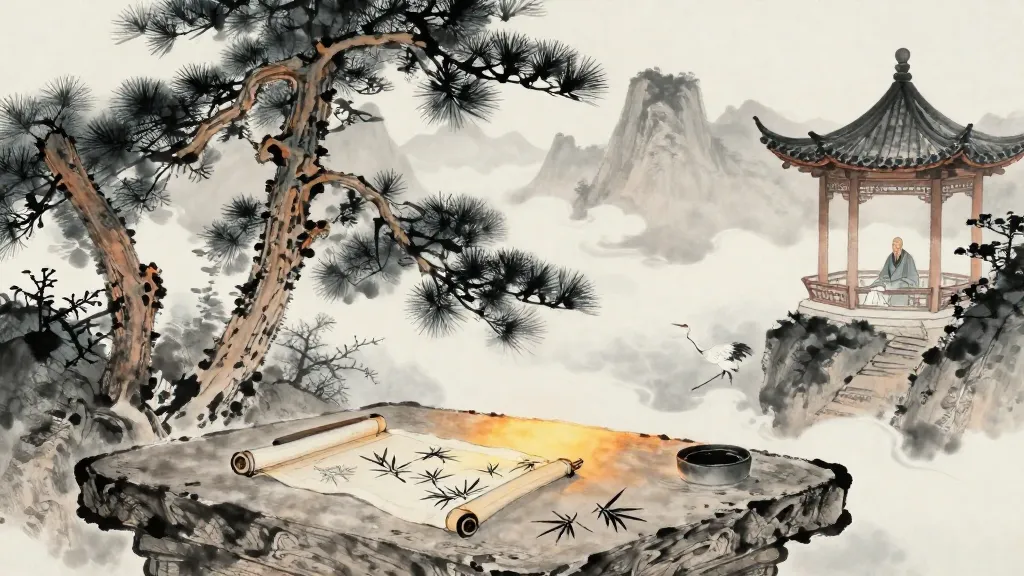
大取 (The Greater Selection) — Chinese ink painting

墨子 Mozi · Chapter 44

大取

The Greater Selection

View:

天愛與聖人之愛

Heaven's Love and the Sage's Love

天之愛人也,薄於聖人之愛人也;其利人也,厚於聖人之利人也。大人之愛小人也,薄於小人之愛大人也;其利小人也,厚於小人之利大人也。

Heaven's love for people is thinner than the sage's love for people, but its benefit to people is thicker than the sage's benefit to people. The great man's love for the small man is thinner than the small man's love for the great man, but his benefit to the small man is thicker than the small man's benefit to the great man.

Notes

1context

The 'Greater Selection' (大取) is a treatise on ethical reasoning and the logic of moral choices. It explores paradoxes of universal love, the weighing of competing interests, and the relationship between intention and consequence. Together with the 'Lesser Selection' (小取), it forms the most sophisticated treatment of applied logic in the Mohist corpus.

權衡利害

Weighing Benefits and Harms

於所體之中,而權輕重之謂權。權,非為是也,非非為非也,權,正也。斷指以存腕,利之中取大,害之中取小也。害之中取小也,非取害也,取利也。其所取者,人之所執也。遇盜人,而斷指以免身,利也;其遇盜人,害也。斷指與斷腕,利於天下相若,無擇也。死生利若,一無擇也。殺一人以存天下,非殺一人以利天下也;殺己以存天下,是殺己以利天下。

To weigh the relative gravity within a concrete situation is what is meant by 'weighing.' Weighing is not declaring right to be right or wrong to be wrong -- weighing is about rectitude. Cutting off a finger to save a wrist: from among benefits, take the greater; from among harms, take the lesser. Taking the lesser of harms is not taking harm -- it is taking benefit. What one takes is what one chooses. Encountering a robber and cutting off a finger to save one's life is a benefit; encountering the robber is a harm. If cutting off a finger and cutting off a wrist are equally beneficial to the world, there is no basis for choosing between them. If life and death are equally beneficial, there is likewise no basis for choosing. Killing one person to save the world is not killing one person to benefit the world. Killing oneself to save the world is killing oneself to benefit the world.

Notes

1context

This passage articulates a utilitarian calculus for moral decisions. The distinction between 'killing one to save the world' (not truly benefiting) versus 'killing oneself to save the world' (truly benefiting) introduces a proto-deontological constraint into consequentialist reasoning -- an ethical nuance often overlooked in characterizations of Mohism as simple utilitarianism.

Edition & Source

Text
《墨子》 Mozi
Edition
中華古詩文古書籍網 transcription, 《四部叢刊》本
Commentary
Mo Di (墨翟) et al., Warring States period