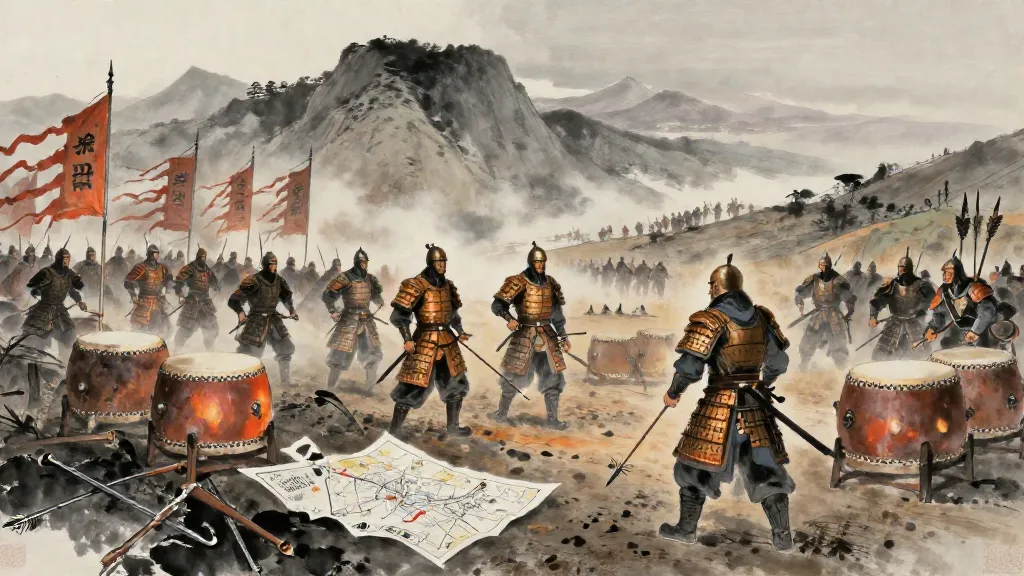
備梯 (Defense Against Siege Ladders) — Chinese ink painting

墨子 Mozi · Chapter 56

備梯

Defense Against Siege Ladders

View:

禽子求守道

Qin Guli Seeks the Way of Defense

禽滑厘子事子墨子三年,手足胼胝,面目黧黑,役身給使,不敢問欲。子墨子其哀之,乃管酒塊脯,寄於大山,昧葇坐之,以樵禽子。禽子再拜而嘆。子墨子曰:"亦何欲乎?"禽子再拜再拜曰:"敢問守道?"

Qin Guli served Master Mozi for three years. His hands and feet were calloused, his face sunburned and dark. He worked his body hard in service and did not dare ask for anything. Master Mozi took pity on him and provided wine and dried meat. They retired to a great mountain, sat on soft grass to rest, and Mozi served Qin Guli. Qin Guli bowed twice and sighed. Master Mozi said: 'What do you wish?' Qin Guli bowed twice more and said: 'I venture to ask about the Way of Defense.'

雲梯之守

Defending Against Cloud Ladders

子墨子曰:問雲梯之守邪?雲梯者重器也,其動移甚難。守為行城,雜樓相見,以環其中。以適廣陝為度,環中藉幕,毋廣其處。行城之法,高城二十尺,上加堞,廣十尺,左右出巨各二十尺,高、廣如行城之法。

Master Mozi said: You ask about defending against cloud ladders? The cloud ladder is a massive device, difficult to move. For defense, construct mobile walls with towers placed at intervals within view of each other, encircling the area. The dimensions should match the width of the attacking formation, with curtains hung within the enclosure, keeping the space compact. The standard for mobile walls: twenty chi high above the regular wall, with battlements on top, ten chi wide, with projecting bastions extending twenty chi to left and right, with the same height and width specifications as the mobile wall.

Notes

1context

Cloud ladders (雲梯) were the primary siege escalade device -- essentially very tall mobile ladders or siege towers. The Mohist defense involves constructing mobile elevated walls (行城) and projecting bastions to create killing zones around the points where the ladders contact the wall.

Edition & Source

Text
《墨子》 Mozi
Edition
中華古詩文古書籍網 transcription, 《四部叢刊》本
Commentary
Mo Di (墨翟) et al., Warring States period