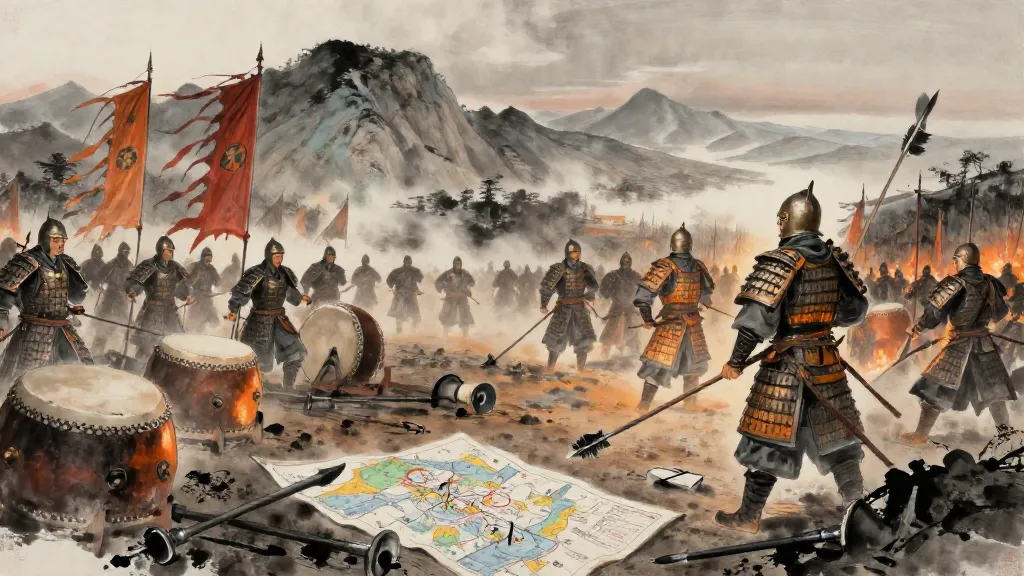
四方迎敵之祠
Sacrificial Rituals by Direction
敵以東方來,迎之東壇,壇高八尺,堂密八;年八十者八人,主祭;青旗、青神長八尺者八,弩八,八發而止;將服必青,其牲以雞。敵以南方來,迎之南壇,壇高七尺,堂密七;年七十者七人,主祭;赤旗、赤神長七尺者七,弩七,七發而止;將服必赤,其牲以狗。
If the enemy comes from the east, meet them at the eastern altar. The altar is eight chi high with eight compartments in the hall. Eight men aged eighty preside over the sacrifice. Eight blue banners and eight blue spirit figures eight chi tall, eight crossbows firing eight volleys then stopping. The general must wear blue; the sacrificial animal is a chicken.
If the enemy comes from the south, meet them at the southern altar. The altar is seven chi high with seven compartments. Seven men aged seventy preside. Seven red banners and seven red spirit figures seven chi tall, seven crossbows firing seven volleys. The general must wear red; the sacrificial animal is a dog.
Notes
This chapter describes morale-building rituals based on Five Phases (五行) correspondences: East/blue/8/chicken, South/red/7/dog, West/white/9/sheep, North/black/6/pig. While the Mohists are often characterized as rationalists who opposed superstition, this chapter shows they pragmatically incorporated ritual practices that served military morale and organizational purposes.