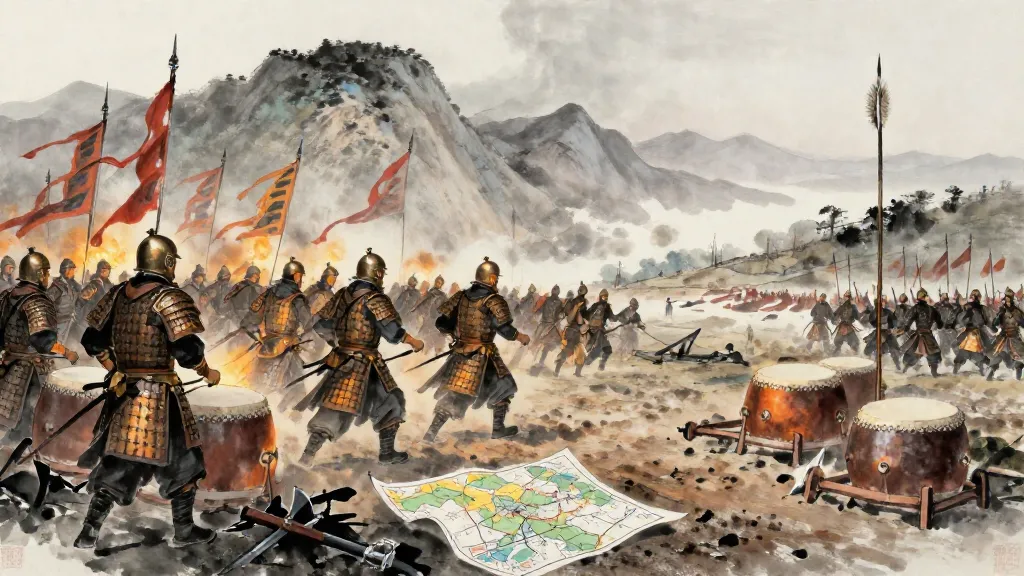
守城旗號系統
The Flag Signaling System for City Defense
守城之法,木為蒼旗,火為赤旗,薪樵為黃旗,石為白旗,水為黑旗,食為菌旗,死士為倉英之旗,竟士為雩旗,多卒為雙兔之旗,五尺童子為童旗,女子為梯末妹妹之旗,弩為狗旗,戟為■旗,劍盾為羽旗,車為龍旗,騎為鳥旗。凡所求索旗名不在書者,皆以其形名為旗。城上舉旗,備具之官致財物,之足而下旗。
The method for defending a city: Wood supplies are signaled by a green flag. Fire is signaled by a red flag. Firewood and brushwood by a yellow flag. Stone by a white flag. Water by a black flag. Food by a mushroom flag. Troops resolved to die by a blue-flower flag. Border troops by a rain-prayer flag. Large troop formations by a double-rabbit flag. Children of five chi height by a children's flag. Women by a ladder-tip flag. Crossbows by a dog flag. Halberds by a [corrupted] flag. Swords and shields by a feather flag. Chariots by a dragon flag. Cavalry by a bird flag. For any supplies needed that are not listed in this book, make a flag depicting the item's shape. When the flag is raised on the city wall, the supply officer delivers the materials. When the need is met, the flag is lowered.
Notes
This flag signaling system is an early military communication code. Each type of supply or troop category has its own distinctive flag, allowing rapid visual communication across the city walls during a siege. This is remarkably similar to modern military logistics signaling.