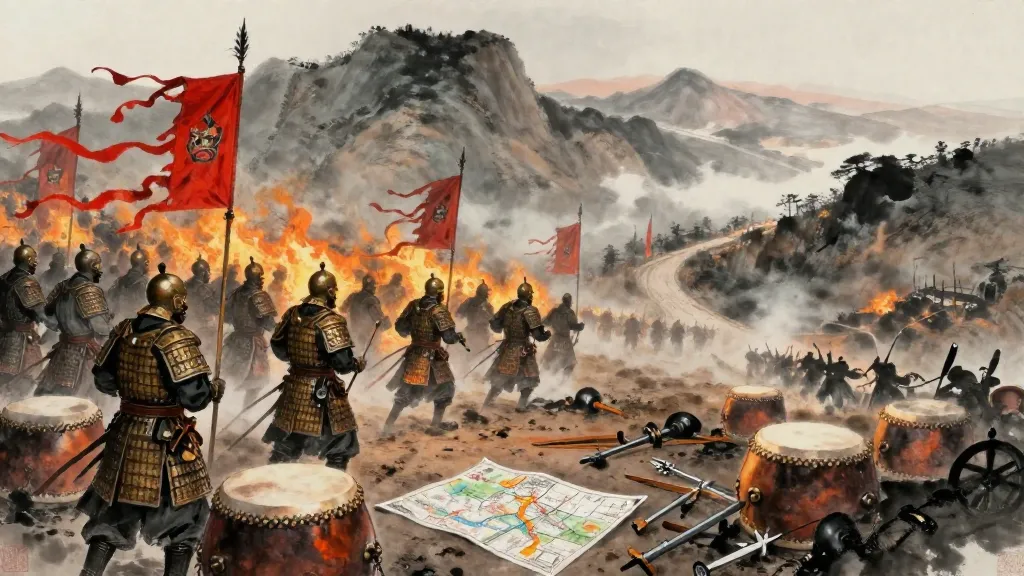
去強 (Eliminating the Strong) — Chinese ink painting

商君書 Shangjunshu · Chapter 4

去強

Eliminating the Strong

View:

以弱去強

Using Weakness to Eliminate Strength

以強去強者,弱;以弱去強者,強。國為善,奸必多。國富而貧治,曰重富,重富者強;國貧而富治,曰重貧,重貧者弱。兵行敵所不敢行,強;事興敵所羞為,利。主貴多變,國貴少變。國多物,削;主少物,強。千乘之國守千物者削。戰事兵用曰強,戰亂兵息而國削。

Using strength to eliminate strength results in weakness; using weakness to eliminate strength results in strength. When the state promotes goodness, villainy will inevitably multiply. A wealthy state governed as though poor is called 'doubly wealthy' — the doubly wealthy are strong. A poor state governed as though rich is called 'doubly impoverished' — the doubly impoverished are weak. When the army undertakes what the enemy dares not undertake, there is strength; when affairs are pursued that the enemy would be ashamed to pursue, there is advantage. The ruler values frequent change; the state values infrequent change. When the state has many diversions, it is diminished; when the ruler has few diversions, it is strong. A state of a thousand chariots that guards a thousand diversions will be diminished. When warfare employs the army, it is called strength; when warfare is chaotic and the army idle, the state is diminished.

Notes

1context

The paradoxical formula 'using weakness to eliminate strength' (以弱去強) encapsulates the Legalist insight that keeping the people in a state of relative deprivation (weakness) forces them to depend on the state and channel their energies into agriculture and warfare, thereby producing collective strength.

三官六虱

The Three Officials and the Six Lice

農、商、官三者,國之常官也。三官者生虱官者六:曰"歲",曰"食";曰"美",曰"好";曰"志",曰"行"。六者有朴,必削。三官之朴三人,六官之朴一人。以治法者,強;以治政者,削。常官治者遷官。治大,國小;治小,國大。強之,重削;弱之,重強。夫以強攻強者亡,以弱攻強者王。國強而不戰,毒輸於內,禮樂虱官生,必削;國遂戰,毒輸於敵,國無禮樂虱官,必強。舉榮任功曰強,虱官生必削。農少、商多,貴人貧、商貧、農貧,三官貧,必削。

Farmers, merchants, and officials — these three are the regular functionaries of the state. These three functionaries generate six parasitic functionaries: 'annual surplus' and 'food surplus'; 'beauty' and 'desirability'; 'ambition' and 'conduct.' If these six have substance, the state will inevitably be diminished. The regular three functionaries employ three people; the six parasitic functionaries employ one. Governing through law brings strength; governing through mere administration brings diminishment. When regular officials govern properly, officials are promoted. When administration is large, the state is small; when administration is small, the state is large. Strengthening what is already strong brings doubled diminishment; weakening what is strong brings doubled strength. Using strength to attack strength leads to destruction; using weakness to attack strength leads to kingship. When a state is strong but does not wage war, the poison flows inward — rites, music, and parasitic officials arise, and it will inevitably be diminished. When a state wages war, the poison flows toward the enemy — with no rites, music, or parasitic officials, it will inevitably be strong. Elevating glory and employing merit is called strength; when parasitic officials arise, there is inevitably diminishment. When farmers are few and merchants many, when the nobles are poor, the merchants poor, and the farmers poor — when all three functionaries are poor, there is inevitably diminishment.

十者與國之興亡

The Ten Things and the Rise or Fall of the State

國有禮、有樂、有《詩》、有《書》、有善、有修、有孝、有弟、有廉、有辯。國有十者,上無使戰,必削至亡;國無十者,上有使戰,必興至王。

國以善民治奸民者,必亂至削;國以奸民治善民者,必治至強。國用《詩》、《書》、禮、樂、孝、弟、善、修治者,敵至,必削國;不至,必貧國。不用八者治,敵不敢至;雖至,必卻;興兵而伐,必取;取,必能有之;按兵而不攻,必富。國好力,曰以難攻;國好言,曰以易攻。國以難攻者,起一得十;國以易攻者,出十亡百。

If a state has rites, music, the Odes, the Documents, goodness, self-cultivation, filial piety, brotherly deference, integrity, and eloquence — if the state has these ten things, the ruler will be unable to make the people wage war, and it will inevitably be diminished to the point of destruction. If a state lacks these ten things, the ruler will be able to make the people wage war, and it will inevitably flourish to the point of kingship.

If the state uses good people to govern wicked people, it will inevitably fall into disorder and be diminished. If the state uses wicked people to govern good people, it will inevitably be well ordered and become strong. If the state employs the Odes, Documents, rites, music, filial piety, brotherly deference, goodness, and self-cultivation in governance, then when the enemy arrives, the state will be diminished; when the enemy does not arrive, the state will be impoverished. If it does not use these eight in governance, the enemy will not dare to come; even if they come, they will be repulsed; if it raises arms to attack, it will conquer; having conquered, it will be able to hold; if it rests its arms and does not attack, it will grow wealthy. A state that values strength — this is called being attacked through what is difficult. A state that loves talk — this is called being attacked through what is easy. A state attacked through what is difficult raises one and gains ten; a state attacked through what is easy sends out ten and loses a hundred.

重罰輕賞

Heavy Punishment and Light Reward

重罰輕賞,則上愛民,民死上;重賞輕罰,則上不愛民,民不死上。興國行罰,民利且畏;行賞,民利且愛。國無力而行知巧者必亡。怯民使以刑,必勇;勇民使以賞,則死。怯民勇,勇民死,國無敵者強,強必王。貧者使以刑,則富;富者使以賞,則貧。治國能令貧者富、富者貧,則國多力,多力者王。王者刑九賞一,強國刑七賞三,削國刑五賞五。

Heavy punishments and light rewards mean the ruler cherishes the people, and the people will die for the ruler. Heavy rewards and light punishments mean the ruler does not cherish the people, and the people will not die for the ruler. A rising state that applies punishment finds the people both profited and awed; when it applies reward, the people are both profited and devoted. A state that lacks strength and yet relies on cleverness and skill will inevitably perish. Cowardly people directed through punishment will become brave; brave people directed through reward will fight to the death. When the cowardly become brave and the brave fight to the death, the state will have no enemy and be strong — and the strong will inevitably achieve kingship. The poor directed through punishment will become wealthy; the wealthy directed through reward will become poor. A governed state that can make the poor wealthy and the wealthy poor will have great strength, and with great strength comes kingship. A state that achieves kingship applies punishment in nine cases and reward in one. A strong state applies punishment in seven cases and reward in three. A diminished state applies punishment in five cases and reward in five.

以刑去刑

Using Punishment to Eliminate Punishment

國作壹一歲,十歲強;作壹十歲,百歲強,作壹百歲,千歲強。千歲強者王。威,以一取十,以聲以實,故能為威者王。能生不能殺,曰自攻之國,必削;能生能殺,曰攻敵之國,必強。故攻官、攻力、攻敵,國用其二、舍其一,必強;令用三者,威,必王。

十里斷者,國弱;九里斷者,國強。以日治者王,以夜治者強,以宿治者削。

舉民眾口數,生者著,死者削。民不逃粟,野無荒草,則國富,國富者強。

以刑去刑,國治,以刑致刑,國亂,故曰:行刑重輕,刑去事成,國強;重重而輕輕,刑至事生,國削。刑生力,力生強,強生威,威生惠,惠生於力。舉力以成勇戰,戰以成知謀。

A state that maintains unified commitment for one year will be strong for ten years; for ten years, strong for a hundred; for a hundred years, strong for a thousand. A state strong for a thousand years will achieve kingship. Authority takes one and gains ten, operating through both reputation and substance — therefore one who can wield authority will achieve kingship. A state that can produce but cannot eliminate is called 'a state that attacks itself' and will inevitably be diminished. A state that can both produce and eliminate is called 'a state that attacks the enemy' and will inevitably be strong. Of attacking through officials, attacking through strength, and attacking the enemy — a state that employs two and sets aside one will be strong; if it commands all three, it will have authority and achieve kingship.

When decisions are made within ten li, the state is weak; when decisions are made within nine li, the state is strong. When governance is completed within a day, there is kingship; when completed at night, there is strength; when it takes overnight, there is diminishment.

Register the total number of the people's mouths: record the living, remove the dead. If the people do not evade grain production and the fields have no barren grass, then the state is wealthy — and the wealthy state is strong.

Using punishment to eliminate punishment, the state is well ordered. Using punishment to invite more punishment, the state is disordered. Therefore it is said: when punishments are applied heavily for light offenses, punishments cease and affairs are accomplished — the state is strong. When heavy offenses are punished heavily and light offenses lightly, punishments multiply and problems arise — the state is diminished. Punishment generates strength, strength generates power, power generates authority, authority generates beneficence — and beneficence is born from strength. Exert strength to achieve brave warfare; wage war to achieve strategic wisdom.

Notes

1context

The principle 'using punishment to eliminate punishment' (以刑去刑) is perhaps the most famous paradox in the Book of Lord Shang. By punishing minor offenses severely, people are deterred from committing any offense at all, so that ultimately no punishment is needed. This logic underpinned the harsh penal codes of the Qin state.

粟金之論與十三數

The Argument of Grain versus Gold and the Thirteen Statistics

粟生而金死,粟死而金生。本物賤,事者眾,買者少,農困而奸勸,其兵弱,國必削至亡。金一兩生於竟內,粟十二石死於竟外;粟十二石生於竟內,金一兩死於竟外。國好生金於竟內,則金粟兩死,倉府兩虛,國弱;國好生粟於竟內,則金粟兩生,倉府兩實,國強。

強國知十三數:竟內倉、口之數,壯男、壯女之數,老、弱之數,官、士之數,以言說取食者之數,利民之數,馬、牛、芻藁之數。欲強國,不知國十三數,地雖利,民雖眾,國愈弱至削。

國無怨民曰強國。興兵而伐,則武爵武任,必勝。按兵而農,粟爵粟任,則國富。兵起而勝敵、按兵而國富者王。

When grain is produced, gold dies; when grain dies, gold is produced. If basic commodities are cheap, there will be many dealers and few buyers; farmers will be distressed while the treacherous prosper, the army will be weak, and the state will inevitably be diminished to the point of destruction. When one tael of gold is produced within the borders, twelve shi of grain die beyond the borders; when twelve shi of grain are produced within the borders, one tael of gold dies beyond the borders. If the state loves producing gold within its borders, then both gold and grain will die — the granaries and treasuries will both be empty, and the state will be weak. If the state loves producing grain within its borders, then both gold and grain will be produced — the granaries and treasuries will both be full, and the state will be strong.

A strong state knows thirteen statistics: the number of granaries and mouths within its borders; the number of able-bodied men and able-bodied women; the number of the old and the weak; the number of officials and scholars; the number of those who live by persuasion and talk; the number of useful people; the number of horses, cattle, and fodder. If you desire a strong state but do not know the thirteen statistics, then even if the land is fertile and the people numerous, the state will grow ever weaker until it is diminished.

A state with no resentful people is called a strong state. If it raises arms and campaigns, then grant military ranks and military appointments — victory is certain. If it rests its arms and farms, grant grain ranks and grain appointments — the state is wealthy. The state that wages war and defeats its enemies, rests its arms and grows wealthy — that state will achieve kingship.

Notes

1context

The thirteen statistics (十三數) represent perhaps the earliest systematic census and accounting framework in Chinese political thought. This emphasis on quantitative statecraft — knowing exact population figures, labor capacity, and resource stocks — is a hallmark of Legalist governance.

Edition & Source

Text
《商君書》 Shangjunshu
Edition
中華古詩文古書籍網 transcription
Commentary
Traditional commentaries