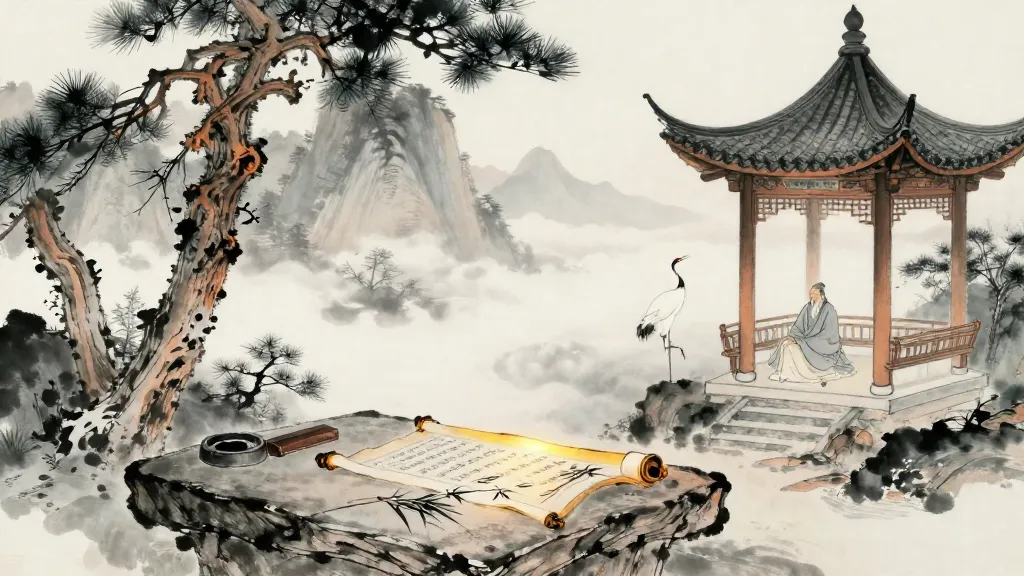
說民 (Persuading the People) — Chinese ink painting

商君書 Shangjunshu · Chapter 5

說民

Persuading the People

View:

八者亂國

The Eight Things That Disorder the State

辯慧,亂之贊也;禮樂,淫佚之徵也;慈仁,過之母也;任譽,奸之鼠也。亂有贊則行,淫佚有徵則用,過有母則生,奸有鼠則不止。八者有群,民勝其政;國無八者,政勝其民。民勝其政,國弱;政勝其民,兵強。故國有八者,上無以使守戰,必削至亡。國無八者,上有以使守戰,必興至王。

用善,則民親其親;任奸,則民親其制。合而復者,善也;別而規者,奸也。章善,則過匿;任奸,則罪誅。過匿,則民勝法;罪誅,則法勝民。

民勝法,國亂;法勝民,兵強。故曰:以良民治,必亂至削;以奸民治,必治至強。

Eloquence and cleverness are the supporters of disorder; rites and music are the symptoms of dissoluteness and indulgence; compassion and benevolence are the mother of transgression; reliance on reputation is the refuge of villainy. When disorder has supporters, it proceeds; when dissoluteness has symptoms, they are employed; when transgression has a mother, it is born; when villainy has refuge, it does not cease. When these eight form a mass, the people overpower the government; when the state lacks these eight, the government overpowers the people. When the people overpower the government, the state is weak; when the government overpowers the people, the army is strong. Therefore if the state has these eight things, the ruler will have no means to make the people defend and fight, and it will inevitably be diminished to the point of destruction. If the state lacks these eight things, the ruler will have the means to make the people defend and fight, and it will inevitably flourish to the point of kingship.

If goodness is employed, the people will be devoted to their personal relationships; if severity is employed, the people will be devoted to the system. Those who come together and return to each other — that is goodness; those who separate and scrutinize each other — that is severity. When goodness is made prominent, transgressions are concealed; when severity is employed, crimes are punished. When transgressions are concealed, the people overpower the law; when crimes are punished, the law overpowers the people.

When the people overpower the law, the state is disordered; when the law overpowers the people, the army is strong. Therefore it is said: governing through good people will inevitably lead to disorder and diminishment; governing through severe people will inevitably lead to order and strength.

Notes

1context

The 'eight things' (八者) — eloquence, cleverness, rites, music, compassion, benevolence, reliance on reputation, and refuge in reputation — are expanded into the 'ten things' in chapter 4 and the 'six lice' in chapter 13. All represent Confucian virtues that Shang Yang saw as parasitic on effective governance.

重輕刑則國強

Punishing Light Offenses Heavily Strengthens the State

國以難攻,起一取十,國以易攻,起十亡百。國好力,曰以難攻;國好言,曰以易攻。民易為言,難為用。國法作民之所難,兵用民之所易而以力攻者,起一得十;國法作民之所易,兵用民之所難而以言攻者,出十亡百。

罰重,爵尊;賞輕,刑威。爵尊,上愛民;刑威,民死上。故興國行罰,則民利;用賞,則上重。法詳,則刑繁;法繁,則刑省。民治則亂,亂而治之,又亂。故治之於其治,則治;治之於其亂,則亂。民之情也治,其事也亂。故行刑,重其輕者,輕者不生,則重者無從至矣,此謂治之於其治者。

行刑。重其重者,輕其輕者,輕者不止,則重者無從止矣,此謂治之於其亂也。故重輕,則刑去事成,國強;重重而輕輕,則刑至而事生,國削。

A state attacked through what is difficult raises one and gains ten; a state attacked through what is easy raises ten and loses a hundred. A state that values strength — this is called being attacked through what is difficult; a state that loves talk — this is called being attacked through what is easy. The people find it easy to talk and difficult to be useful. When the state's laws require what is difficult of the people and the army employs what comes easily to them, attacking through strength, it raises one and gains ten. When the state's laws require only what is easy and the army employs what is difficult, attacking through talk, it sends out ten and loses a hundred.

When punishments are heavy, ranks are honored; when rewards are light, punishments have authority. When ranks are honored, the ruler cherishes the people; when punishments have authority, the people die for the ruler. Therefore a rising state that applies punishment finds the people profited; when it uses reward, the ruler gains weight. When the law is detailed, punishments are frequent; when the law is comprehensive, punishments decrease. If the people are governed when already orderly, things remain orderly; if governed only when disordered, disorder returns. The people's nature tends toward order, but their affairs tend toward disorder. Therefore in applying punishment, if you punish light offenses heavily, the light offenses will not arise, and consequently heavy offenses will have no way of occurring — this is called governing before disorder arises.

In applying punishment, if you punish heavy offenses heavily and light offenses lightly, the light offenses will not stop, and consequently heavy offenses will have no way of stopping — this is called governing after disorder has arisen. Therefore punishing light offenses heavily means punishment ceases and affairs are accomplished, and the state is strong. Punishing heavy offenses heavily and light offenses lightly means punishment multiplies and problems arise, and the state is diminished.

怯民勇勇民死

Making the Cowardly Brave and the Brave Fight to the Death

民勇,則賞之以其所欲;民怯,則殺之以其所惡。故怯民使之以刑,則勇;勇民使之以賞,則死。怯民勇,勇民死,國無敵者必王。

民貧則弱國,富則淫,淫則有虱,有虱則弱。故貧者益之以刑,則富;富者損之以賞,則貧。治國之舉,貴令貧者富、富者貧。貧者富,國強;富者貧,三官無虱。國久強而無虱者必王。

刑生力,力生強,強生威,威生德,德生於刑。故刑多,則賞重;賞少,則刑重。民之有欲有惡也,欲有六淫,惡有四難。從六淫,國弱;行四難,兵強。故王者刑於九而賞出一。刑於九,則六淫止;賞出一,則四難行。六淫止,則國無奸;四難行,則兵無敵。

If the people are brave, reward them with what they desire; if the people are cowardly, punish them with what they dread. Therefore cowardly people directed through punishment become brave; brave people directed through reward will fight to the death. When the cowardly become brave and the brave fight to the death, the state will have no enemy and will surely achieve kingship.

When the people are poor, the state is weak; when they become rich, they grow dissolute; when dissolute, parasites arise; with parasites, the state is weakened. Therefore add punishment to the poor and they will become wealthy; diminish the wealthy through reward expenditure and they will become poor. In governance, what matters is to make the poor wealthy and the wealthy poor. When the poor become wealthy, the state is strong; when the wealthy become poor, the three official classes will have no parasites. A state that remains strong for a long time without parasites will surely achieve kingship.

Punishment generates strength, strength generates power, power generates authority, authority generates virtue — and virtue is born from punishment. When punishments are many, rewards carry weight; when rewards are few, punishments carry weight. The people have desires and aversions. Their desires fall into six dissolutions; their aversions include four difficulties. If the six dissolutions are indulged, the state is weak; if the four difficulties are enacted, the army is strong. Therefore the king punishes in nine cases and rewards in one. When he punishes in nine, the six dissolutions cease; when he rewards from one channel, the four difficulties are enacted. When the six dissolutions cease, the state has no villainy; when the four difficulties are enacted, the army has no rival.

壹民之利出一孔

Unifying the People Through a Single Channel of Benefit

民之所欲萬,而利之所出一。民非一,則無以致欲,故作一。作一則力摶,力摶則強。強而用,重強。故能生力,能殺力,曰攻敵之國,必強。塞私道以窮其志,啟一門以致其欲,使民必先行其所要,然後致其所欲,故力多。力多而不用,則志窮;志窮,則有私;有私,則有弱。故能生力,不能殺力,曰自攻之國,必削。故曰:王者,國不蓄力,家不積粟。國不蓄力,下用也;家不積粟,上藏也。

The people's desires are myriad, but the channel through which benefit issues is one. If the people are not unified, they have no way to fulfill their desires — therefore create unity. With unity, strength is concentrated; with concentrated strength, there is power. Strong and employed, this is doubled strength. A state that can generate strength and can deploy strength is called 'a state that attacks the enemy' and will surely be strong. Block private channels to exhaust their willfulness; open a single gate through which to direct their desires. Make the people first perform what is required of them and only afterward obtain what they desire — then their strength will be great. If strength is great but not deployed, willfulness sets in; when willfulness sets in, private interests arise; with private interests, there is weakness. Therefore a state that can generate strength but cannot deploy it is called 'a state that attacks itself' and will inevitably be diminished. Therefore it is said: the true king's state does not hoard strength and his households do not stockpile grain. The state does not hoard strength because it employs it below; households do not stockpile grain because it is stored above.

家斷則王

Household-Level Judgment Achieves Kingship

國治:斷家王,斷官強,斷君弱。重輕,刑去。常官,則治。省刑,要保,賞不可倍也。有奸必告之,則民斷於心,上令而民知所以應。器成於家,而行於官,則事斷於家。故王者刑賞斷於民心,器用斷於家。治明則同,治暗則異。同則行,異則止,行則治,止則亂。治則家斷,亂則君斷。治國者貴不斷,故以十里斷者弱,以五里斷者強。家斷則有餘,故曰:日治者王。

官斷則不足,故曰:夜治者強。君斷則亂,故曰:宿治者削。故有道之國,治不聽君,民不從官。

In a well-governed state: when judgment is made at the household level, there is kingship; when judgment is made at the official level, there is strength; when judgment rests with the ruler, there is weakness. When light offenses are punished heavily, punishment disappears. When officials maintain their proper functions, there is order. Reduce punishments, emphasize mutual guarantees, and rewards must not be doubled. If every instance of villainy must be reported, then the people judge in their hearts, and when the ruler issues commands, the people know how to respond. When implements are fashioned in the household and employed by the officials, then affairs are decided at the household level. Therefore the true king ensures that punishment and reward are decided in the people's hearts, and tools and instruments are decided in the household. When governance is clear, there is unanimity; when governance is obscure, there is divergence. With unanimity, things proceed; with divergence, things stall. When things proceed, there is order; when they stall, there is disorder. When there is order, the household judges; when there is disorder, the ruler must judge. The governor of a state values not having to make decisions. When decisions are made within ten li, the state is weak; when within five li, the state is strong. When the household judges, there is surplus — therefore it is said: 'day governance achieves kingship.'

When officials judge, there is insufficiency — therefore it is said: 'night governance achieves strength.' When the ruler judges, there is disorder — therefore it is said: 'overnight governance leads to diminishment.' Therefore in a state that possesses the Way, governance does not depend on the ruler, and the people do not rely on officials.

Notes

1context

The metaphor of 'day/night/overnight governance' (日治/夜治/宿治) rates administrative efficiency by how quickly matters are resolved. The ideal state operates so automatically through law that decisions happen at the lowest level (household) within a single day, requiring no escalation.

Edition & Source

Text
《商君書》 Shangjunshu
Edition
中華古詩文古書籍網 transcription
Commentary
Traditional commentaries