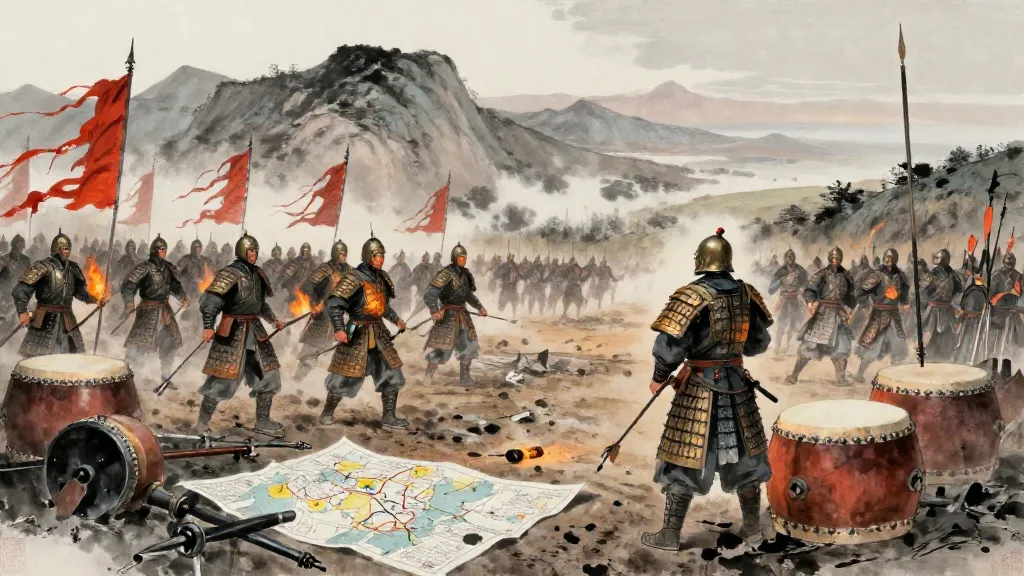
賞刑 (Reward and Punishment) — Chinese ink painting

商君書 Shangjunshu · Chapter 17

賞刑

Reward and Punishment

View:

壹賞壹刑壹教

Unified Reward, Unified Punishment, Unified Instruction

聖人之為國也,壹賞,壹刑,壹教。壹賞則兵無敵,壹刑則令行,壹教則下聽上。夫明賞不費,明刑不戮,明教不變,而民知於民務,國無異俗。

明賞之猶至於無賞也,明刑之猶至於無刑也,明教之猶至於無教也。

The sage's governance of the state employs unified reward, unified punishment, and unified instruction. Unified reward means the army has no rival; unified punishment means orders are carried out; unified instruction means those below obey those above. When reward is clear, it costs nothing; when punishment is clear, no one is executed; when instruction is clear, nothing changes — yet the people understand their duties and the state has no divergent customs.

When reward is perfectly clear, it reaches the point of no reward being needed. When punishment is perfectly clear, it reaches the point of no punishment being needed. When instruction is perfectly clear, it reaches the point of no instruction being needed.

壹賞出於兵

Unified Reward Issues from Military Service

所謂壹賞者,利祿官爵摶出於兵,無有異施也。夫固知愚、貴賤、勇怯、賢不肖,皆盡其胸臆之知,竭其股肱之力,出死而為上用也;天下豪傑賢良從之如流水;是故兵無敵而今行於天下。萬乘之國不敢蘇其兵中原;千乘之國不敢捍城。萬乘之國,若有蘇其兵中原者,戰將覆其軍;千乘之國,若有捍城者,攻將凌其城。戰必覆人之軍,攻必凌人之城,盡城而有之,盡賓而致之,雖厚慶賞,何費匱之有矣?昔湯封於贊茅,文王封於岐周,方百里。

湯與桀戰於鳴條之野,武王與紂戰於牧野之中,大破九軍,卒裂土封諸侯,士卒坐陳者,里有書社。車休息不乘,縱馬華山之陽,縱牛於農澤,縱之老而不收。此湯、武之賞也。故曰:贊茅、岐周之粟,以賞天下之人,不人得一升;以其錢賞天下之人,不人得一錢。故曰:百里之君,而封侯其臣,大其舊;自士卒坐陳者,里有書社;賞之所加,寬於牛馬者;何也?善因天下之貨以賞天下之人。故曰:明賞不費。湯、武既破桀、紂,海內無害,天下大定,築五庫,藏五兵,偃武事,行文教,倒載干戈,搢笏,作為樂,以申其德,當此時也,賞祿不行,而民整齊。故曰:明賞之猶至於無賞也。

What is called 'unified reward' means that profit, salary, office, and rank all issue solely from military service, with no other channel of bestowal. Thus whether wise or foolish, noble or base, brave or timid, worthy or unworthy, all exhaust the knowledge in their minds and drain the strength of their limbs, going forth to die in the ruler's service. The heroes and worthies of the world follow like flowing water. Therefore the army has no rival and commands are obeyed throughout the world. A state of ten thousand chariots dares not deploy its army in the central plains; a state of a thousand chariots dares not defend its walls. If a state of ten thousand chariots dares to deploy its army in the central plains, battle will overturn its forces. If a state of a thousand chariots dares to defend its walls, assault will overwhelm them. When battle invariably overturns enemy forces and assault invariably overwhelms enemy walls — when you take every city you seize and capture every submission you receive — then even with generous rewards, what expense or shortfall could there be? Long ago, Tang was enfeoffed at Zanmao and King Wen at Qizhou, each a territory of merely a hundred li.

Tang fought Jie at the fields of Mingtiao; King Wu fought Zhou of Shang at the fields of Muye. They utterly destroyed the nine armies and ultimately carved up the land to enfeoff the feudal lords. Soldiers who had sat in formation received a village with registered families. War chariots were rested and not ridden; horses were released on the sunny slopes of Mount Hua; cattle were released on the farming marshes — released to grow old without being recaptured. This was the reward of Tang and Wu. Therefore it is said: if you took the grain of Zanmao and Qizhou to reward every person in the world, not one person would receive a single sheng. If you took their coins to reward every person in the world, not one person would receive a single coin. Yet: a lord of a hundred li enfeoffed his ministers as marquises, enlarging their former holdings; from common soldiers who sat in formation, each village received registered families; the scope of reward was more generous even than for cattle and horses — why? Because he skillfully used the world's wealth to reward the world's people. Therefore it is said: 'Clear reward costs nothing.' After Tang and Wu defeated Jie and Zhou, the realm was free from harm and all under heaven was greatly settled. They built five storehouses, stored the five weapons, ceased military affairs, practiced civil instruction, loaded shields and halberds blade-down, tucked tablets of office in their belts, and composed music to display their virtue. At that time, reward and salary were no longer distributed, yet the people were orderly and disciplined. Therefore it is said: 'When reward is perfectly clear, it reaches the point of no reward being needed.'

Notes

1context

The Battle of Mingtiao (鳴條之戰) was where Tang overthrew Jie, last ruler of the Xia dynasty. The Battle of Muye (牧野之戰, c. 1046 BC) was where King Wu of Zhou overthrew Zhou of Shang. Both exemplify how decisive military victory enables generosity in peace.

壹刑無等級

Unified Punishment Recognizes No Rank

所謂壹刑者,刑無等級,自卿相、將軍以至大夫、庶人,有不從王令、犯國禁、亂上制者,罪死不赦。有功於前,有敗於後,不為損刑。有善於前,有過於後,不為虧法。忠臣孝子有過,必以其數斷。守法守職之吏有不行王法者,罪死不赦,刑及三族。周官之人,知而訐之上者,自免於罪,無貴賤,屍襲其官長之官爵田祿。故曰:重刑,連其罪,則民不敢試。民不敢試,故無刑也。夫先王之禁,刺殺,斷人之足,黥人之面,非求傷民也,以禁奸止過也。故禁奸止過,莫若重刑。刑重而必得,則民不敢試,故國無刑民。國無刑民,故曰:明刑不戮。晉文公將欲明刑以親百姓,於是合諸卿大夫於侍千宮,顛頡後至,吏請其罪,君曰:"用事焉。"吏遂斷顛頡之脊以殉。晉國之土,稽焉皆懼,曰:"顛頡之有寵也,斷以殉,況於我乎!"舉兵伐曹、五鹿,及反鄭之埤,東徵之畝,勝荊人於城濮。三軍之士,止之如斬足,行之如流水。三軍之士,無敢犯禁者。故一假道重輕於顛頡之脊,而晉國治。

What is called 'unified punishment' means punishment recognizes no rank. From chief ministers and generals down to grand officers and commoners — anyone who disobeys the king's orders, violates the state's prohibitions, or disrupts the ruler's institutions shall be sentenced to death without pardon. If one has merit in the past but failure afterward, the punishment is not reduced. If one has done good in the past but committed an offense afterward, the law is not compromised. Even if loyal ministers and filial sons commit offenses, they must be judged according to the established standards. Law-abiding and duty-keeping officials who fail to enforce the king's law shall be sentenced to death without pardon, and punishment shall extend to their three kinship groups. Those among the Zhou officials who detect violations and report them to their superiors shall be exempt from guilt, regardless of their rank, and shall inherit the office, rank, fields, and salary of their superior. Therefore it is said: when punishment is heavy and guilt is shared, the people dare not test the law. When the people dare not test it, there is no punishment. The former kings' prohibitions — stabbing, amputating feet, branding faces — were not intended to injure the people but to prohibit villainy and stop transgressions. Nothing prohibits villainy and stops transgression like heavy punishment. When punishment is heavy and offenders are certainly caught, the people dare not test the law, and thus the state has no punished people. When the state has no punished people, it is said: 'Clear punishment needs no executions.' Duke Wen of Jin wished to make punishment clear in order to win the people's devotion. He assembled all the ministers and grand officers at the Shiqian Palace. Dian Jie arrived late. The official requested his punishment. The lord said: 'Carry out the sentence.' The official thereupon severed Dian Jie's spine and displayed his body. Every notable in Jin was struck with fear, saying: 'Dian Jie was a favorite, yet he was executed and displayed — what about us!' Duke Wen raised armies to attack Cao and Wulu, reversed the walls of Zheng, marched east to the farming fields, and defeated the Jing people at Chengpu. The soldiers of the three armies, when halted, stopped as though their feet had been cut off; when marched, flowed like water. Not a soldier dared violate the prohibitions. Thus by once using the weight of punishment on Dian Jie's spine, the state of Jin was brought to order.

Notes

1person晉文公Jìn Wén Gōng

Duke Wen of Jin (晉文公, r. 636–628 BC) was one of the Five Hegemons of the Spring and Autumn period. His victory at the Battle of Chengpu (城濮之戰, 632 BC) over Chu established Jin's hegemony.

2person顛頡Diān Jié

Dian Jie (顛頡) was a favored minister of Duke Wen of Jin who was executed for arriving late, serving as a warning to all others.

壹教出於戰

Unified Instruction Issues from Warfare

昔者周公旦殺管叔、流霍叔,曰:"犯禁者也。"天下眾皆曰:"親昆弟有過,不違,而況疏遠乎!"故天下知用刀鋸於周庭,而海內治,故曰:明刑之猶至於無刑也。

所謂壹教者,博聞、辯慧,信廉、禮樂、修行、群黨、任譽、清濁,不可以富貴,不可以評刑,不可獨立私議以陳其上。堅者被,銳者挫。雖曰聖知、巧佞、厚朴,則不能以非功罔上利。然富貴之門,要存戰而已矣。彼能戰者踐富貴之門。強梗焉,有常刑而不赦。是父兄、昆弟、知識、婚姻、契約者,皆曰:"務之所加,存戰而已矣。"夫故當壯者務於戰,老弱者務於守,死者不悔,生者務勸,此臣之所謂壹教也。民之欲富貴也,共闔棺而後止,而富貴之門必出於兵,是故民聞戰而相賀也,起居飲食所歌謠者,戰也。

此臣所謂明教之猶至於無教也。

此臣所謂參教也。聖人非能通,知萬物之要也。故其治國,舉要以致萬物,故寡教而多功。聖人治國也,易知而難行也。是故聖人不必加,凡主不必廢;殺人不為暴,賞人不為仁者,國法明也。聖人以功授官予爵,故賢者不憂;聖人不宥過,不赦刑,故奸無起。聖人治國也,審壹而已矣。

In the past, the Duke of Zhou Dan killed Guan Shu and banished Huo Shu, saying: 'They violated the prohibitions.' Everyone under heaven said: 'Even his own brothers were not spared when they transgressed — how much less would the distant and unrelated be spared!' Thus the world knew that blades and saws were employed at the Zhou court, and the realm was brought to order. Therefore it is said: 'When punishment is perfectly clear, it reaches the point of no punishment being needed.'

What is called 'unified instruction' means this: broad learning and eloquent wisdom, trustworthiness and integrity, rites and music, self-cultivation and conduct, factions and cliques, reliance on reputation, and discriminating moral talk — none of these may be used to obtain wealth and honor, none may be used to influence judgments of punishment, and none may independently offer private opinions to their superiors. The stubborn are broken; the sharp are blunted. Even those who claim to be sages, the clever and flattering, the honest and simple — none can use anything other than merit to secure the ruler's benefits. The gate to wealth and honor lies solely in warfare. Those who can fight enter the gate of wealth and honor. Those who are recalcitrant receive the standard punishment without pardon. Therefore fathers and brothers, elder and younger siblings, acquaintances, marriage connections, and contractual partners all say: 'What effort is directed toward lies solely in warfare.' Thus the able-bodied devote themselves to warfare, the old and weak devote themselves to defense, the dead have no regrets, and the living strive earnestly. This is what your minister calls unified instruction. The people desire wealth and honor until the coffin lid closes, and the gate to wealth and honor must issue from military service — therefore when the people hear of war they congratulate each other. In all their daily activities, eating and drinking, what they sing about is warfare.

This is what your minister means by saying that when instruction is perfectly clear, it reaches the point of no instruction being needed.

This is what your minister calls the threefold instruction. The sage does not comprehend everything — he knows the essentials of the myriad things. Therefore in governing the state, he grasps the essentials to command all things — thus instruction is minimal yet achievements are many. The sage's governance of the state is easy to understand yet difficult to practice. Therefore the sage need not add anything special, and the ordinary ruler need not be discarded. Killing without being considered cruel and rewarding without being considered benevolent — this is because the state's law is clear. The sage grants office and bestows rank according to merit, therefore the worthy do not worry. The sage does not forgive transgressions and does not pardon punishments, therefore villainy does not arise. The sage's governance of the state consists of careful unity — that is all.
Notes

1person周公旦Zhōu Gōng Dàn

The Duke of Zhou (周公旦, fl. 11th century BC) was the brother of King Wu who served as regent for the young King Cheng. He executed his own brother Guan Shu (管叔) and banished Huo Shu (霍叔) for their rebellion.

Edition & Source

Text
《商君書》 Shangjunshu
Edition
中華古詩文古書籍網 transcription
Commentary
Traditional commentaries