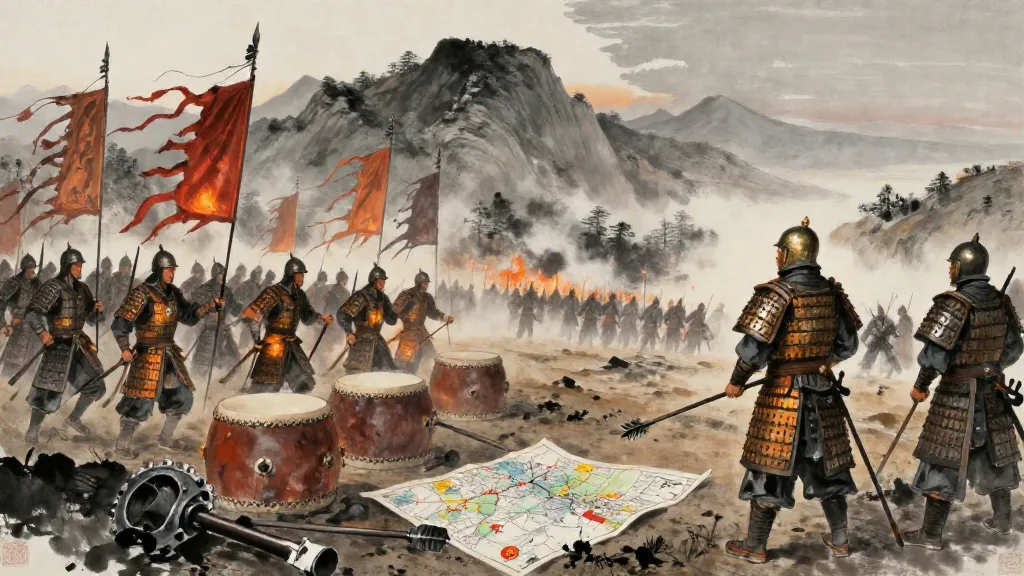
外內 (External and Internal Affairs) — Chinese ink painting

商君書 Shangjunshu · Chapter 22

外內

External and Internal Affairs

View:

外事之難在戰

The Difficulty of External Affairs Lies in Warfare

民之外事,莫難於戰,故輕法不可以使之。奚謂輕法?其賞少而威薄、淫道不塞之謂也。奚謂淫道?為辯知者貴、遊宦者任、文學私名顯之謂也。

三者不塞,則民不戰而事失矣。故其賞少,則聽者無利也;威薄,則犯者無害也。故開淫道以誘之,而以輕法戰之,是謂設鼠而餌以狸也,亦不幾乎!

故欲戰其民者,必以重法。賞則必多,威則必嚴,淫道必塞,為辯知者不貴,遊宦者不任,文學私名不顯。賞多威嚴,民見戰賞之多則忘死,見不戰之辱則苦生。賞使之忘死,而威使之苦生,而淫道又塞,以此遇敵,是以百石之弩射飄葉也,何不陷之有哉?

Of the people's external affairs, none is more difficult than warfare. Therefore lenient law cannot compel them. What is meant by lenient law? Rewards are few, authority is weak, and the dissolute channels are not blocked. What are the dissolute channels? Honoring the eloquent and clever, appointing wandering office-seekers, and allowing literary figures with private reputations to become prominent.

If these three are not blocked, the people will not fight and affairs will fail. When rewards are few, those who obey gain no benefit. When authority is weak, those who transgress suffer no harm. Opening dissolute channels to lure the people while using lenient law to make them fight — this is like setting a mousetrap and baiting it with a wildcat. How could it possibly work!

Therefore if you wish to make the people fight, you must employ stern law. Rewards must be generous, authority must be severe, and the dissolute channels must be blocked — the eloquent and clever must not be honored, wandering office-seekers must not be appointed, literary figures with private reputations must not be made prominent. With generous rewards and severe authority, when the people see the abundance of war rewards they forget death, and when they see the disgrace of not fighting they find life bitter. Reward makes them forget death; authority makes them find life bitter; and the dissolute channels are blocked. Meeting the enemy under these conditions is like shooting a drifting leaf with a crossbow of a hundred stone — what could possibly not be pierced?

內事之苦在農

The Hardship of Internal Affairs Lies in Agriculture

民之內事,莫苦於農,故輕治不可以使之。奚謂輕治?其農貧而商富——故其食賤者錢重,食賤則農貧,錢重則商富;末事不禁,則技巧之人利,而游食者眾之謂也。故農之用力最苦,而贏利少,不如商賈、技巧之人。苟能令商賈、技巧之人無繁,則欲國之無富,不可得也。故曰:欲農富其國者,境內之食必貴,而不農之徵必多,市利之租必重。則民不得無田,無田不得不易其食。食貴則田者利,田者利則事者眾。食貴,糴食不利,而又加重征,則民不得無去其商賈、技巧而事地利矣。故民之力盡在於地利矣。

故為國者,邊利盡歸於兵,市利盡歸於農。邊利歸於兵者強,市利歸於農者富。故出戰而強、入休而富者,王也。

Of the people's internal affairs, none is more burdensome than agriculture. Therefore lenient governance cannot compel them. What is meant by lenient governance? Farmers are poor while merchants are wealthy. When food is cheap, currency is dear; when food is cheap, farmers are poor; when currency is dear, merchants are wealthy. When non-essential activities are not prohibited, the technically skilled profit and the idle eaters are many. Thus farmers exert the most toilsome effort yet gain the least profit — they cannot compete with merchants and the technically skilled. If you can simply prevent the merchants and technically skilled from proliferating, then it would be impossible for the state not to become wealthy. Therefore it is said: if you wish agriculture to enrich the state, food within the borders must be made expensive, taxes on non-agricultural occupations must be made heavy, and rents on market profits must be made steep. Then the people cannot avoid needing fields; without fields they cannot avoid working to obtain food. When food is expensive, farmers profit; when farmers profit, those who farm are numerous. When food is expensive, buying grain is unprofitable — and with heavy taxes added besides — the people cannot avoid abandoning commerce and technical crafts to engage in the profits of the land. Therefore the people's strength is entirely directed to the profits of the land.

Therefore in governing the state: the profits of the border should all go to the army; the profits of the market should all go to agriculture. When border profits go to the army, the state is strong; when market profits go to agriculture, the state is wealthy. A state that is strong when it marches to war and wealthy when it rests at home — that is kingship.

Edition & Source

Text
《商君書》 Shangjunshu
Edition
中華古詩文古書籍網 transcription
Commentary
Traditional commentaries