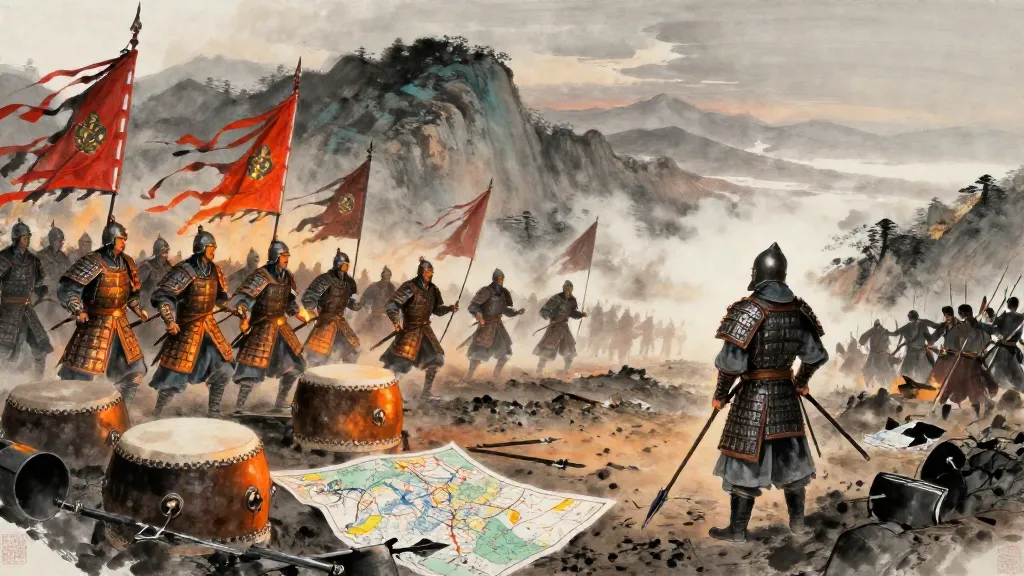
定分 (Fixing the Standards) — Chinese ink painting

商君書 Shangjunshu · Chapter 26

定分

Fixing the Standards

View:

法令明白易知

Law and Orders Must Be Clear and Easy to Understand

公問於公孫鞅曰:"法令以當時立之者,明旦欲使天下之吏民皆明知而用之,如一而無私,奈何"?

公孫鞅曰:為法令,置官吏,朴足以知法令之謂者,以為天下正,則奏天子。天子則各主法令之,皆降,受命,發官。各主法令之民,敢忘行主法令之所謂之名,各以其所忘之法令名罪之。主法令之吏有遷徙物故,輒使學讀法令所謂,為之程式,使日數而知法令之所謂;不中程,為法令以罪之。

The duke asked Gongsun Yang: "If laws and orders are established for the present time, how can we ensure that by the next morning every official and commoner in the realm clearly knows and applies them, uniformly and without private distortion?"

Gongsun Yang said: In drafting laws and orders and appointing officials, select those sufficiently straightforward to understand the meaning of the laws and orders, and install them as the realm's legal authorities. Then memorialize this to the Son of Heaven. The Son of Heaven shall appoint each to be master of the laws and orders. All shall descend in rank, receive their commands, and be dispatched to their offices. For each populace assigned a master of laws and orders: if any dare to forget or neglect the content of the laws and orders they administer, they shall be convicted according to the specific law or order they forgot. When masters of laws and orders are transferred, relocated, or die, immediately have their replacements study and read the content of the laws and orders. Establish a training schedule so that within a set number of days they know the content of the laws and orders. Those who fail to meet the standard shall be convicted under the law.

Notes

1context

This chapter, likely among the latest in the text, describes a sophisticated system of legal publication, official training, and accountability that anticipates the administrative apparatus of the unified Qin empire. The emphasis on making law 'clear and easy to understand' (明白易知) represents a departure from the tradition of legal secrecy.

法令副本與禁室

Legal Copies and the Forbidden Chamber

有敢剟定法令、損益一字以上,罪死不赦。諸官吏及民有問法令之所謂也於主法令之吏,皆各以其故所欲問之法令明告之。各為尺六寸之符,明書年、月、日、時、所問法令之名,以告吏民。主法令之吏不告,及之罪,而法令之所謂也,皆以吏民之所問法令之罪,各罪主法令之吏。即以左券予吏之問法令者,主法令之吏謹藏其右券木柙,以室藏之,封以法令之長印。即後有物故,以券書從事。

法令皆副,置一副天子之殿中,為法令為禁室,有鋌鑰,為禁而以封之,內藏法令一副禁室中,封以禁印。有擅髮禁室印,及入禁室視禁法令,及禁剟一字以上,罪皆死不赦。一歲受法令以禁令。

Anyone who dares to alter or tamper with established laws and orders, adding or removing even a single character, shall be sentenced to death without pardon. When any official or commoner inquires of the master of laws and orders about the content of a particular law or order, the master must clearly explain the specific law or order inquired about. For each inquiry, a tally of one foot six inches shall be made, clearly recording the year, month, day, hour, and the name of the law or order inquired about, and this shall be reported to the official and the commoner. If the master of laws and orders fails to explain, he is convicted of the corresponding offense — specifically, whatever crime the inquiring official or commoner would be liable for under the law they asked about, the master of laws and orders shall be charged with that crime instead. The left half of the tally is given to the official who inquired about the law; the master of laws and orders carefully stores the right half in a wooden case, keeps it in a sealed chamber, and seals it with the chief legal officer's seal. Should any subsequent dispute arise, the tally serves as the basis for adjudication.

All laws and orders shall be duplicated. One copy shall be placed in the Son of Heaven's palace hall. A forbidden chamber shall be built for the laws and orders, fitted with lock and key, sealed under prohibition. One copy of the laws and orders shall be stored inside the forbidden chamber, sealed with the prohibition seal. Anyone who opens the forbidden chamber's seal without authorization, enters the forbidden chamber to view the prohibited laws and orders, or tampers with even a single character — the punishment in all cases is death without pardon. Once a year, the laws and orders are received and issued as prohibition orders.

天下皆知法

All Under Heaven Know the Law

天子置三法官,殿中置一法官,御史置一法官及吏,丞相置一法官。諸侯、郡、縣皆各為置一法官及吏,皆此秦一法官。郡、縣、諸侯一受寶來之法令,學問並所謂。吏民知法令者,皆問法官。故天下之吏民無不知法者。

吏明知民知法令也,故吏不敢以非法遇民,民不敢犯法以乾法官也。遇民不修法,則問法官,法官即以法之罪告之,民即以法官之言正告之吏。吏知其如此,故吏不敢以非法遇民,民又不敢犯法。如此,天下之吏民雖有賢良辯慧,不能開一言以枉法;雖有千金,不能以用一銖。故知詐賢能者皆作而為善,皆務自治奉公。民愚則易治也,此所生於法明白易知而必行。

The Son of Heaven shall appoint three legal officials: one in the palace hall, one under the Imperial Censor with clerks, and one under the Chancellor. Every feudal lord, commandery, and county shall each appoint one legal official with clerks — all modeled on the Qin legal official. Commanderies, counties, and feudal lords all receive the officially transmitted laws and orders and study their content. Any official or commoner who needs to know the laws and orders shall inquire of the legal official. Therefore no official or commoner under heaven is ignorant of the law.

When officials clearly know that the people know the laws and orders, officials dare not treat the people in violation of the law, and the people dare not break the law to challenge the legal official. If the people are treated by an official in a way that does not accord with the law, they inquire of the legal official. The legal official immediately informs them of the legal punishment, and the people then formally report the violation to the official's superiors, citing the legal official's words. Officials know this will happen, and therefore they dare not treat the people in violation of the law, and the people likewise dare not break the law. Under these conditions, no official or commoner under heaven, however worthy, eloquent, or clever, can utter a single word to bend the law; however wealthy, cannot use a single zhu of gold to corrupt it. Therefore the cunning, the deceptive, the worthy, and the able all rise to do good and devote themselves to self-governance and public service. The people being simple makes them easy to govern — and this is born from the law being clear, easy to understand, and invariably enforced.

名分定則天下治

When Standards Are Fixed, the World Is Ordered

法令者,民之命也,為治之本也,所以備民也。為治而去法令,猶欲無飢而去食也,欲無寒而去衣也,欲東而西行也,其不幾亦明矣。一兔走,百人逐之,非以兔為可分以為百,由名之未定也。夫賣兔者滿市,而盜不敢取,由名分已定也。故名分未定,堯、舜、禹、湯且皆如鶩焉而逐之;名分已定,貪盜不取。今法令不明,其名不定,天下之人得議之。其議,人異而無定。

人主為法於上,下民議之於下,是法令不定,以下為上也。此所謂名分之不定也。夫名分不定,堯、舜猶將皆折而奸之,而況眾人乎?此令奸惡大起、人主奪威勢、亡國滅社稷也道也。今先聖人為書而傳之後世,必師受之,乃知所謂之名;不師受之,而人以其心意議之,至死不能知其名與其意。故聖人必為法令置官也,置吏也,為天下師,所以定名分也,名分定,則大詐貞信,巨盜願愨,而各自治也。故夫名分定,勢治之道也;名分不定,勢亂之道也。故勢治者不可亂,勢亂者不可治。夫勢亂而治之,愈亂;勢治而治之,則治。故聖王治治不治亂。

Laws and orders are the people's lifeline, the foundation of governance, and the means of preparing the people. To seek governance while discarding law and orders is like seeking to avoid hunger while discarding food, seeking to avoid cold while discarding clothing, or wishing to go east while walking west — that it will not work is perfectly clear. When one rabbit runs, a hundred people chase it — not because the rabbit can be divided among a hundred, but because the ownership has not been fixed. When rabbits fill the market stalls, thieves dare not take them — because the ownership has been fixed. Therefore when standards are not fixed, even Yao, Shun, Yu, and Tang would all rush after them like ducks in a scramble. When standards are fixed, even the greedy and thievish will not take what is not theirs. Now when laws and orders are not clear and their terms are not fixed, the people of the world are able to debate them. In the debate, each person differs and nothing is settled.

When the ruler makes law above while the people below debate it, the law is unsettled and those below become the superiors. This is what is called standards not being fixed. When standards are not fixed, even Yao and Shun would bend and subvert them — how much more so ordinary people? This is the path by which villainy arises on a grand scale, the ruler is stripped of his authority, and the state is destroyed and its altars of soil and grain are demolished. Now when the sages of antiquity composed texts and transmitted them to later generations, they had to be received through a teacher in order to know the names and meanings — without receiving them through a teacher, if people debated them according to their own ideas, they could spend their whole lives without knowing the names or their meanings. Therefore the sage must establish officials and install clerks for the laws and orders, to serve as teachers for the world — this is the means of fixing the standards. When standards are fixed, the greatest deceivers become truly honest, the greatest thieves become conscientiously virtuous, and each person governs himself. When standards are fixed, structural conditions lead to order; when standards are not fixed, structural conditions lead to disorder. When structural conditions favor order, it cannot be disordered; when structural conditions favor disorder, it cannot be ordered. When structural conditions favor disorder and you try to impose order, it becomes even more disordered. When structural conditions favor order and you govern accordingly, there is order. Therefore the sage king governs order — he does not govern disorder.

Notes

1context

The parable of the rabbit — when ownership (名分, 'name and share') is undefined, even sages compete chaotically; when it is defined, even thieves refrain — is one of the most famous illustrations of institutional design in Chinese political philosophy. It prefigures the property-rights focus of later economic thought.

聖人為法必明白易知

The Sage's Law Must Be Clear and Easy to Understand

夫微妙意志之言,上知之所難也。夫不待法令繩墨,而無不正者,千萬之一也。故聖人以千萬治天下,故夫知者而後能知之,不可以為法,民不盡知;賢者而後知之,不可以為法,民不盡賢。故聖人為法,必使之明白易知,名正,愚知遍能知之;為置法官,置主法之吏,以為天下師,令萬民無陷於險危。故聖人立天下而無刑死者,非不刑殺也,行法令,明白易知,為置法官吏為之師,以道之知,萬民皆知所避就,避禍就福,而皆以自治也。故明主因治而終治之,故天下大治也。

Words of subtle and profound meaning are difficult even for the most knowledgeable to grasp. Those who are perfectly correct without needing laws, orders, and standards number perhaps one in a million. Therefore the sage governs the world by accounting for the million. What only the knowledgeable can know cannot be made into law, for not all the people are knowledgeable. What only the worthy can know cannot be made into law, for not all the people are worthy. Therefore when the sage makes law, he must make it clear and easy to understand, with terms that are correct, so that both the foolish and the wise can comprehend it. He establishes legal officials and installs masters of law as teachers for the world, so that the myriad people do not fall into danger and peril. Therefore the sage establishes his rule over the world without anyone being punished or executed — not because he does not punish or execute, but because the laws and orders are practiced, clear and easy to understand, with legal officials installed as teachers to guide their knowledge. The myriad people all know what to avoid and what to pursue — avoiding disaster and pursuing good fortune — and all govern themselves. Therefore the enlightened ruler builds upon existing order and brings it to its ultimate conclusion — and the world achieves great order.

Edition & Source

Text
《商君書》 Shangjunshu
Edition
中華古詩文古書籍網 transcription
Commentary
Traditional commentaries