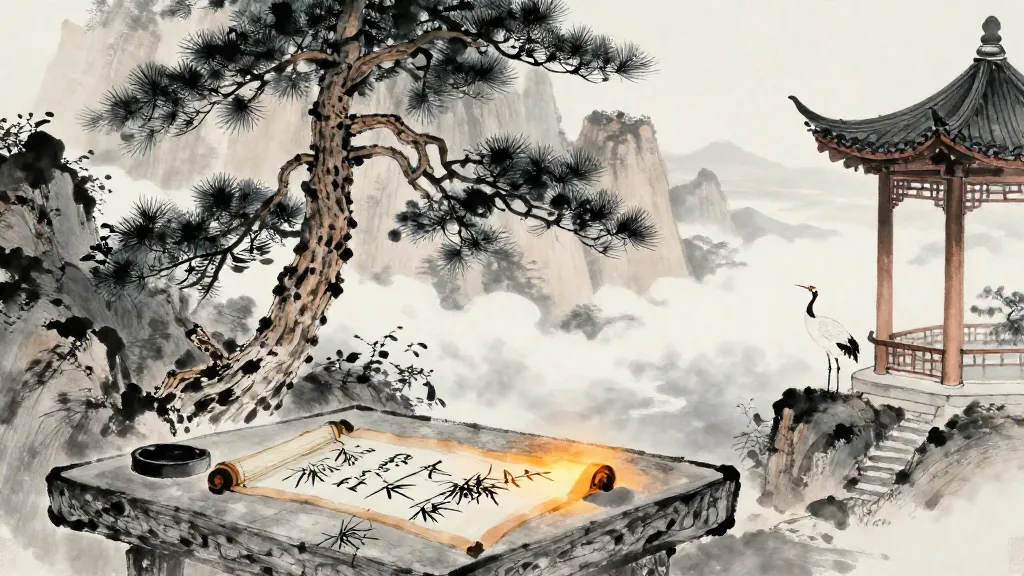
循吏列傳 (Biographies of Conscientious Officials) — Chinese ink painting

Chapter 119 of 130

循吏列傳

Biographies of Conscientious Officials

View:

太史公論循吏

The Grand Historian on Conscientious Officials

太史公曰:法令所以導民也,刑罰所以禁奸也。文武不備,良民懼然身修者,官未曾亂也。奉職循理,亦可以為治,何必威嚴哉?

The Grand Historian says: Laws and decrees are meant to guide the people; punishments are meant to suppress wrongdoing. When civil and military measures are not fully in place, yet good people still discipline themselves in apprehension, it is because the officials have not created disorder. Fulfilling one's duties and following proper principles can itself produce good governance — why must one resort to severity?

Notes

1context

This preface sets the thematic contrast with Juan 122 (Cruel Officials). Sima Qian argues that effective governance arises from moral example and competent administration rather than from harsh legal enforcement — a position aligned with Confucian and Daoist thought.

孫叔敖治楚

Sun Shuao Governs Chu

孫叔敖者,楚之處士也。虞丘相進之於楚莊王,以自代也。三月為楚相,施教導民,上下和合,世俗盛美,政緩禁止,吏無奸邪,盜賊不起。秋冬則勸民山采,春夏以水,各得其所便,民皆樂其生。

莊王以為幣輕,更以小為大,百姓不便,皆去其業。市令言之相曰:「市亂,民莫安其處,次行不定。」相曰:「如此幾何頃乎?」市令曰:「三月頃。」相曰:「罷,吾今令之復矣。」後五日,朝,相言之王曰:「前日更幣,以為輕。今市令來言曰『市亂,民莫安其處,次行之不定』。臣請遂令復如故。」王許之,下令三日而市復如故。

楚民俗好庳車,王以為庳車不便馬,欲下令使高之。相曰:「令數下,民不知所從,不可。王必欲高車,臣請教閭里使高其困。乘車者皆君子,君子不能數下車。」王許之。居半歲,民悉自高其車。

此不教而民從其化,近者視而效之,遠者四面望而法之。故三得相而不喜,知其材自得之也;三去相而不悔,知非己之罪也。

Sun Shuao was a reclusive scholar of Chu. Minister Yuqiu recommended him to King Zhuang of Chu as his own replacement. Within three months as prime minister, he had instituted education to guide the people. High and low were in harmony, public morals flourished, governance was lenient yet prohibitions were effective, officials committed no abuses, and bandits did not arise. In autumn and winter he encouraged the people to gather resources from the mountains; in spring and summer, from the rivers — each finding what suited them, and all the people took pleasure in their lives.

King Zhuang thought the currency was too light and changed it from small denominations to large ones. The people found this inconvenient and all abandoned their occupations. The market superintendent told the prime minister: 'The market is in chaos — no one can settle into their place, and the order of stalls keeps shifting.' The prime minister asked: 'How long has this been going on?' The market superintendent replied: 'About three months.' The prime minister said: 'Enough — I will now order it restored.' Five days later, at court, the prime minister addressed the king: 'The currency was recently changed because it was deemed too light. Now the market superintendent has reported that the market is in disorder and the people cannot settle. I request permission to restore the old system.' The king approved, and within three days of the decree the market returned to normal.

The people of Chu customarily preferred low-slung carriages. The king thought such carriages were hard on the horses and wanted to issue a decree raising them. The prime minister said: 'Decrees have been issued too frequently — the people do not know what to follow. This will not work. If Your Majesty insists on taller carriages, I request permission to instruct the neighborhoods to raise their door thresholds. Those who ride carriages are all gentlemen, and gentlemen cannot constantly dismount to pass through doorways.' The king approved. After half a year, the people had all raised their carriages of their own accord.

This is governance without explicit instruction, where the people follow the transformation naturally: those nearby observe and imitate, those far away look on from all directions and model themselves accordingly. Thus Sun Shuao was appointed prime minister three times without elation, knowing his ability had earned it; and was dismissed three times without regret, knowing it was not his fault.
Notes

1person孫叔敖Sūn Shū Áo

Sun Shuao (孫叔敖, d. c. 593 BC) served as prime minister (令尹) under King Zhuang of Chu (楚莊王, r. 613–591 BC). He is celebrated for his hydraulic engineering works, particularly the construction of the Qishui reservoir (期思陂) in modern Henan.

2context

The door-threshold stratagem is a classic example of 'governing by influence' (化) rather than by decree (令). By making tall carriages practically necessary rather than legally mandated, Sun Shuao achieved compliance without generating resentment.

子產治鄭

Zi Chan Governs Zheng

子產者,鄭之列大夫也。鄭昭君之時,以所愛徐摯為相,國亂,上下不親,父子不和。大宮子期言之君,以子產為相。為相一年,豎子不戲狎,斑白不提挈,僮子不犁畔。二年,市不豫賈。三年,門不夜關,道不拾遺。四年,田器不歸。五年,士無尺籍,喪期不令而治。治鄭二十六年而死,丁壯號哭,老人兒啼,曰:「子產去我死乎!民將安歸?」

Zi Chan was a senior official of Zheng. During the reign of Duke Zhao of Zheng, the duke appointed his favorite Xu Zhi as prime minister. The state fell into disorder — ruler and subjects were estranged, fathers and sons were at odds. The court grandee Ziqi spoke to the duke and had Zi Chan appointed prime minister. After one year in office, young men stopped their rowdy behavior, the gray-haired no longer had to carry burdens, and boys did not have to plow fields. After two years, merchants in the market no longer haggled dishonestly. After three years, gates were not locked at night and lost property was not taken from the road. After four years, farming tools were not brought home from the fields. After five years, officers needed no military registers, and mourning periods were observed properly without government orders. He governed Zheng for twenty-six years and died. Strong men wept aloud and the elderly cried like children, saying: 'Zi Chan has abandoned us and died! Where shall the people turn?'

Notes

1person子產Zǐ Chǎn

Zi Chan (子產, c. 580–522 BC), personal name Gongsun Qiao (公孫僑), was prime minister of the state of Zheng. He is one of the most celebrated statesmen of the Spring and Autumn period, known for reforming taxation, codifying laws, and achieving social harmony through competent administration.

公儀休不受魚

Gongyi Xiu Refuses the Gift of Fish

公儀休者,魯博士也。以高弟為魯相。奉法循理,無所變更,百官自正。使食祿者不得與下民爭利,受大者不得取小。

客有遺相魚者,相不受。客曰:「聞君嗜魚,遺君魚,何故不受也?」相曰:「以嗜魚,故不受也。今為相,能自給魚;今受魚而免,誰復給我魚者?吾故不受也。」

食茹而美,拔其園葵而棄之。見其家織布好,而疾出其家婦,燔其機,雲「欲令農士工女安所讎其貨乎」?

Gongyi Xiu was a scholar of Lu. He rose to the top of his class and became prime minister of Lu. He upheld the law and followed proper principles, making no arbitrary changes, and all the officials governed themselves rightly. He decreed that those who drew government salaries were not to compete with the common people for profit, and those who held high offices were not to engage in petty commerce.

A visitor offered the prime minister a gift of fish. The prime minister refused. The visitor said: 'I heard you are fond of fish, so I brought you fish — why will you not accept it?' The prime minister replied: 'It is precisely because I am fond of fish that I refuse. As prime minister, I can afford to buy my own fish. If I accept your fish and lose my post, who will provide me fish then? That is why I refuse.'

When he found his home-grown greens delicious, he uprooted the mallow plants in his garden and threw them away. When he saw that the cloth woven by his household was fine, he immediately sent his wife away and burned the loom, saying: 'If officials' households produce such goods, where will the farmers and weavers sell their products?'

Notes

1person公儀休Gōngyí Xiū

Gongyi Xiu (公儀休) was a scholar and prime minister of Lu during the late Warring States period. His anecdotes became standard moral exempla for official incorruptibility in Chinese political thought.

石奢與李離以身殉法

Shi She and Li Li Sacrifice Themselves for the Law

石奢者,楚昭王相也。堅直廉正,無所阿避。行縣,道有殺人者,相追之,乃其父也。縱其父而還自系焉。使人言之王曰:「殺人者,臣之父也。夫以父立政,不孝也;廢法縱罪,非忠也;臣罪當死。」王曰:「追而不及,不當伏罪,子其治事矣。」石奢曰:「不私其父,非孝子也;不奉主法,非忠臣也。王赦其罪,上惠也;伏誅而死,臣職也。」遂不受令,自刎而死。

李離者,晉文公之理也。過聽殺人,自拘當死。文公曰:「官有貴賤,罰有輕重。下吏有過,非子之罪也。」李離曰:「臣居官為長,不與吏讓位;受祿為多,不與下分利。今過聽殺人,傅其罪下吏,非所聞也。」辭不受令。文公曰:「子則自以為有罪,寡人亦有罪邪?」李離曰:「理有法,失刑則刑,失死則死。公以臣能聽微決疑,故使為理。今過聽殺人,罪當死。」遂不受令,伏劍而死。

Shi She was the prime minister of King Zhao of Chu. He was resolute, upright, incorruptible, and impartial, showing no favoritism. While touring the counties, he encountered a murderer on the road. The prime minister pursued him — and discovered it was his own father. He let his father go and returned to place himself under arrest. He sent a messenger to tell the king: 'The killer is your servant's father. To make an example of my own father would be a violation of filial duty; to set aside the law and release a criminal would be disloyal. Your servant deserves to die.' The king said: 'You pursued him but could not catch him — you need not accept punishment. Return to your duties.' Shi She replied: 'Not to protect one's own father is to be an unfilial son; not to uphold the ruler's law is to be a disloyal minister. That Your Majesty pardons my crime is the grace of a sovereign; that I submit to execution is the duty of a minister.' He refused the king's order and cut his own throat.

Li Li was the chief judge of Duke Wen of Jin. He erroneously accepted testimony and put an innocent man to death, then placed himself under arrest as deserving death. Duke Wen said: 'Offices have their ranks and punishments their degrees. The lower officials made the error — it is not your fault.' Li Li replied: 'I hold the highest office and have not yielded my seat to subordinates; I draw the greatest salary and have not shared my pay with those below me. Now I erroneously accepted testimony and killed a man. To shift the blame to subordinate officials — this is unheard of.' He refused to accept the duke's order. Duke Wen said: 'If you consider yourself guilty, then am I also guilty?' Li Li replied: 'The chief judge has his rules: if he errs in sentencing, he takes that sentence upon himself; if his error causes death, he dies. Your Grace made me chief judge because I could weigh fine distinctions and decide difficult cases. Now I have erroneously put a man to death. The penalty is death.' He refused the order and fell upon his sword.

Notes

1person石奢Shí Shē

Shi She (石奢) served under King Zhao of Chu (楚昭王, r. 515–489 BC). His story illustrates the irreconcilable tension between filial piety and public duty — a core ethical problem in Chinese thought.

2person李離Lǐ Lí

Li Li (李離) served under Duke Wen of Jin (晉文公, r. 636–628 BC). His insistence on taking personal responsibility for a judicial error — even against the ruler's wishes — became a model for judicial accountability.

太史公贊

The Grand Historian's Assessment

太史公曰:孫叔敖出一言,郢市復。子產病死,鄭民號哭。公儀子見好布而家婦逐。石奢縱父而死,楚昭名立。李離過殺而伏劍,晉文以正國法。

The Grand Historian says: Sun Shuao spoke a single word, and the market of Ying was restored. Zi Chan died of illness, and the people of Zheng wailed. Gongyi Xiu saw fine cloth and banished his wife. Shi She released his father and died, and King Zhao of Chu's reputation was established. Li Li wrongly sentenced a man to death and fell upon his sword, and Duke Wen of Jin thereby set right the laws of his state.

Notes

1context

Sima Qian's closing summary emphasizes that each official's principled action had consequences far beyond the individual: one man's integrity could restore markets, define a king's legacy, or establish the rule of law for an entire state.

Edition & Source

Text
《史記》 Shiji
Edition
中華古詩文古書籍網 transcription
Commentary
裴駰《史記集解》、司馬貞《史記索隱》、張守節《史記正義》(Three Commentaries)