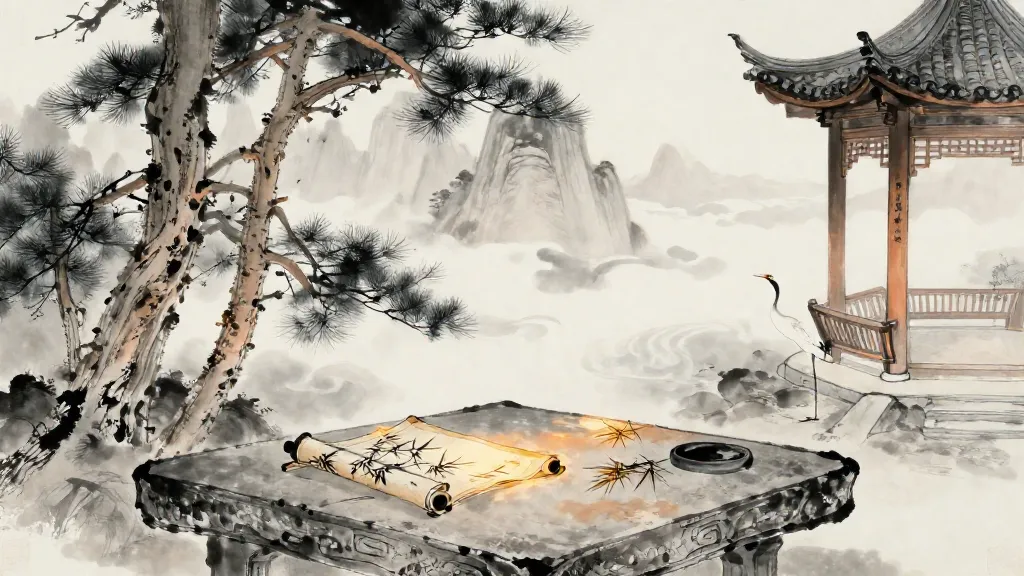
淮南衡山列傳 (Biographies of the Kings of Huainan and Hengshan) — Chinese ink painting

Chapter 118 of 130

淮南衡山列傳

Biographies of the Kings of Huainan and Hengshan

View:

淮南厲王劉長

Liu Chang, the Fierce King of Huainan

淮南厲王長者,高祖少子也,其母故趙王張敖美人。高祖八年,從東垣過趙,趙王獻之美人。厲王母得幸焉,有身。趙王敖弗敢內宮,為築外宮而舍之。及貫高等謀反柏人事發覺,並逮治王,盡收捕王母兄弟美人,系之河內。厲王母亦系,告吏曰:「得幸上,有身。」吏以聞上,上方怒趙王,未理厲王母。厲王母弟趙兼因辟陽侯言呂后,呂后妒,弗肯白,辟陽侯不彊爭。及厲王母已生厲王,恚,即自殺。吏奉厲王詣上,上悔,令呂后母之,而葬厲王母真定。真定,厲王母之家在焉,父世縣也。

Liu Chang, the Fierce King of Huainan, was Emperor Gaozu's youngest son. His mother had been a concubine of Zhao Wang Zhang Ao. In the eighth year of Gaozu's reign, the emperor passed through Zhao on his way from Dongyuan, and the King of Zhao presented a concubine to him. The Fierce King's mother found favor and became pregnant. King Ao did not dare bring her into his own palace, so he built separate quarters for her. When the plot of Guan Gao and others at Bairen was discovered, the king was arrested and investigated, and all the king's mother's relatives, brothers, and concubines were seized and imprisoned in Henei. The Fierce King's mother was likewise imprisoned. She told the officials: 'I received the emperor's favor and am carrying his child.' The officials reported this to the emperor, but the emperor was furious at the King of Zhao and paid no attention to the Fierce King's mother. Her brother Zhao Jian appealed through the Marquis of Biyang to Empress Lü, but Empress Lü was jealous and refused to intervene; the Marquis of Biyang did not press the case. When the Fierce King's mother had given birth, she was filled with resentment and killed herself. The officials brought the infant Fierce King before the emperor. The emperor felt regret and ordered Empress Lü to raise the child, burying the mother at Zhending. Zhending was where her family lived — it was her father's ancestral county.

Notes

1person劉長Liú Cháng

Liu Chang (劉長, 198–174 BC) was the youngest son of Emperor Gaozu. Enfeoffed as King of Huainan, he grew increasingly insubordinate under Emperor Wen, was stripped of his title, and died in exile. Posthumously titled 'Fierce King' (厲王).

2context

The Bairen conspiracy (柏人之謀) of 199 BC was an assassination attempt against Emperor Gaozu by retainers of the King of Zhao. Though the King himself was not directly involved, the entire household was implicated.

厲王驕恣與流放

The Fierce King's Arrogance and Exile

高祖十一年月,淮南王黥布反,立子長為淮南王,王黥布故地,凡四郡。上自將兵擊滅布,厲王遂即位。厲王蚤失母,常附呂后,孝惠、呂后時以故得幸無患害,而常心怨辟陽侯,弗敢發。及孝文帝初即位,淮南王自以為最親,驕蹇,數不奉法。上以親故,常寬赦之。三年,入朝。甚橫。從上入苑囿獵,與上同車,常謂上「大兄」。厲王有材力,力能扛鼎,乃往請辟陽侯。辟陽侯出見之,即自袖鐵椎椎辟陽侯,令從者魏敬剄之。厲王乃馳走闕下,肉袒謝曰:「臣母不當坐趙事,其時辟陽侯力能得之呂后,弗爭,罪一也。趙王如意子母無罪,呂后殺之,辟陽侯弗爭,罪二也。呂后王諸呂,欲以危劉氏,辟陽侯弗爭,罪三也。臣謹為天下誅賊臣辟陽侯,報母之仇,謹伏闕下請罪。」孝文傷其志,為親故,弗治,赦厲王。

In the eleventh year of Gaozu's reign, when the King of Huainan Qing Bu rebelled, Gaozu installed his son Chang as King of Huainan, ruling over Qing Bu's former territory of four commanderies. The emperor personally led troops to destroy Qing Bu, and the Fierce King thereupon assumed his throne. Having lost his mother early, the Fierce King had always attached himself to Empress Lü, and during the reigns of Emperor Hui and Empress Lü he was favored and unharmed. But he always harbored resentment against the Marquis of Biyang, though he dared not act. When Emperor Wen first took the throne, the King of Huainan considered himself the closest relative, grew arrogant and unruly, and repeatedly violated the law. The emperor, on account of their kinship, always pardoned him leniently. In the third year, the Fierce King came to court. He was extremely overbearing. He accompanied the emperor into the imperial park to hunt, rode in the emperor's carriage, and habitually addressed the emperor as 'Big Brother.' The Fierce King was physically powerful — strong enough to lift a bronze cauldron. He went to call on the Marquis of Biyang. When the marquis came out to receive him, the Fierce King drew an iron mace from his sleeve and struck him, then ordered his attendant Wei Jing to behead him. The Fierce King then galloped to the foot of the palace gate, bared his upper body, and apologized, saying: 'My mother should not have been implicated in the Zhao affair. At that time, the Marquis of Biyang had the influence to intervene with Empress Lü but did not — that is his first crime. Prince Ruyi of Zhao and his mother were innocent, yet Empress Lü killed them while the Marquis of Biyang did not object — that is his second crime. Empress Lü enfeoffed the Lü clan as kings, intending to endanger the Liu house, yet the Marquis of Biyang did not object — that is his third crime. Your servant has taken it upon himself to execute the treacherous minister, the Marquis of Biyang, on behalf of the realm, and to avenge his mother. He respectfully prostrates himself at the palace gate to accept punishment.' Emperor Wen was moved by his spirit and, on account of their kinship, did not prosecute him but pardoned the Fierce King.

Notes

1person審食其Shěn Yìjī

The Marquis of Biyang (辟陽侯) was Shen Yiji (審食其), a longtime political associate of Empress Lü who had served as her intermediary. His failure to save the Fierce King's mother became the pretext for his assassination.

淮南王安謀反

Liu An, King of Huainan, Plots Rebellion

淮南王安為人好讀書鼓琴,不喜弋獵狗馬馳騁,亦欲以行陰德拊循百姓,流譽天下。時時怨望厲王死,時欲畔逆,未有因也。及建元二年,淮南王入朝。素善武安侯,武安侯時為太尉,乃逆王霸上,與王語曰:「方今上無太子,大王親高皇帝孫,行仁義,天下莫不聞。即宮車一日晏駕,非大王當誰立者!」淮南王大喜,厚遺武安侯金財物。陰結賓客,拊循百姓,為畔逆事。

Liu An, King of Huainan, was by nature fond of reading and playing the zither. He had no taste for falconry, hunting, or horse-racing, and sought to practice secret virtue and win the people's affection, spreading his reputation throughout the realm. He constantly brooded over the death of the Fierce King and harbored thoughts of rebellion, but had not found an opportunity. In the second year of the Jianyuan era, the King of Huainan came to court. He had long been on good terms with the Marquis of Wu'an, who was then Grand Commandant. The marquis met the king at Bashang and said to him: 'At present the emperor has no heir apparent. Your Majesty is a grandson of Emperor Gaozu, practices benevolence and righteousness, and is known throughout the realm. Should the imperial carriage one day depart this world, who but Your Majesty should be established?' The King of Huainan was overjoyed and lavished gold and treasures upon the Marquis of Wu'an. He secretly formed a network of retainers, cultivated the common people, and prepared for rebellion.

Notes

1person劉安Liú Ān

Liu An (劉安, 179–122 BC), King of Huainan, was both a serious intellectual and a political conspirator. He is credited with compiling the Huainanzi (淮南子), a major philosophical compendium blending Daoist, Confucian, and Legalist thought. His rebellion plot was uncovered in 122 BC and he was forced to commit suicide.

2person田蚡Tián Fén

The Marquis of Wu'an (武安侯) was Tian Fen (田蚡), maternal uncle of Emperor Wu, who served as Grand Commandant and later Chancellor. His encouragement of Liu An's ambitions was reckless and self-serving.

伍被論天下形勢

Wu Bei Analyzes the State of the Realm

王坐東宮,召伍被與謀,曰:「將軍上。」被悵然曰:「上寬赦大王,王復安得此亡國之語乎!臣聞子胥諫吳王,吳王不用,乃曰『臣今見麋鹿游姑蘇之台也』。今臣亦見宮中生荊棘,露霑衣也。」王怒,系伍被父母,囚之三月。復召曰:「將軍許寡人乎?」被曰:「不,直來為大王畫耳。」

The king sat in the Eastern Palace and summoned Wu Bei to plot with him, saying: 'General, proceed.' Wu Bei replied mournfully: 'The emperor has generously pardoned Your Majesty, and yet Your Majesty returns to this talk of national ruin! I have heard that Wu Zixu remonstrated with the King of Wu; when the king would not listen, Wu Zixu said, "I can already see the deer roaming the terraces of Gusu." Now I too can see thorns growing in Your Majesty's palace and dew soaking my robes.' The king was furious. He imprisoned Wu Bei's parents and held Wu Bei for three months. Then he summoned him again and said: 'Will you join me now, General?' Wu Bei replied: 'No — I have merely come to lay out the strategic situation for Your Majesty.'

Notes

1person伍被Wǔ Bèi

Wu Bei (伍被) was one of Liu An's key advisors who reluctantly analyzed military strategy for the king while consistently warning against rebellion. He argued that the Han empire was too strong and well-governed to overthrow. Despite his opposition to the plot, he was executed along with the other conspirators.

淮南衡山敗亡

The Fall of Huainan and Hengshan

於是廷尉以王孫建辭連淮南王太子遷聞。上遣廷尉監因拜淮南中尉,逮捕太子。至淮南,淮南王聞,與太子謀召相、二千石,欲殺而發兵。召相,相至;內史以出為解。中尉曰:「臣受詔使,不得見王。」王念獨殺相而內史中尉不來,無益也,即罷相。王猶豫,計未決。太子念所坐者謀刺漢中尉,所與謀者已死,以為口絕,乃謂王曰:「群臣可用者皆前系,今無足與舉事者。王以非時發,恐無功,臣原會逮。」王亦偷欲休,即許太子。太子即自剄,不殊。伍被自詣吏,因告與淮南王謀反,反蹤跡具如此。

The Commandant of Justice received testimony from the king's grandson Jian implicating the Crown Prince Qian of Huainan. The emperor dispatched the Commandant of Justice's Inspector to simultaneously take up the post of Central Commandant of Huainan and arrest the Crown Prince. When news reached Huainan, the king conspired with the Crown Prince to summon the chancellor and the two-thousand-bushel officials, intending to kill them and mobilize troops. The chancellor was summoned and came; the Interior Secretary excused himself as being away; the Central Commandant said: 'I have received an imperial commission and cannot see the king.' The king realized that killing the chancellor alone while the Interior Secretary and Central Commandant did not come would serve no purpose, so he dismissed the chancellor. The king vacillated, unable to decide. The Crown Prince reflected that the charge against him was plotting to assassinate the Han Central Commandant, and that his co-conspirators were already dead, so the witnesses were silenced. He told the king: 'All the officials who might have been of use have already been arrested. There is no one left to carry out the undertaking. If Your Majesty raises troops at the wrong moment, I fear it will fail. I am willing to submit to arrest.' The king also secretly wished to abandon the plan, so he agreed. The Crown Prince then cut his own throat, but did not die. Wu Bei went voluntarily to the authorities and confessed the full conspiracy with the King of Huainan, providing all the evidence.

Notes

1context

The collapse of the Huainan conspiracy in 122 BC resulted in mass executions. Thousands of people connected to Liu An and his co-conspirators were put to death. The kingdoms of Huainan and Hengshan were abolished and converted to commanderies.

衡山王賜之亂

The Rebellion of King Ci of Hengshan

衡山王賜,王后乘舒生子三人,長男爽為太子,次男孝,次女無采。又姬徐來生子男女四人,美人厥姬生子二人。衡山王、淮南王兄弟相責望禮節,間不相能。衡山王聞淮南王作為畔逆反具,亦心結賓客以應之,恐為所並。

King Ci of Hengshan had three children by Queen Cheng Shu: his eldest son Shuang, who was Crown Prince; his second son Xiao; and a daughter Wucai. By his consort Xu Lai he had four more children, and by the beauty Lady Jue two more. The kings of Hengshan and Huainan were brothers who resented each other over matters of protocol and were privately estranged. When the King of Hengshan heard that the King of Huainan was preparing for rebellion, he too secretly gathered retainers to support the uprising, fearing he would otherwise be absorbed.

Notes

1person劉賜Liú Cì

Liu Ci (劉賜), King of Hengshan, was Liu An's younger brother. His household was torn apart by rivalry among his wives and children, each faction trying to gain advantage through accusations and counter-accusations. He committed suicide when the conspiracy was uncovered.

太史公贊

The Grand Historian's Assessment

太史公曰:詩之所謂「戎狄是膺,荊舒是懲」,信哉是言也。淮南、衡山親為骨肉,疆土千里,列為諸侯,不務遵蕃臣職以承輔天子,而專挾邪僻之計,謀為畔逆,仍父子再亡國,各不終其身,為天下笑。此非獨王過也,亦其俗薄,臣下漸靡使然也。夫荊楚僄勇輕悍,好作亂,乃自古記之矣。

The Grand Historian says: The Odes say, 'The Rong and Di were struck down; Jing and Shu were punished.' How true these words are! Huainan and Hengshan were the emperor's own flesh and blood, with territories of a thousand li, ranked among the feudal lords. Yet instead of fulfilling their duty as vassal ministers to support the Son of Heaven, they clung to perverse and deviant schemes, plotting rebellion. Father and son both lost their kingdoms across two generations, each failing to die a natural death, becoming the laughingstock of the realm. This was not the kings' fault alone — the shallow customs of their region and the corrupting influence of their retainers brought it about. The people of Jing and Chu are impulsive, bold, reckless, and prone to disorder — this has been recorded since antiquity.

Notes

1context

Sima Qian's assessment is notable for partially exculpating the kings themselves, attributing the rebellions to regional culture and the influence of scheming retainers. The reference to the Odes (詩經) connects the Han-era feudal rebellions to the ancient pattern of southern Chu insubordination.

Edition & Source

Text
《史記》 Shiji
Edition
中華古詩文古書籍網 transcription
Commentary
裴駰《史記集解》、司馬貞《史記索隱》、張守節《史記正義》(Three Commentaries)