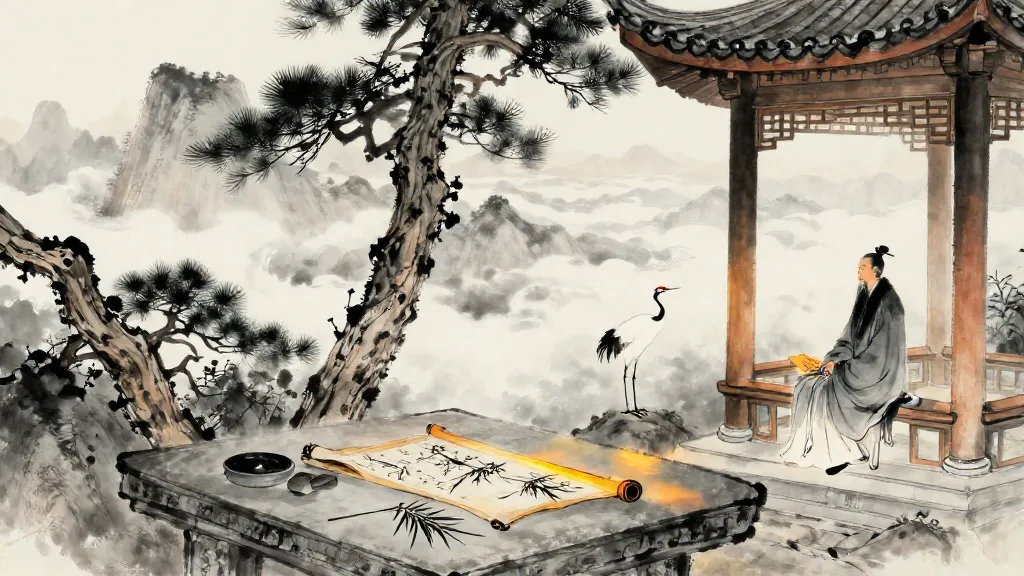
建元以來王子侯者年表 (Chronological Table of Marquises from Royal Sons Since the Jianyuan Era) — Chinese ink painting

Chapter 21 of 130

建元以來王子侯者年表

Chronological Table of Marquises from Royal Sons Since the Jianyuan Era

View:

詔令與太史公序

The Imperial Edict and the Grand Historian's Comment

制詔御史:「諸侯王或欲推私恩分子弟邑者,令各條上,朕且臨定其號名。」

太史公曰:盛哉,天子之德!一人有慶,天下賴之。

Imperial edict to the Grandee Secretary: "Any feudal king who wishes to extend private grace by dividing his territory to grant towns to his sons and brothers shall submit an itemized list, and I will personally determine the titles and names."

The Grand Historian says: How magnificent, the virtue of the Son of Heaven! When one man bestows blessings, the whole realm benefits.

Notes

1context

This edict implements the 'push-grace' (推恩) policy, allowing feudal kings to subdivide their domains among all sons. By framing it as imperial generosity rather than punishment, Emperor Wu peacefully fragmented the great kingdoms that had threatened central authority.

Eulogy

漢世之初,矯枉過正。欲大本枝,先封同姓。建元已後,籓翰克盛。主父上言,推恩下令。長沙濟北,中山趙敬。分邑廣封,振振在詠。扞城禦侮,曄曄輝映。百足不僵,一人有慶。

In the early Han, the correction overshot the mark. To strengthen trunk and branch, they first enfeoffed the surname-kin. After the Jianyuan era, the protective screen flourished grandly. Zhufu Yan submitted his memorial; the push-grace decree went forth. Changsha, Jinan, Zhongshan, Zhao, and Jing — their towns were divided and fiefs broadly granted, a multitude to be praised in song. Guarding the walls, warding off insult, they shone with brilliant light. A creature with a hundred legs does not topple; when one man is blessed, the world shares in his fortune.

Notes

1person主父偃Zhǔfù Yān

Zhufu Yan (主父偃, d. 126 BC) was the strategist who proposed the push-grace policy to Emperor Wu. He was later executed for corruption, but his policy permanently weakened the feudal kingdoms.

Edition & Source

Text
《史記》 Shiji
Edition
中華古詩文古書籍網 transcription
Commentary
裴駰《史記集解》、司馬貞《史記索隱》、張守節《史記正義》(Three Commentaries)