太史公序
The Grand Historian's Preface
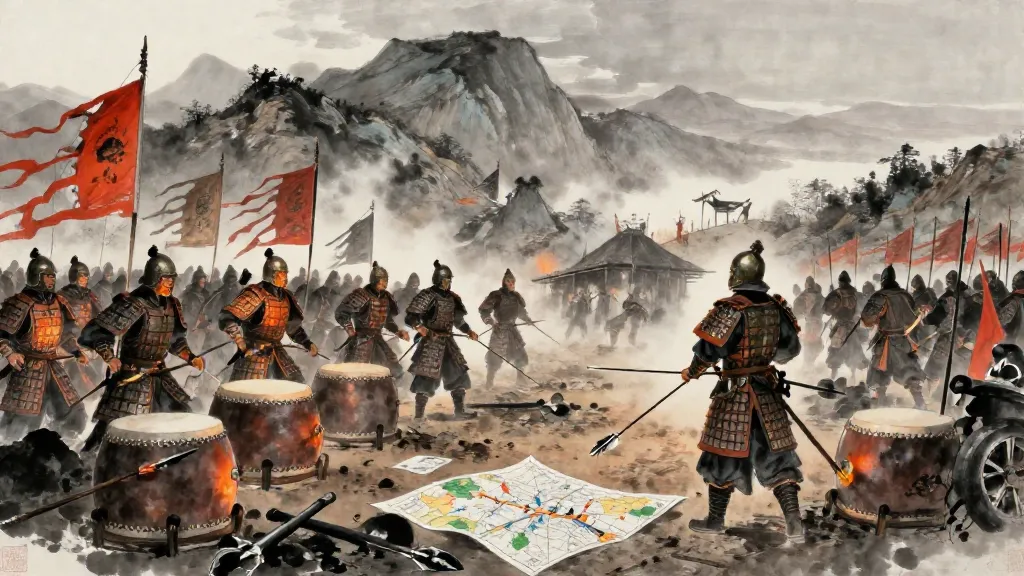
太史公曰:匈奴絕和親,攻當路塞;閩越擅伐,東甌請降。二夷交侵,當盛漢之隆,以此知功臣受封侔於祖考矣。何者?自《詩》、《書》稱三代「戎狄是膺,荊荼是征」,齊桓越燕伐山戎,武靈王以區區趙服單于,秦繆用百里霸西戎,吳楚之君以諸侯役百越。況乃以中國一統,明天子在上,兼文武,席捲四海,內輯億萬之眾,豈以晏然不為連境征伐哉!自是後,遂出師北討強胡,南誅勁越,將卒以次封矣。
The Grand Historian says: The Xiongnu broke off the peace-and-kinship treaties and attacked the border passes; the Min Yue launched unauthorized invasions, and the Eastern Ou requested surrender. With these two barbarian peoples encroaching simultaneously, at the height of Han power, we can see that the meritorious ministers who received enfeoffment were fully the equals of the founders. Why? The Odes and the Documents praise the Three Dynasties for 'striking the Rong and Di, campaigning against the Jing and Tu.' Duke Huan of Qi crossed Yan to attack the mountain Rong; King Wuling of Zhao, with tiny Zhao, brought the Shanyu to submission; Duke Mu of Qin used Baili Xi to dominate the Western Rong; the kings of Wu and Chu, as feudal lords, commanded the Hundred Yue. How much more so with the Central States unified, a brilliant Son of Heaven on the throne, combining civil and military power, sweeping across the four seas, and rallying hundreds of millions within — could he sit idly by without waging war along his borders? From this point on, armies marched north to campaign against the mighty Hu and south to punish the formidable Yue, and generals and soldiers were enfeoffed in turn.
Notes
The Jianyuan era (建元, 140–135 BC) was the first reign period of Emperor Wu of Han, whose aggressive expansionist policies drove the massive campaigns against the Xiongnu, Min Yue, Southwestern Yi, and other peoples that defined his reign.
King Wuling of Zhao (趙武靈王, r. 325–299 BC) was famous for adopting Hu cavalry dress and tactics ('wearing Hu clothing and shooting from horseback'), transforming Zhao into a major military power.