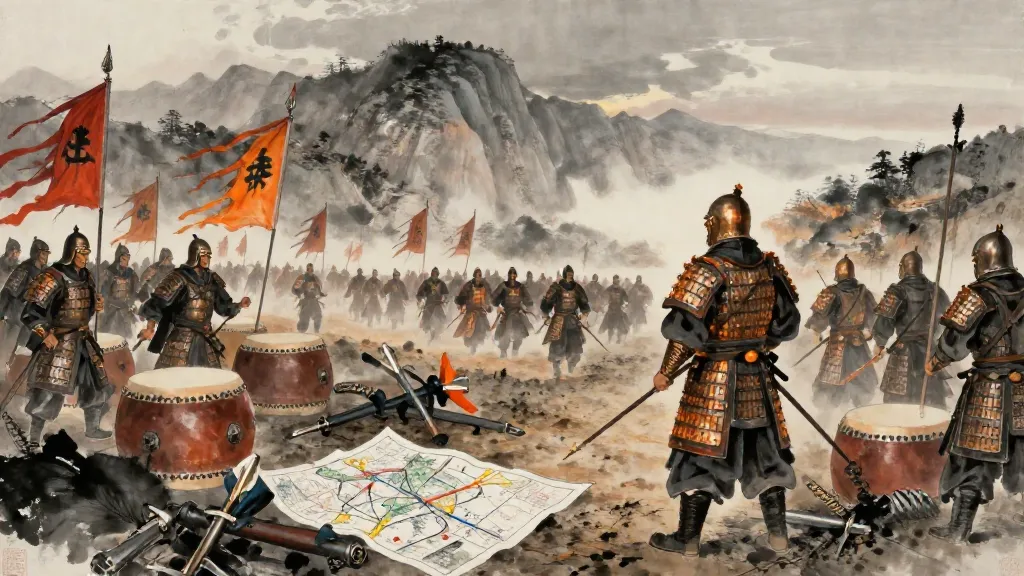
兵者非士恆勢
Warfare Is Not a Constant Condition
孫子見威王,曰:"夫兵者,非士恆勢也。此先王之傅道也。戰勝,則所以在亡國而繼絕世也。戰不勝,則所以削地而危社稷也。是故兵者不可不察。然夫樂兵者亡,而利勝者辱。兵非所樂也,而勝非所利也。事備而後動,故城小而守固者,有委也;卒寡而兵強者,有義也。夫守而無委,戰而無義,天下無能以固且強者。"
Sun Bin had an audience with King Wei and said: 'Warfare is not a constant condition for the warrior. This was the transmitted teaching of the former kings. Victory in battle is the means by which one preserves states on the brink of ruin and continues lines that have been cut off. Defeat in battle is the means by which territory is diminished and the altars of soil and grain are endangered. Therefore warfare demands careful consideration. Those who take pleasure in war will perish, and those who seek profit from victory will be disgraced. War is not something to take pleasure in, and victory is not something to profit from. Prepare fully before acting. A city that is small yet holds firmly has reserves. An army that is few yet fights strongly has a just cause. To defend without reserves and fight without justice — nothing under heaven can make such a position secure or strong.'
Notes
King Wei of Qi (齊威王, r. 356–320 BC) was one of the most capable rulers of the Warring States period. Under his reign, Qi became a dominant power. He patronized scholars at the Jixia Academy and employed Sun Bin as military advisor.