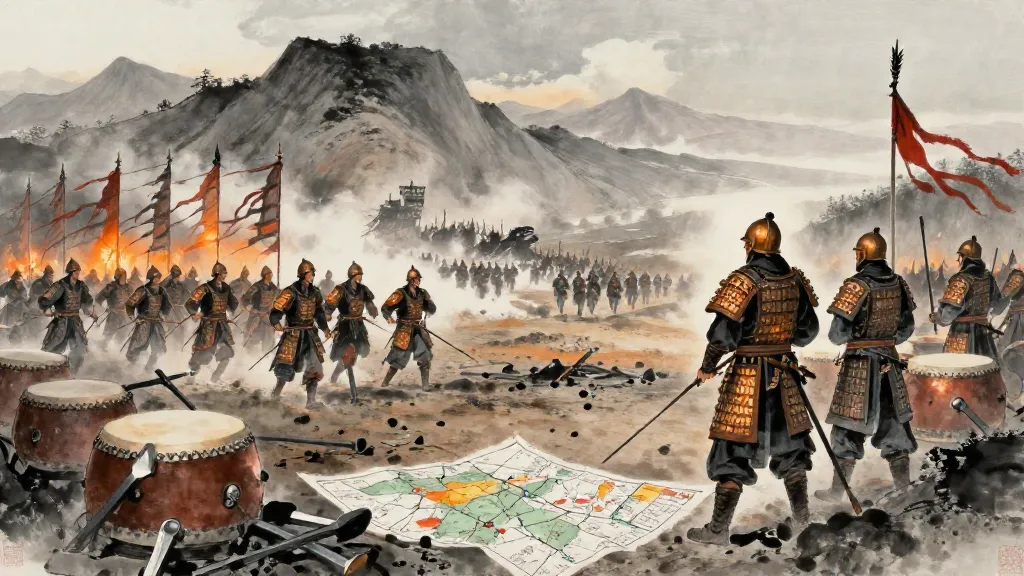
五氣之法
The Five Methods of Managing Morale
孫子曰:合軍聚眾,務在激氣,復徙合軍,務在治兵利氣。臨境近敵,務在厲氣。戰日有期,務在斷氣。今日將戰,務在延氣。..以威三軍之士,所以激氣也。將軍令..其令,所以利氣也。將軍乃..短衣絜裘,以勸士志,所以厲氣也。將軍令,令軍人人為三日糧,國人家為..[所以]斷氣也。將軍召將衛人者而告之曰:飲食毋..[所]以延氣..也。
Sun Bin said: When assembling the army and gathering the multitude, the priority is to arouse morale. When reassembling and repositioning the army, the priority is to regulate the troops and sharpen morale. When approaching the border and nearing the enemy, the priority is to steel morale. When the day of battle has been set, the priority is to harden morale. On the day of battle itself, the priority is to sustain morale. [...] To overawe the soldiers of the three armies is the way to arouse morale. The general's orders [...] the commands, are the way to sharpen morale. The general then [...] short coats and cleaned furs, to encourage the soldiers' resolve — this is the way to steel morale. The general orders every man in the army to carry three days' rations, and every household in the state to [...] — this is the way to harden morale. The general summons the guard commanders and tells them: as for food and drink, do not [...] — this is the way to sustain morale.
Notes
Sun Bin identifies five phases of morale management corresponding to five stages of a campaign: assembly (激氣, arousing), redeployment (利氣, sharpening), approach (厲氣, steeling), eve of battle (斷氣, hardening), and the battle itself (延氣, sustaining). Each phase requires different leadership techniques. The progression from arousal to sustainment shows sophisticated understanding of the psychology of combat.