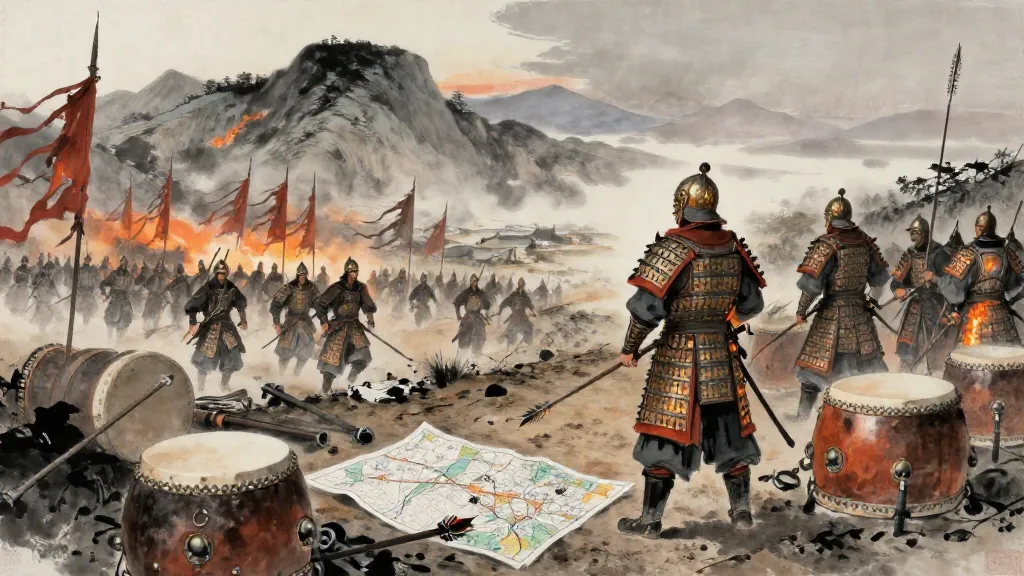
五度九奪
Five Measures and Nine Seizures
..矣。救者至,又重敗之。故兵之大數,五十里不相救也。況近□□□□□數百里,此程兵之極也。故兵曰:積弗如,勿與持久。眾弗如,勿與接和。□[弗如,勿與□□。□弗如,勿]與□長。習弗如,毋當其所長。五度既明,兵乃橫行。故兵..趨敵數。一曰取糧。二曰取水。三曰取津。四曰取途。五曰取險。六曰取易。七曰[取□。八曰取□。九]曰取其所讀貴。凡九奪,所以趨敵也。
[...] When rescuers arrive, defeat them again with heavy force. The great rule of warfare is that forces fifty li apart cannot rescue each other, let alone [those separated by lacuna] hundreds of li — this is the extreme of military calculation. Therefore the military text says: if your stockpiles are inferior, do not engage in a protracted campaign. If your numbers are inferior, do not engage in pitched battle. If [your lacuna] is inferior, do not [lacuna]. If [your lacuna] is inferior, do not [lacuna] at length. If your training is inferior, do not confront the enemy where he is strong. Once the five measures are clear, the army can march freely. Therefore the military [...] the methods for pressing the enemy. First, seize his grain. Second, seize his water. Third, seize his river crossings. Fourth, seize his roads. Fifth, seize his difficult terrain. Sixth, seize his level ground. Seventh, seize [lacuna]. Eighth, seize [lacuna]. Ninth, seize what he values most. These nine seizures are the means by which one presses the enemy.
Notes
The 'five measures' (五度) establish that a commander must honestly assess his own capabilities relative to the enemy in five dimensions before choosing a strategy. The 'nine seizures' (九奪) are a targeting priority list — seize supply lines first (grain, water), then mobility assets (crossings, roads), then terrain, and finally whatever the enemy holds most dear. The fifty-li rule of mutual support is a practical operational planning distance that remained relevant in Chinese military thought for centuries.