Thucydides · 2 chapters · 432 BC
The Road to War
Wars begin not from aggression but from fear — the growth of Athenian power and the alarm it inspired in Sparta made conflict structurally inevitable before either side chose it.
Commentary
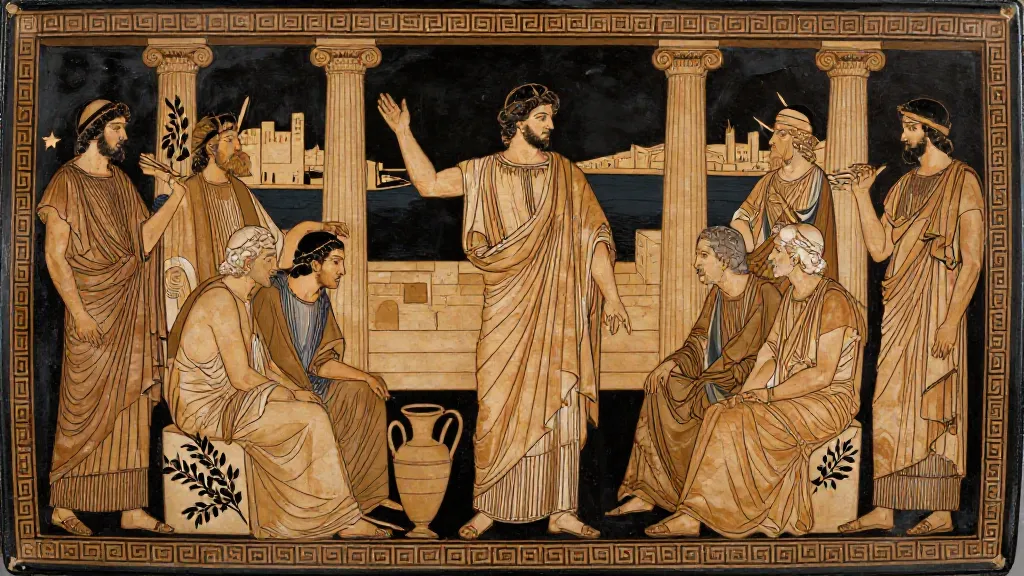
In 432 BC, the Spartan assembly heard two cases. The Corinthians argued that Athens was an aggressive, restless power that would swallow the Peloponnese if unchecked. The Athenian envoys — present on other business, they said, but suspiciously well-prepared — argued that empire was natural, that Athens had earned it at Marathon and Salamis, and that Sparta would do the same in their position. King Archidamus, who had actually fought wars, counseled patience, preparation, and diplomacy. Then Ephor Sthenelaidas stood and delivered four sentences. He said the Athenians had wronged Sparta's allies. He said war was the answer. The assembly voted. That was it. Thucydides is showing you how the most consequential decision in Greek history was made: not by the careful analyst but by the man who reduced the question to a binary and forced an immediate vote.
The Pentekontaetia — the fifty-year flashback Thucydides inserts immediately after the debate — is the structural explanation for why Sthenelaidas won. Over five decades, Athens transformed the Delian League from a voluntary anti-Persian alliance into a coercive empire. The treasury moved from Delos to Athens. Allies who tried to secede were besieged and reduced. The process was incremental, each step defensible in isolation, and cumulatively irreversible. By 432 BC, Sparta faced not a policy dispute but a structural trap: Athenian power had grown to the point where tolerating it signaled weakness and confronting it meant war against the strongest naval power in the Mediterranean. Neither side wanted total war. The alliance system made de-escalation impossible. This is the pattern that recurs across civilizations — in the Zhanguoce, Qin's growth triggered precisely the same coalition logic, where each state's rational response to rising power collectively guaranteed the conflict everyone sought to avoid.
Chapters in this Arc
Corinthians accuse Athens of relentless expansion; Athenian envoys defend empire as natural; Archidamus counsels caution; Sthenelaidas forces a war vote in four sentences.
Thucydides' fifty-year flashback reveals how Athens incrementally transformed the Delian League from liberation alliance to coercive empire, making the war structurally inevitable.