Thucydides · 2 chapters · 431–429 BC
The Idealist's Wager
Pericles bet Athens' survival on the idea that democratic legitimacy could be a strategic asset — a wager that only works as long as the leader making it is alive.
Commentary
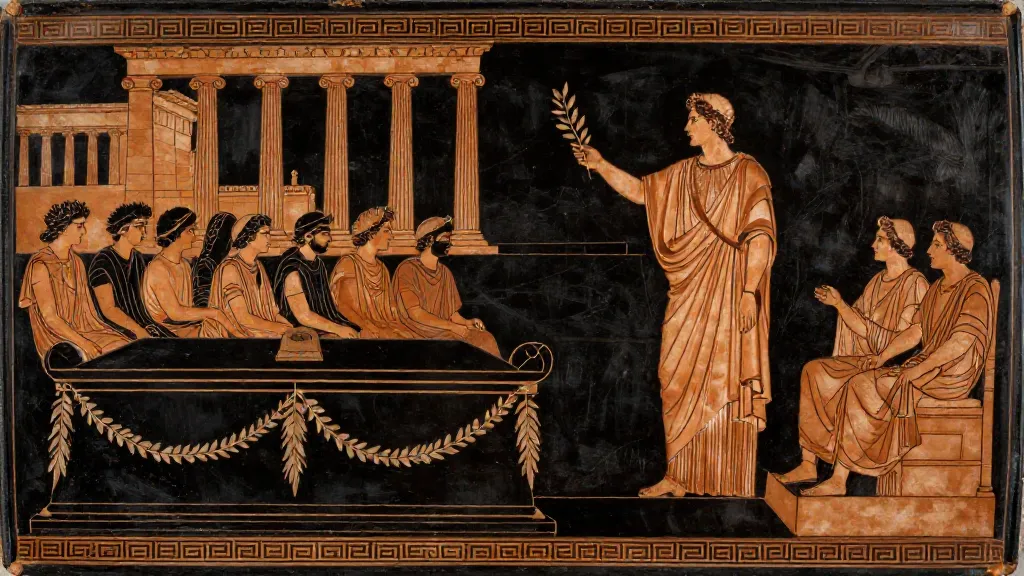
In 431 BC, Pericles stood over the first Athenian dead of the Peloponnesian War and gave a speech that was not really about the dead at all. It was a theory of power. His argument was unusual for a general: that Athens' open constitution, its tolerance, its culture of deliberation — these were not liabilities to be protected from war but force multipliers that made Athens militarily formidable. Democratic legitimacy, in Pericles' framing, was the source of the soldiers' courage, the city's resilience, and ultimately its superiority over Sparta's drill-ground model.
The wager was coherent. It was also catastrophically personal. The strategy required the city to trust Pericles' judgment about when to fight and when to endure — his plan was to avoid pitched land battle, let Sparta exhaust itself raiding Attica, and use naval superiority to outlast them. That is not a strategy a democratic city follows without the man who designed it standing on the Pnyx to defend it season after season. When the plague killed Pericles in 429 BC, two years into the war, the wager came due. Athens had the institutions but not the leader. What followed — the demagogues, the Sicilian catastrophe, the slow unraveling — is the other arc.
Chapters in this Arc
Pericles argues that Athenian democratic culture is itself a strategic asset, not a vulnerability.
The plague destroys Pericles and exposes the fatal flaw in his strategy: it depended entirely on one man's judgment.