吳起與秦戰,舍不平隴畝,樸樕蓋之,以蔽霜露。如此何也?不自高人故也。乞人之死不索尊,竭人之力不責禮。故古者,甲冑之士不拜,示人無已煩也。夫煩人而欲乞其死、竭其力,自古至今未嘗聞矣。
將受命之日忘其家,張軍宿野忘其親,援桴而鼓忘其身。吳起臨戰,左右進劍。起曰:「將專主旗鼓爾,臨難決疑,揮兵指刃,此將事也。一劍之任,非將事也。」三軍成行,一舍而後成三舍,三舍之餘,如決川源。望敵在前,因其所長而用之。敵白者堊之,赤者赭之。
吳起與秦戰,未合,一夫不勝其勇,前獲雙首而還。吳起立斬之。軍吏諫曰:「此材士也,不可斬。」起曰:「材士則是也,非吾令也。」斬之。
When Wu Qi campaigned against Qin, he did not pitch camp on level ground but slept in the furrows between fields, covering himself with rough branches to shelter from frost and dew. Why did he do this? Because he did not elevate himself above his men.
When you ask men to die for you, do not demand deference. When you exhaust their strength, do not insist on ceremony. The ancients exempted armored soldiers from bowing -- to show that one does not add unnecessary burdens. To burden men with ceremony while demanding their lives and exhausting their strength -- from ancient times to the present, this has never been heard of.
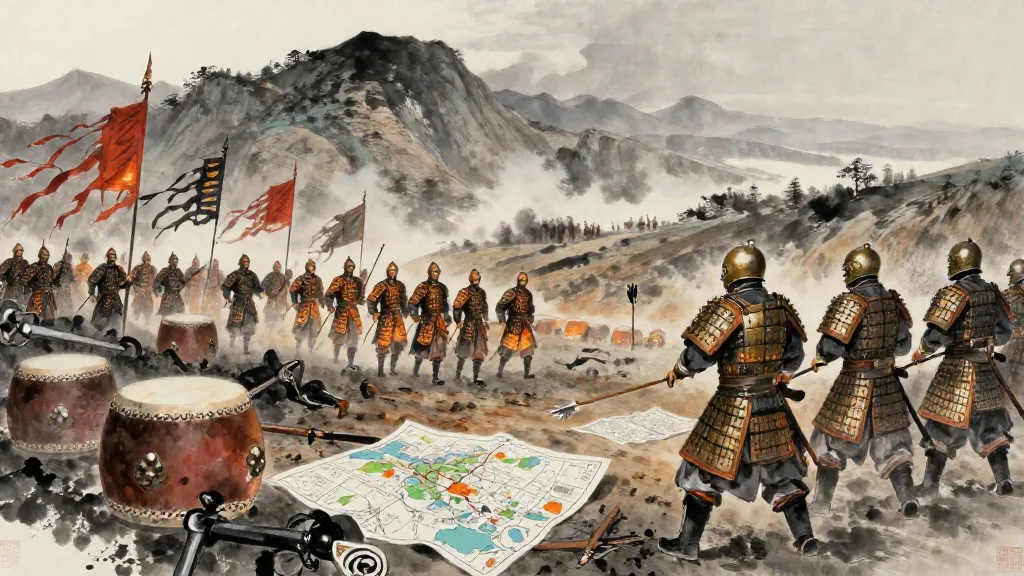
On the day a general receives his mandate, he forgets his family. When the army camps in the field, he forgets his kin. When he lifts the drumstick and beats the drum, he forgets himself.
When Wu Qi faced battle, his attendants offered him a sword. Wu Qi said: 'The general's sole task is to command through flags and drums. Facing danger, resolving uncertainty, directing troops and guiding blades -- these are the general's duties. Wielding a single sword is not the general's business.'
His three armies formed their ranks. One day's march became three days' march. After three days' march, they flowed like water bursting from a riverhead. Seeing the enemy ahead, he employed each unit according to its strengths. Against white-bannered enemies he deployed with white; against red-bannered enemies, with red.
Once, when Wu Qi was about to engage Qin and the armies had not yet clashed, one soldier could not contain his courage, rushed forward alone, took two enemy heads, and returned. Wu Qi immediately had him executed. His officers protested: 'This man is a capable warrior -- you cannot execute him!' Wu Qi replied: 'A capable warrior he may be, but he did not follow my orders.' He executed him.