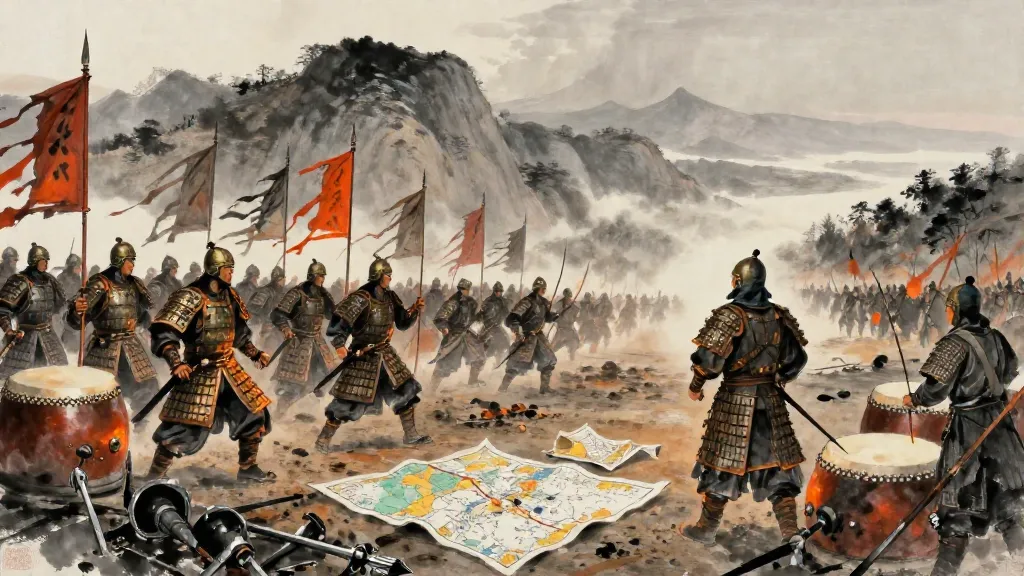
亡伍得伍之法
The Law of Losing and Capturing Squad Members
束伍之令曰:五人為伍,共一符,收於將吏之所。亡伍而得伍,當之;得伍而不亡,有賞,亡伍不得伍,身死家殘。亡長得長,當之;得長不亡,有賞,亡長不得長,身死家殘;復戰得首長,除之。亡將得將,當之;得將不亡,有賞,亡將不得將,坐離地遁逃之法。
The ordinance on binding the squads states: five men form a squad and share one tally-token, kept in the custody of their commanding officer.
If you lose a squadmate but capture an enemy squadmate, the accounts are balanced. If you capture an enemy squadmate without losing your own, you are rewarded. If you lose a squadmate without capturing an enemy squadmate, you are executed and your family is destroyed.
If you lose a squad leader but capture an enemy squad leader, the accounts are balanced. If you capture an enemy squad leader without losing your own, you are rewarded. If you lose a squad leader without capturing an enemy squad leader, you are executed and your family is destroyed. However, if in a subsequent battle you take an enemy leader's head, the offense is expunged.
If you lose a commander but capture an enemy commander, the accounts are balanced. If you capture an enemy commander without losing your own, you are rewarded. If you lose a commander without capturing an enemy commander, you are punished under the law for abandoning position and fleeing.
Notes
The 束伍 ('binding the squads') system creates a precise accounting of battlefield losses and gains. Every casualty must be compensated by an equivalent enemy casualty. This transforms combat into a quantifiable ledger: each soldier's survival depends on his squad's collective performance.
當之 (dang zhi): literally 'it offsets.' The term treats military losses and gains as a balance sheet. This accounting mentality is characteristic of the Legalist approach to warfare, where human costs are measured with bureaucratic precision.