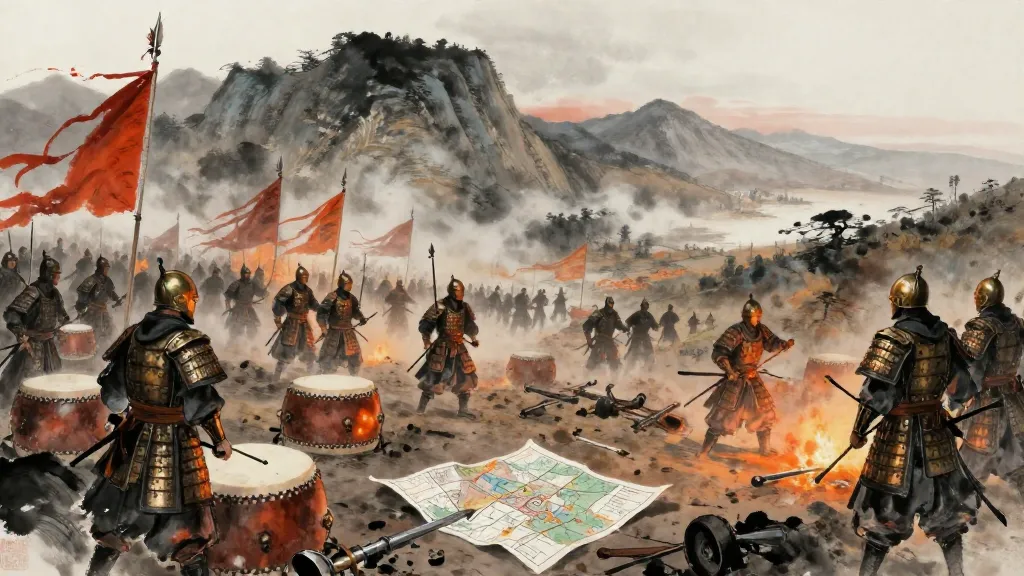
勵士 (Encouraging the Officers) — Chinese ink painting

吳子 Wuzi · Chapter 6

勵士

Encouraging the Officers

View:

三樂

The Three Joys of a Ruler

武侯問曰:“嚴刑明賞,足以勝乎?”

起對曰:“嚴明之事,臣不能悉。雖然,非所恃也。夫發號布令而人樂聞,興師動眾而人樂戰,交兵接刃而人樂死。此三者,人主之所恃也。”

武侯曰:“致之奈何?”

起對曰:“君舉有功而進饗之,無功而勵之。”

Marquis Wu asked: "Are strict punishments and clear rewards sufficient to win?"

Wu Qi replied: "I cannot cover every detail of strict and clear administration. But in any case, these alone are not what you should rely on. When orders are issued and the people are glad to hear them; when the army is mobilized and the people are glad to fight; when blades clash and the people are glad to die — these three are what a ruler should rely on."

Marquis Wu said: "How can this be achieved?"

Wu Qi replied: "Elevate those with merit and feast them; encourage those without merit to strive harder."

三行饗士

The Three Rows Banquet

於是武侯設坐廟廷,為三行,饗士大夫。上功坐前行,餚席兼重器、上牢;次功坐中行,餚席器差減;無功坐後行,餚席無重器。饗畢而出,又頒賜有功者父母妻子於廟門外,亦以功為差。有死事之家,歲譴使者勞賜其父母,著不忘於心。

Thereupon Marquis Wu arranged seating in the courtyard of the ancestral temple in three rows, and held a banquet for the officers and grandees. Those of the highest merit sat in the front row, with fine dishes, full table settings of precious vessels, and the finest sacrificial offerings. Those of the next rank of merit sat in the middle row, with somewhat reduced table settings and vessels. Those without merit sat in the rear row, with dishes but no precious vessels. After the banquet, he went out and distributed gifts to the parents, wives, and children of the meritorious at the temple gate, also graded according to merit. For the families of those who had died in service, he dispatched envoys every year to present condolences and gifts to their parents, demonstrating that they were never forgotten.

Notes

1context

The Three Rows system (三行) was a public ranking of military achievement. Holding the banquet in the ancestral temple gave it ritual and political weight, making meritorious distinction a matter of state ceremony rather than mere administrative reward.

魏士不待令而戰

Wei Soldiers Fight Without Waiting for Orders

行之三年,秦人興師,臨於西河。魏士聞之,不待吏令,介冑而奮擊之者以萬數。

After three years of this practice, the Qin raised an army and advanced to the Western River. When the Wei soldiers heard the news, without waiting for official orders, those who donned armor and helmets and charged out to fight numbered in the tens of thousands.

一死賊足懼千夫

One Man Resolved to Die Can Terrify a Thousand

武侯召吳起而謂曰:“子前日之教行矣。”

起對曰:“臣聞人有短長,氣有盛衰。君試發無功者五萬人,臣請率以當之。脫其不勝,取笑於諸侯,失權於天下矣。今使一死賊伏於曠野,千人追之,莫不梟視狼顧。何者?忌其暴起而害己。是以一人投命,足懼千夫。今臣以五萬之眾,而為一死賊,率以討之,固難敵矣。”

Marquis Wu summoned Wu Qi and said: "Your teaching from before has taken effect."

Wu Qi replied: "I have heard that men have strengths and weaknesses, and morale has its peaks and troughs. Let my lord send out the fifty thousand who have not yet earned merit, and allow me to lead them against the enemy. If we fail to win, we will be laughed at by the other lords and lose our authority in the realm. Now consider: if one man resolved to die lies in ambush in the open wilderness and a thousand men pursue him, every one of them will look around warily like owls and glance back like wolves. Why? Because they fear he will spring up suddenly and harm them. Thus one man who throws away his life is enough to terrify a thousand. Now if I take fifty thousand men and transform them all into that one man resolved to die, and lead them into battle — it will be very hard for any enemy to withstand us."

破秦五十萬

Defeating Five Hundred Thousand Qin Troops

於是武侯從之,兼車五百乘,騎三千匹,而破秦五十萬眾,此勵士之功也。

Thereupon Marquis Wu followed his advice. With five hundred additional chariots and three thousand cavalry, they defeated a Qin army of five hundred thousand. This was the achievement of encouraging the officers.

Notes

1context

The figure of 500,000 Qin troops is likely an exaggeration typical of Warring States rhetoric. The core point is that Wu Qi's system of motivating soldiers through the Three Rows merit recognition enabled a smaller, highly motivated force to defeat a much larger one.

戰日之令

Orders on the Day of Battle

先戰一日,吳起令三軍曰:“諸吏士當從受敵。車騎與徒,若車不得車,騎不得騎,徒不得徒,雖破軍皆無功。“故戰之日,其令不煩而威震天下。

The day before battle, Wu Qi issued orders to the three armies: "All officers and soldiers are to engage the enemy as assigned. Chariots against chariots, cavalry against cavalry, infantry against infantry. If the chariot corps does not defeat the enemy chariots, the cavalry does not defeat the enemy cavalry, and the infantry does not defeat the enemy infantry — then even if the army wins the battle, none shall receive credit for merit." Therefore on the day of battle, his orders were few and simple, yet his authority shook the realm.

Edition & Source

Text
《吳子》 Wuzi
Edition
《武經七書》(Seven Military Classics) canonical text
Commentary
Traditional military commentaries