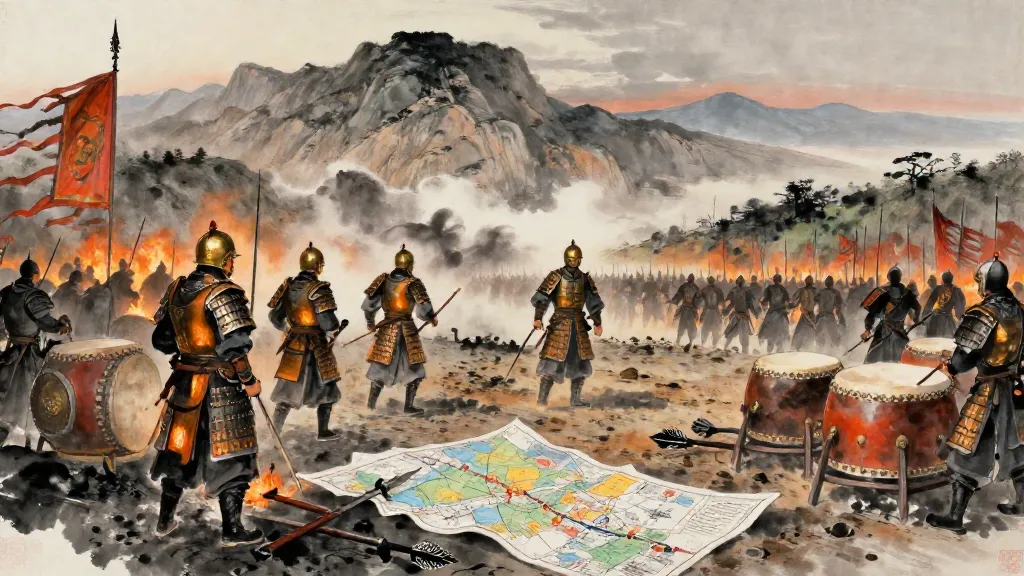
戰之節
Signals for Battle Coordination
武侯問曰:“車堅馬良,將勇兵強,卒遇敵人,亂而失行,則如之何?”
吳起對曰:“凡戰之法,晝以旌旗幡麾為節,夜以金鼓笳笛為節。麾左而左,麾右而右。鼓之則進,金之則止。一吹而行,再吹而聚。不從令者誅。三軍服威,士卒用命,則戰無強敵,攻無堅陳矣。”
Marquis Wu asked: "If our chariots are sturdy, horses excellent, generals brave, and soldiers strong, but upon suddenly encountering the enemy the troops fall into disorder and lose formation — what should be done?"
Wu Qi replied: "The method for all battles is this: by day, use banners, pennants, and signal flags as coordination markers; by night, use gongs, drums, reed pipes, and flutes. Signal left and they go left; signal right and they go right. The drum means advance; the gong means halt. One blast of the pipe means march; two blasts mean assemble. Anyone who disobeys orders is executed. When the entire army submits to authority and the soldiers carry out commands, then in battle there is no enemy too strong, and in attack there is no formation too solid."