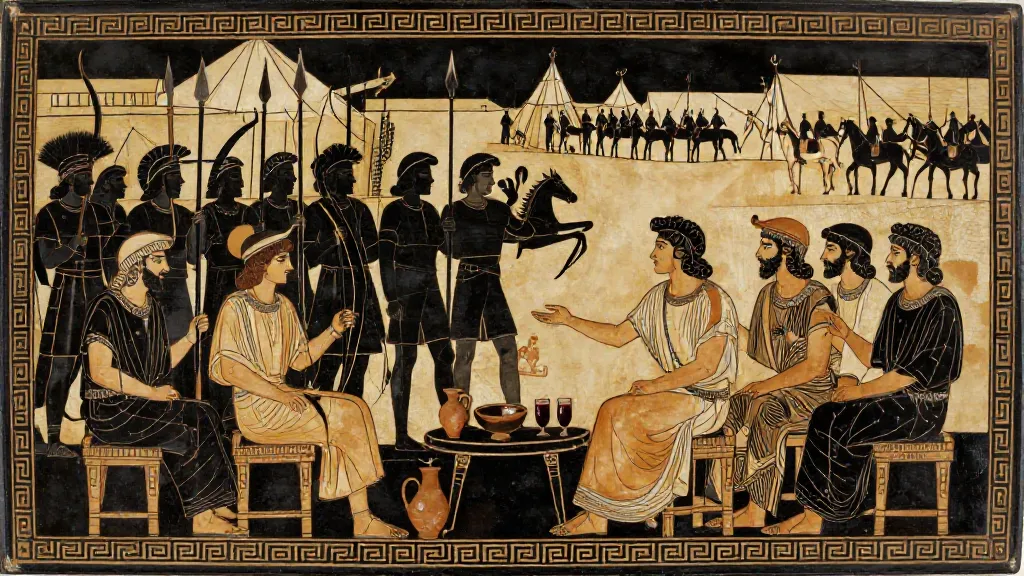
Xenophon · 1 chapter · c. 559-550 BC
Building a Coalition from Nothing
Cyrus assembled a multi-ethnic force against a larger empire by making each ally believe the coalition served their own interests — the mechanism that makes vertical alliances work.
Commentary
In the decade before 550 BC, Cyrus of Persia held a position that should have been impossible to leverage: a subordinate king under Media, commanding a population smaller and poorer than his suzerain's, with no obvious path to regional dominance. What he had instead was a method. Rather than building an army from Persian manpower alone, he recruited Hyrcanians, Cadusians, Sakians, and Armenians — each on terms calibrated to that group's specific grievance against Median rule. The coalition did not require its members to like each other. It required only that each member calculate, correctly, that their interests were better served by Cyrus winning than by Astyages holding on.
Xenophon understood this as the central political problem of multistate competition: not how to make allies loyal, but how to make alliance the rational choice for actors who are loyal to nothing but their own survival. The Cyropaedia is, in this reading, less a biography than a manual for the construction of interest-aligned coalitions against structurally superior adversaries.