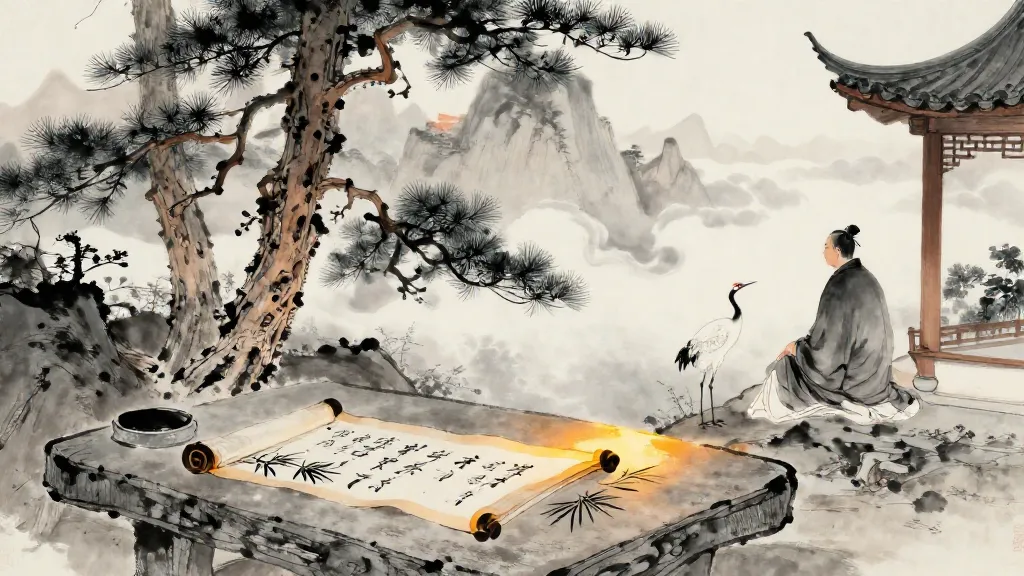
臣道 (The Way of the Minister) — Chinese ink painting

荀子 Xunzi · Chapter 13

臣道

The Way of the Minister

View:

人臣四等

Four Types of Ministers

人臣之論:有態臣者,有篡臣者,有功臣者,有聖臣者。內不足使一民,外不足使距難,百姓不親,諸侯不信;然而巧敏佞說,善取寵乎上,是態臣者也。

A discussion of ministers: there are fawning ministers, usurping ministers, meritorious ministers, and sage ministers. Those who within cannot unite the people, without cannot resist difficulties, who are neither loved by the people nor trusted by the lords — yet who are clever, nimble, and skilled at ingratiating speech, adept at winning favor from above — these are fawning ministers.

從道不從君

Follow the Way, Not the Ruler

故正義之臣設,則朝廷不頗;諫爭輔拂之人信,則君過不遠;爪牙之士施,則仇讎不作;邊境之臣處,則疆垂不喪,故明主好同而闇主好獨,明主尚賢使能而饗其盛,闇主妒賢畏能而滅其功。傳曰:「從道不從君。」此之謂也。

Therefore when upright ministers are established, the court is not biased. When remonstrating, contending, assisting, and correcting ministers are trusted, the ruler's errors do not go far. When capable warriors are deployed, enemies do not arise. When border ministers are in place, the frontiers are not lost. The enlightened ruler loves having companions; the benighted ruler loves being alone. The enlightened ruler honors the worthy and employs the capable, sharing in their prosperity; the benighted ruler envies the worthy and fears the capable, destroying their achievements. The tradition says: 'Follow the Way, not the ruler.' This is what it means.

Edition & Source

Text
《荀子》 Xunzi
Edition
《四部叢刊》本
Commentary
Traditional commentaries