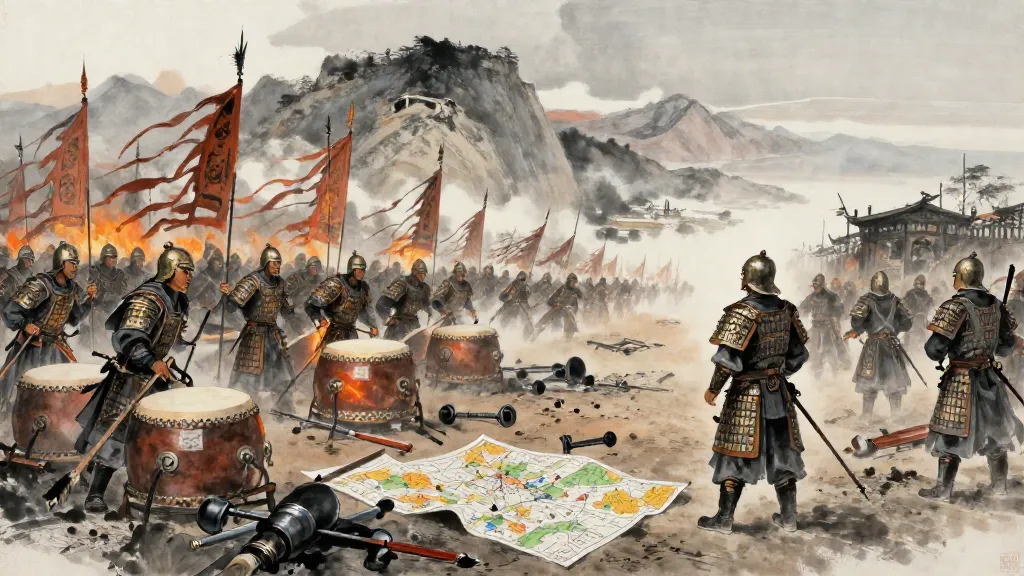
權修 (Cultivating Authority) — Chinese ink painting

管子 Guanzi · Chapter 3

權修

Cultivating Authority

View:

國之本務

The Fundamental Tasks of the State

萬乘之國,兵不可以無主,土地博大,野不可以無吏,百姓殷眾,官不可以無長,操民之命,朝不可以無政。

In a state of ten thousand chariots, the army cannot be without a commander; when the territory is vast, the countryside cannot be without officials; when the people are numerous, the offices cannot be without supervisors; when wielding the people's fate, the court cannot be without governance. When the land is vast yet the state is poor, the fields have not been opened. When the people are many yet the army is weak, the people lack incentive. Therefore, if non-essential production is not prohibited, the fields will not be opened. If rewards and punishments are not trustworthy, the people will lack incentive.

取民有度

Taking from the People Has Limits

地之生財有時,民之用力有倦,而人君之欲無窮,以有時與有倦,養無窮之君,而度量不生於其間,則上下相疾也。是以臣有殺其君,子有殺其父者矣。故取於民有度,用之有止,國雖小必安;取於民無度,用之不止,國雖大必危。

The earth produces wealth in its seasons; the people's labor has its limits of exhaustion; yet the ruler's desires are boundless. Using what is seasonal and what is exhaustible to nourish a ruler of boundless appetite, if proper measure does not arise between them, then superior and inferior will resent each other. This is why there are ministers who have killed their rulers and sons who have killed their fathers. Therefore: take from the people with measure and use resources with restraint, and the state, though small, will surely be secure. Take from the people without measure and use resources without restraint, and the state, though great, will surely be imperiled.

樹人之計

The Strategy of Cultivating People

一年之計,莫如樹谷;十年之計,莫如樹木;終身之計,莫如樹人。一樹一獲者,谷也;一樹十獲者,木也;一樹百穫者,人也。我茍種之,如神用之,舉事如神,唯王之門。

For a plan of one year, nothing is better than planting grain. For a plan of ten years, nothing is better than planting trees. For a plan of a lifetime, nothing is better than cultivating people. Plant once and harvest once — that is grain. Plant once and harvest tenfold — that is trees. Plant once and harvest a hundredfold — that is people. If I plant diligently, the harvest comes as if by divine power. To accomplish affairs as if by divine power — this is the gate of the true king.

Notes

1context

This passage is one of the most frequently quoted lines in all of Chinese political philosophy. It establishes the Guanzi's priority of human capital development over material production.

禮義廉恥之治

Governing through Propriety, Duty, Integrity, and Shame

凡牧民者,欲民之正也;欲民之正,則微邪不可不禁也;微邪者,大邪之所生也;微邪不禁,而求大邪之無傷國,不可得也。

All who shepherd the people desire that the people be upright. To desire the people's uprightness, one must not fail to prohibit minor wickedness — for minor wickedness is the origin of great wickedness. If minor wickedness is not prohibited and one seeks that great wickedness not harm the state, this cannot be achieved. All who shepherd the people desire the people to have propriety — then minor breaches of propriety must not be neglected. All who shepherd the people desire the people to have duty — then minor duties must not go unperformed. All who shepherd the people desire the people to have integrity — then minor points of integrity must not go unattended. All who shepherd the people desire the people to have shame — then minor matters of shame must not go unregarded.

法度與爵祿

Law and the System of Ranks and Emoluments

凡牧民者,欲民之可御也;欲民之可御,則法不可不審;法者,將立朝廷者也;將立朝廷者,則爵服不可不貴也。

All who shepherd the people desire that the people be governable. To desire the people's governability, the law must not be left unexamined. Law is what establishes the court. To establish the court, rank and vestments must not fail to be honored. If rank and vestments are bestowed on the unworthy, the people will despise them; when the people despise rank and vestments, the ruler is not honored; when the ruler is not honored, commands will not be carried out. Law is what employs the people's strength — therefore emoluments must be generous. Law is what employs the people's ability — therefore appointments must be judicious. Law is what employs the people's lives — therefore punishments must be carefully examined.

Edition & Source

Text
《管子》 Guanzi
Edition
中華古詩文古書籍網 transcription
Commentary
Traditional commentaries