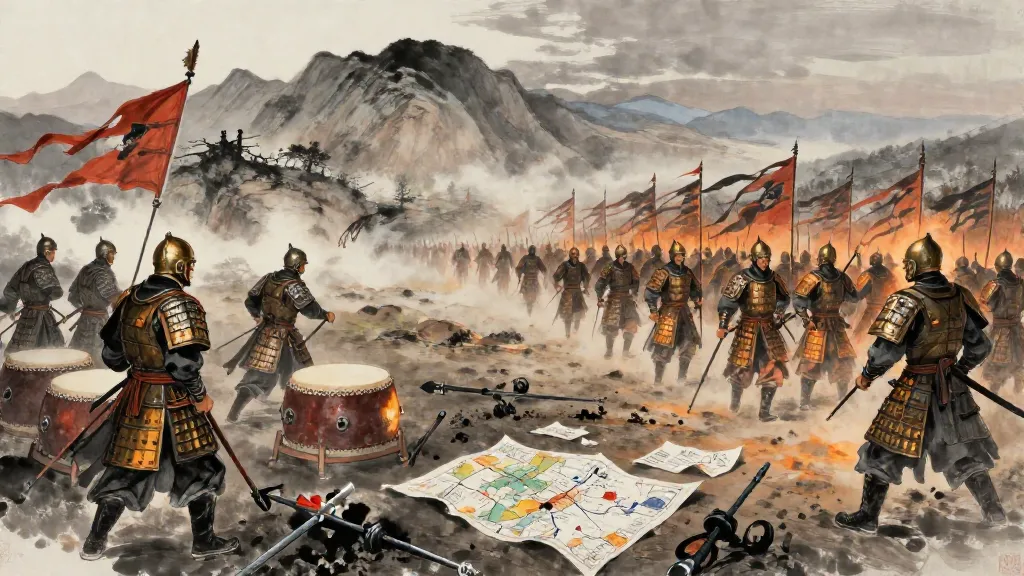
立政 (Establishing Governance) — Chinese ink painting

管子 Guanzi · Chapter 4

立政

Establishing Governance

View:

三本

The Three Fundamentals

國之所以治亂者三,殺戮刑罰,不足用也。國之所以安危者四,城郭險阻,不足守也。國之所以富貧者五,輕稅租,薄賦斂,不足恃也。治國有三本,而安國有四固,而富國有五事,五事五經也。

The factors determining whether a state is orderly or chaotic are three — execution and punishment alone are insufficient. The factors determining whether a state is secure or imperiled are four — city walls and natural barriers alone are insufficient to defend. The factors determining whether a state is wealthy or poor are five — merely lightening taxes and thinning levies is insufficient to rely upon. Governing the state has Three Fundamentals; securing the state has Four Firmaments; enriching the state has Five Tasks. The ruler must examine three things: first, whether virtue matches position; second, whether merit matches emolument; third, whether ability matches office. These Three Fundamentals are the roots of order and disorder.

四固與五事

The Four Firmaments and Five Tasks

君之所慎者四:一曰大德不至仁,不可以授國柄。二曰見賢不能讓,不可與尊位。三曰罰避親貴,不可使主兵。四曰不好本事,不務地利,而輕賦斂,不可與都邑。

The ruler must be cautious about four things: first, one whose great virtue does not extend to benevolence should not be entrusted with state power. Second, one who sees the worthy but cannot defer should not be given a high position. Third, one whose punishments avoid relatives and the noble should not be put in command of troops. Fourth, one who does not favor fundamental occupations, does not cultivate the land's advantages, and levies taxes carelessly should not be given a city to govern. As for the Five Tasks of enriching the state: mountains and marshes not protected from fire bring poverty; drainage ditches not maintained bring poverty; mulberry and hemp not planted and the five grains not suited to their soil bring poverty; livestock not raised and fruits not prepared bring poverty; artisan work consumed by carving and women's work consumed by embroidery bring poverty.

首憲首事

Promulgating the Constitution and Initiating Affairs

分國以為五鄉,鄉為之師,分鄉以為五州,州為之長。分州以為十里,里為之尉。分里以為十游,游為之宗。十家為什,五家為伍,什伍皆有長焉。

Divide the state into five districts, each with its Director. Divide each district into five prefectures, each with its Chief. Divide each prefecture into ten wards, each with its Captain. Divide each ward into ten neighborhoods, each with its Elder. Ten households form a squad; five households form a file; squads and files all have their heads. Build barriers, block hidden passages, unify the roads, regulate exits and entries, inspect the gates, and carefully manage the keys. The ward keys are stored with the Ward Captain. The gate officers are appointed and open and close the gates at set times. Those who exit and enter at irregular times, whose dress is improper, or who gather in unauthorized groups — the gate officers observe them and report without delay.

省官與服制

Offices and Sumptuary Regulations

修火憲,敬山澤,林藪積草,夫財之所出,以時禁發焉。

Enforce fire regulations, respect the mountains and marshes. Forests, thickets, and accumulated grasses are the sources of wealth — prohibit and release them according to the seasons. The Forester manages woodcutting and seasonal prohibitions. The Minister of Works manages water drainage, dikes, and irrigation. The Field Officer manages the soil, inspecting high and low terrain, fertile and poor land. The District Director manages the villages, inspecting dwellings, tree-planting, and livestock. The Master of Works manages craftsmen, supervising seasonal work. As for sumptuary regulations: measure rank and regulate dress; calculate emoluments and regulate expenditures. Food and drink have their quantities; clothing has its regulations; dwellings have their standards. Even if one has a worthy person's body, without the proper rank one dares not wear that rank's garments.

九敗七觀

The Nine Defeats and Seven Observations

寢兵之說勝,則險阻不守;兼愛之說勝,則士卒不戰。全生之說勝,則廉恥不立。

When the doctrine of abolishing arms prevails, strategic passes are left unguarded. When the doctrine of universal love prevails, soldiers refuse to fight. When the doctrine of preserving life at all costs prevails, integrity and shame cannot be established. When the doctrine of private deliberation and self-aggrandizement prevails, the ruler's commands are not carried out. When the doctrine of cliques and factions prevails, the worthy and unworthy are not distinguished. When the doctrine of gold, jade, and bribes prevails, rank and vestments flow downward to the undeserving. The Seven Observations describe what to look for: when commands reach their effect and the people transform — that is the goal of education. When behavior begins from the invisible and ends beyond reach — that is the goal of training.

Notes

1context

The 'Nine Defeats' passage is notable for its explicit critique of Mohist 'universal love' (兼愛) and Yangist 'preserving life' (全生) doctrines — showing the Guanzi's Legalist-Realist orientation.

Edition & Source

Text
《管子》 Guanzi
Edition
中華古詩文古書籍網 transcription
Commentary
Traditional commentaries