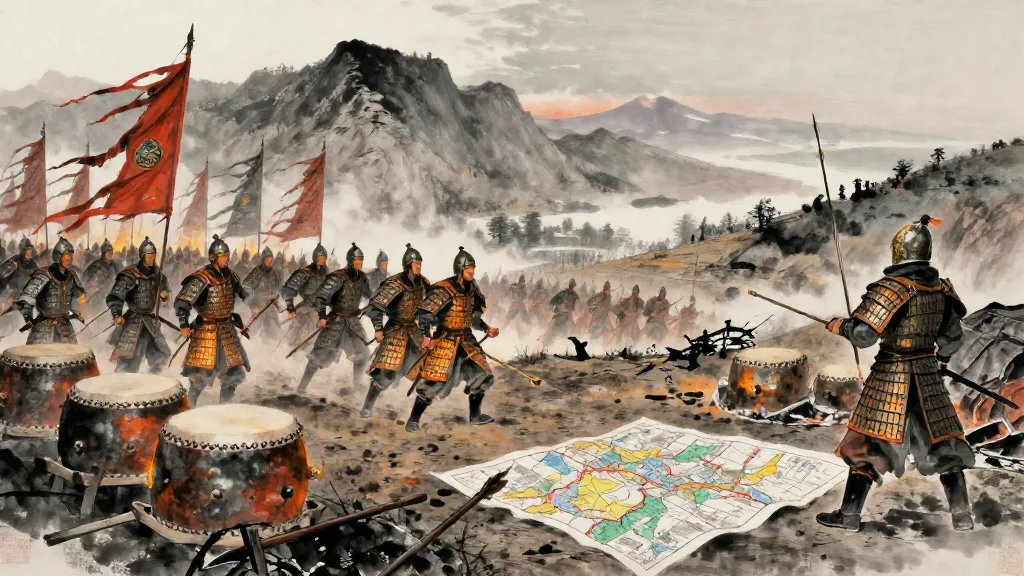
乘馬 (The Chariot and Horse) — Chinese ink painting

管子 Guanzi · Chapter 5

乘馬

The Chariot and Horse

View:

立國之本

The Foundations of Establishing a State

凡立國都,非於大山之下,必於廣川之上;高毋近旱,而水用足;下毋近水,而溝防省;因天材,就地利,故城郭不必中規矩,道路不必中準繩。

Whenever establishing a state capital, it must be either at the foot of a great mountain or on the banks of a broad river. High enough to avoid drought with sufficient water supply; low enough to be near water yet with minimal need for drainage works. Follow heaven's materials and take advantage of the land's features — thus city walls need not conform perfectly to compass and square, and roads need not align perfectly with level and line. To act without purpose is the way of the emperor; to act yet take no credit for it is the way of the king; to act without self-aggrandizement is the way of the hegemon.

地政市金

Land, Markets, and Money

地者,政之本也。朝者,義之理也。市者,貨之準也。黃金者,用之量也。諸侯之地,千乘之國者,器之制也。

Land is the foundation of governance. The court is the principle of duty. The market is the standard of goods. Gold is the measure of expenditure. The territory of feudal lords and states of a thousand chariots are the regulation of capacity. These five — their principles can be understood, and there is a Way to implement each. Land is the foundation of governance; therefore land can correct governance. If land is not measured evenly and harmonized, governance cannot be corrected. The market lets you know order and disorder, abundance and scarcity — but cannot create abundance or scarcity. Gold lets you know extravagance and thrift — but frugality harms enterprise while extravagance harms goods.

地均與軍制

Land Equalization and Military Organization

地之不可食者,山之無木者,百而當一。涸澤,百而當一。

Land that cannot produce food: mountains without trees count as one hundredth of productive land. Dried marshes count as one hundredth. Barren land without grass or trees counts as one hundredth. For the measurement system: an area of six li square is called a 'burst.' Five bursts make a 'section.' Five sections make a 'cluster' — every cluster has a market, for without a market the people will lack. Five clusters are named a certain district; four districts make a 'region' — this is the official system. An area of six li square constitutes the territory for one war chariot. One chariot means four horses. The horses require twenty-eight sets of armor and twenty shields. Thirty unarmored infantry serve the chariot pair.

聖人分民

The Sage Allocates the People

聖人之所以為聖人者,善分民也。聖人不能分民,則猶百姓也,於己不足,安得名聖。

What makes the sage a sage is his skill at allocating the people. If the sage could not allocate the people, he would be no different from an ordinary person — insufficient in himself, how could he be called sage? Therefore when there are tasks, he employs them; when there are none, he returns resources to the people. Only the sage is skilled at entrusting enterprise to the people. Time's handling of affairs is supremely precise; it cannot be stored and set aside. Therefore it is said: what is not done today will be forgotten wealth tomorrow. Yesterday has passed and will not return.

Edition & Source

Text
《管子》 Guanzi
Edition
中華古詩文古書籍網 transcription
Commentary
Traditional commentaries