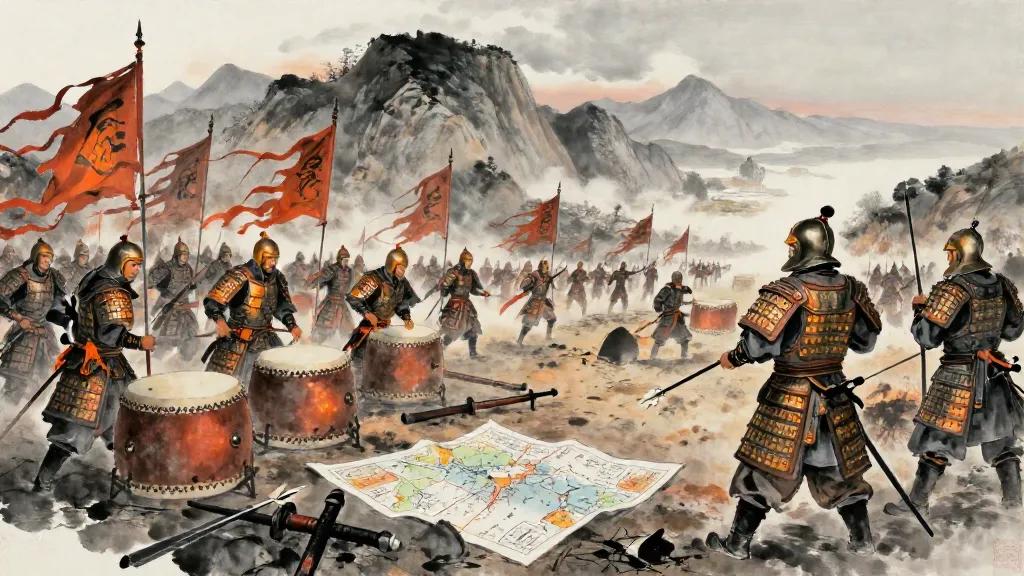
七法 (The Seven Standards) — Chinese ink painting

管子 Guanzi · Chapter 6

七法

The Seven Standards

View:

七法總論

General Discussion of the Seven Standards

言是而不能立,言非而不能廢;有功而不能賞,有罪而不能誅,若是而能治民者,未之有也。

To affirm what is right yet be unable to establish it; to condemn what is wrong yet be unable to abolish it; to have merit yet be unable to reward it; to have guilt yet be unable to punish it — if one could govern the people under such conditions, this has never existed. The Seven Standards are: Pattern, Model, Law, Transformation, Decision, Mind-Technique, and Calculation. Pattern means the constants of heaven and earth. Model means categories, names, timings, similarities. Law means measures and instruments. Transformation means gradual habituation. Decision means granting and taking, opening and closing. Mind-Technique means sincerity and empathy. Calculation means weighing light and heavy, large and small, near and far.

四經之敗

Corruption of the Four Pillars

百匿傷上威。奸吏傷官法。奸民傷俗教。賊盜傷國眾。

Secret wickedness injures the ruler's authority. Corrupt officials injure the laws of office. Wicked commoners injure popular customs and education. Bandits and thieves injure the state's populace. When authority is injured, power shifts downward. When laws are injured, bribes flow upward. When education is injured, those who follow commands lose cohesion. When the populace is injured, the common people feel insecure in their homes. When power shifts downward, commands are not carried out. The enlightened ruler values commands above treasure, places the altars of state before kinship, holds law dearer than the people, and considers authority more precious than rank and emolument.

兵之八無敵

Eight Forms of Invincibility in War

為兵之數,存乎聚財,而財無敵。存乎論工,而工無敵。存乎制器,而器無敵。存乎選士,而士無敵。

The art of military preparation lies in accumulating wealth — and wealth without rival. In training craftsmen — and craftsmen without rival. In producing weapons — and weapons without rival. In selecting soldiers — and soldiers without rival. In governance and education without rival. In drill and training without rival. In comprehensive knowledge of the realm without rival. In mastery of timing and stratagem without rival. Thus before the army even crosses the border, there are eight forms of invincibility. To right the realm, one's wealth must surpass the realm's. One's craftsmen must surpass the realm's. One's weapons must surpass the realm's. One's soldiers must surpass the realm's.

攻伐之道

The Way of Attack and Conquest

若夫曲制時舉,不失天時,毋壙地利。其數多少,其要必出於計數。

As for detailed planning and timely action: do not miss the timing of heaven, do not waste the advantages of terrain. The specifics of numbers and their essentials must emerge from calculation. In all campaigns, plans must first be determined within before troops cross the border. When plans are not settled within yet troops are sent across the border, the battle defeats itself and the siege destroys itself. Therefore one must understand the enemy's governance before attacking, understand the enemy's conditions before negotiating, understand the enemy's generals before deploying, and understand the enemy's soldiers before forming ranks. Thus strike the many with the few ordered, strike the chaotic with the well-governed, strike the poor with the wealthy, strike the incompetent with the capable — and win every battle.

Edition & Source

Text
《管子》 Guanzi
Edition
中華古詩文古書籍網 transcription
Commentary
Traditional commentaries