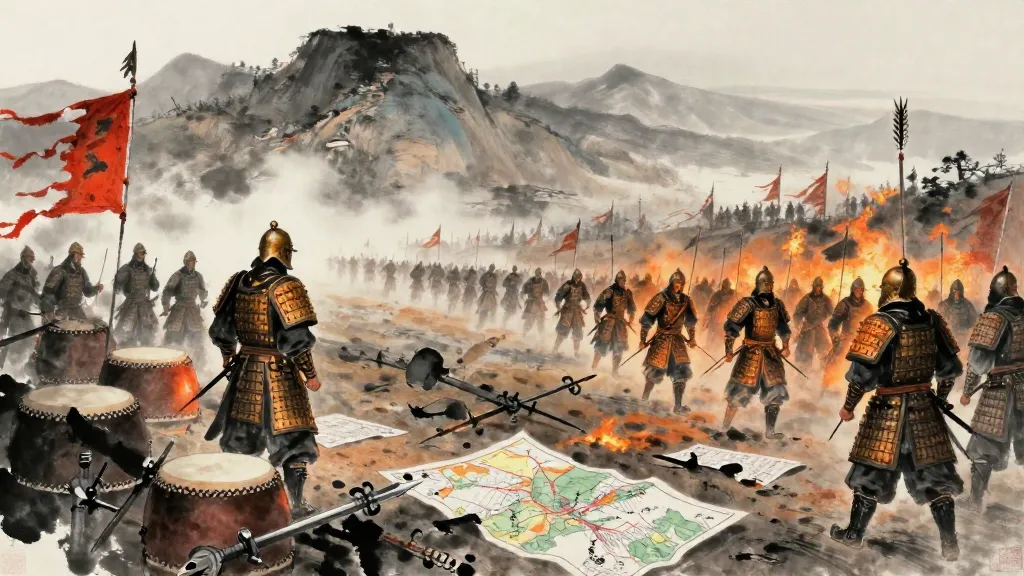
八觀 (The Eight Observations) — Chinese ink painting

管子 Guanzi · Chapter 13

八觀

The Eight Observations

View:

城郭之觀

Observing Walls and Fortifications

大城不可以不完,郭周不可以外通,里域不可以橫通,閭閈不可以毋闔,宮垣關閉不可以不修。

The inner walls must not be left incomplete; the outer walls must not be connected to the outside; the ward boundaries must not have cross-passages; the neighborhood gates must not be without doors; the palace walls and barriers must not be left unrepaired. When the wise ruler occupies his position above, punishments are few and penalties rare — not because what deserves punishment goes unpunished, but because the wise ruler closes the gates, blocks the paths, and conceals the traces, so that the people have no way to encounter lewdness and wickedness. Thus the people walk the right path and do good as if by nature.

農事之觀

Observing Agricultural Affairs

行其田野,視其耕芸,計其農事,而飢飽之國可以知也。

Walk through the fields and countryside, observe the plowing and weeding, calculate the agricultural situation, and you can know whether the state will be hungry or sated. When plowing is not deep, weeding not careful, the soil not suited to its crops, the fields full of weeds — even without flood or drought, this is the countryside of a hungry state.

山澤宮室之觀

Observing Mountains, Marshes, and Palaces

行其山澤,觀其桑麻,計其六蓄之產,而貧富之國可知也。

Walk through the mountains and marshes, observe the mulberry and hemp, calculate the livestock production, and you can know whether the state is poor or wealthy. Enter the cities, observe the palaces and residences, view the carriages and clothing, and you can know whether the state is extravagant or frugal. Survey famines, calculate military campaigns, observe the terraces and pavilions, measure state expenses, and you can know whether the state is substantial or hollow.

習俗朝廷之觀

Observing Customs and the Court

入州里,觀習俗,聽民之所以化其上。而治亂之國可知也。

Enter the villages, observe the customs, hear how the people transform under their superiors, and you can know whether the state is well-ordered or chaotic. Enter the court, observe the attendants, examine the ministers, assess what is honored and despised above and below, and you can know whether the state is strong or weak. Evaluate policies and laws, observe how the people are governed, and you can know whether commands take effect or not. Assess allies and enemies, measure the ruler's intentions, examine the state's foundations, and you can know whether the state will survive or perish. Through these eight observations, the ruler has no condition he can hide.

Edition & Source

Text
《管子》 Guanzi
Edition
中華古詩文古書籍網 transcription
Commentary
Traditional commentaries