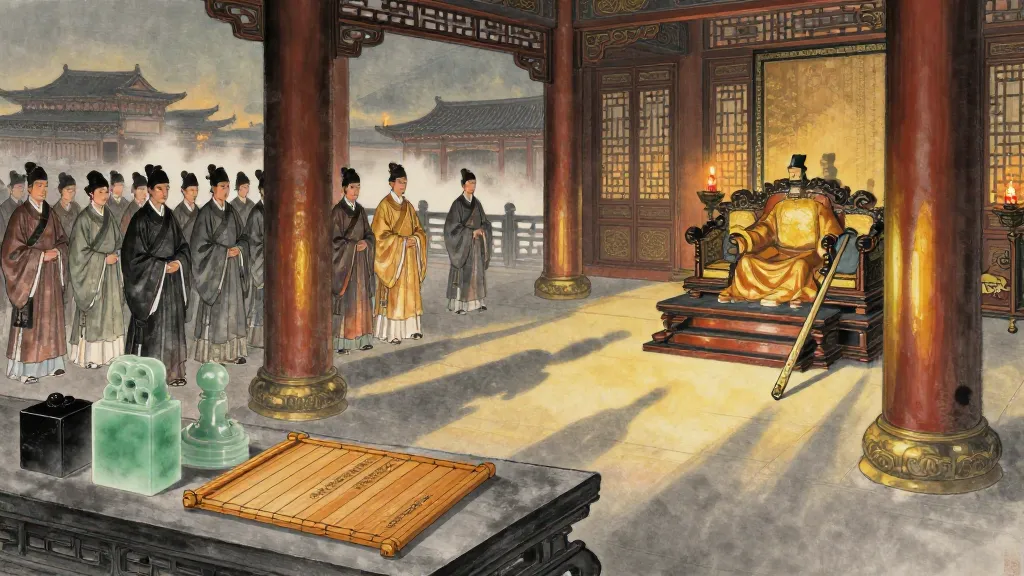
重令 (Weighting the Commands) — Chinese ink painting

管子 Guanzi · Chapter 15

重令

Weighting the Commands

View:

令重則國安

When Commands Are Weighty, the State Is Secure

凡君國之重器,莫重於令。令重則君尊,君尊則國安;令輕則君卑,君卑則國危。故安國在乎尊君,尊君在乎行令,行令在乎嚴罰。

Of all the weighty instruments of governing a state, none is weightier than commands. When commands are weighty, the ruler is honored; when the ruler is honored, the state is secure. When commands are light, the ruler is demeaned; when the ruler is demeaned, the state is imperiled. Securing the state lies in honoring the ruler; honoring the ruler lies in enforcing commands; enforcing commands lies in strict punishments. Five categories of violation of commands merit death without pardon: diminishing commands, adding to commands, not carrying out commands, delaying commands, and not following commands.

四逆之害

The Harm of the Four Perversities

菽粟不足,末生不禁,民必有飢餓之色,而工以雕文刻鏤相稚也,謂之逆。

When beans and millet are insufficient yet non-essential production is not prohibited, and the people show the look of hunger while craftsmen compete in carving and engraving — this is called perversity. When cloth is insufficient yet dress has no standards, and the people suffer cold while women compete in fine garments and embroidered silk — this is called perversity. When a state of ten thousand chariots cannot field an army, yet scholars compete in avoiding military service — this is called perversity. When officials are appointed without regard to ability and rewarded without regard to merit — this is called perversity.

三器六攻

Three Instruments and Six Attacks

凡先王治國之器三,攻而毀之者六。

The former kings had three instruments for governing the state, and there were six forces that attacked and undermined them. The three instruments are: commands, the axe and battle-axe (coercive authority), and emoluments and rewards. The six attacks are: kinship, noble rank, wealth, beauty, cunning flattery, and amusements. When one can escape punishment despite disobeying, then commands are insufficient to direct subordinates. When one can be pardoned despite violating prohibitions, then the axe and battle-axe are insufficient to overawe the multitude. When one can become wealthy without merit, then emoluments and rewards are insufficient to encourage the people. The ruler who does not alter commands for these six, does not waver punishments for these six, does not adjust emoluments for these six — under such a ruler, near and far are of one mind.

Edition & Source

Text
《管子》 Guanzi
Edition
中華古詩文古書籍網 transcription
Commentary
Traditional commentaries