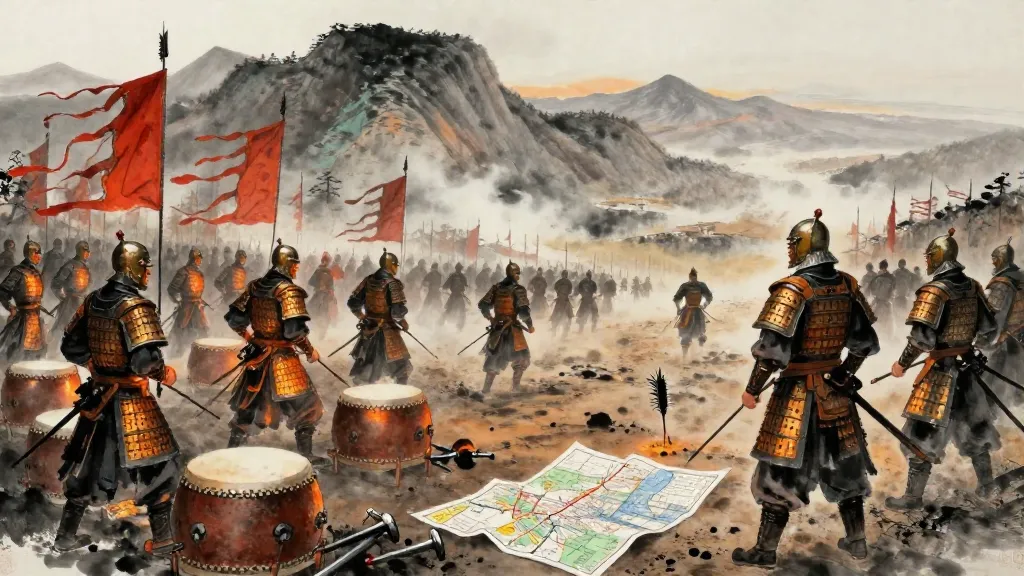
兵法 (The Art of War) — Chinese ink painting

管子 Guanzi · Chapter 17

兵法

The Art of War

View:

兵之本

The Foundation of Military Affairs

明一者皇,察道者帝,通德者王,謀得兵勝者霸。故夫兵,雖非備道至德也,然而所以輔王成霸。

One who comprehends unity is an august sovereign; one who perceives the Way is an emperor; one who communicates virtue is a king; one who plans well and wins in battle is a hegemon. Thus military force, though not the complete Way or ultimate virtue, is what supports the king and completes the hegemon. Those who use military force today are not like this — they do not understand military authority. Therefore on the day they raise troops, the state within the borders grows poor; victory is not assured; even in victory many die; and territory gained leads to state decline.

三官五教九章

Three Commands, Five Trainings, Nine Standards

三官不繆,五教不亂,九章著明,則危危而無害,窮窮而無難。

When the Three Commands are not confused, the Five Trainings are not disordered, and the Nine Standards are clearly displayed, then danger upon danger brings no harm, and crisis upon crisis brings no difficulty. The Three Commands: first, the drum — the drum is what engages, rouses, and advances; second, the gong — the gong is what halts, retreats, and withdraws; third, the banner — the banner is what establishes, benefits, and suspends the troops. The Five Trainings: first, train the eyes with banners of form and color; second, train the body with commands and numbers; third, train the feet with the pace of advance and retreat; fourth, train the hands with the advantage of long and short weapons; fifth, train the heart with the sincerity of rewards and punishments. The Nine Standards are nine different campaign banners for day-march, night-march, water crossing, forest, hillside, marsh, flatland, mountain, and supply transport.

至善不戰

The Supreme Good Is Not to Fight

無守也,故能守勝。數戰則士罷,數勝則君驕,夫以驕君使罷民,則國安得無危?故至善不戰,其次一之。

There is no fixed defense — therefore one can defend victory. Frequent battles exhaust the soldiers; frequent victories make the ruler arrogant. Using an arrogant ruler to command exhausted people — how can the state avoid danger? Therefore the supreme good is not to fight. The next best is to unify through a single decisive action. Nurture the people through the Way and they will be harmonious; raise them through virtue and they will be united. Harmonious and united, they can cooperate; cooperating, they can act in concert — and none can harm them.

Notes

1context

The phrase 'the supreme good is not to fight' (至善不戰) echoes Sunzi's famous dictum. The Guanzi's military chapters share significant vocabulary and concepts with the Sunzi Bingfa, suggesting a common intellectual milieu.

Edition & Source

Text
《管子》 Guanzi
Edition
中華古詩文古書籍網 transcription
Commentary
Traditional commentaries